If you walk into a European or other international grocery store, you might come across dried fruits originally sourced from Uzbekistan. However, instead of seeing “Made in Uzbekistan” on the packaging, you are more likely to find the label of another country, as the origin may be Uzbek, but the brand and final presentation often might belong elsewhere.
This is a predictable outcome of exporting commodities instead of brands; the countries that export bulk agricultural goods often capture only a fraction of the final retail value.
How the exports of brands work
While Uzbekistan exports significant volumes of fruits and vegetables in bulk, much of the value added through branding and retail packaging is often captured elsewhere. Neighboring and regional trade partners, such as Turkey and Azerbaijan, are active exporters of branded dried fruit products to European and Middle Eastern markets. Turkey was among the world’s leading exporters of dried fruits in 2024, according to data from the Observatory of Economic Complexity (OEC). Notably, the strategic location, established logistical procedures, and infrastructure play a huge role, combining with the access to wider markets, and logically, this illustrates a broader pattern: countries that control packaging, certification, and branding tend to capture a larger share of export value than those supplying raw or semi-processed goods.
The response to this opportunity is simple: the country has the potential to develop its brands around the agro sector. Because with branding, Uzbekistan could create:
Consumer awareness: Global shoppers will associate Uzbekistan with quality agricultural products, as they're consuming Uzbek fruits weekly.
Price control: When producers control branding, they control pricing. Uzbek producers could set prices without being subject to intermediary negotiating power.
Future opportunities: Entering new markets will be easier with established brand equity to leverage.
Domestic jobs: Packaging and processing employment could be created domestically instead of staying in neighboring countries.
Perhaps most importantly, Uzbek products already satisfy international consumers. They simply lack the packaging and positioning to capture full value.
Government response: From infrastructure to branding
In recent years, government support for the agro sector has intensified through targeted policy initiatives.
In recent years, government support for the agro sector has intensified through targeted policy initiatives. A presidential decree issued in February 2025 placed particular emphasis on strengthening export capacity and advancing national agricultural brands. Among the key institutional steps is the creation of Uzagrostar Holding, designed to strengthen export-oriented production, deepen regional specialization, and promote standardized agricultural output.
Yet infrastructure and institutional reform alone do not automatically translate into strong brands. Building recognizable products for international consumers requires strategic positioning, packaging expertise, and an understanding of global competition as well as local strengths.
From policy to practice: A case of brand architecture
To remain competitive in international markets, Uzbek agricultural products need strong branding and market positioning, such as packaging and brand architecture, that play a decisive role in the process.
A prominent example can be seen in Germany, the country ranked as the fifth-largest dried fruit exporter in 2024, according to the Observatory of Economic Complexity (OEC). This success is driven not by raw production, but by quality certification, premium packaging standards, and strong retail branding.
For Uzbekistan, this demonstrates that export competitiveness is about presentation, perception, and positioning on the shelf, along with the esports volume.
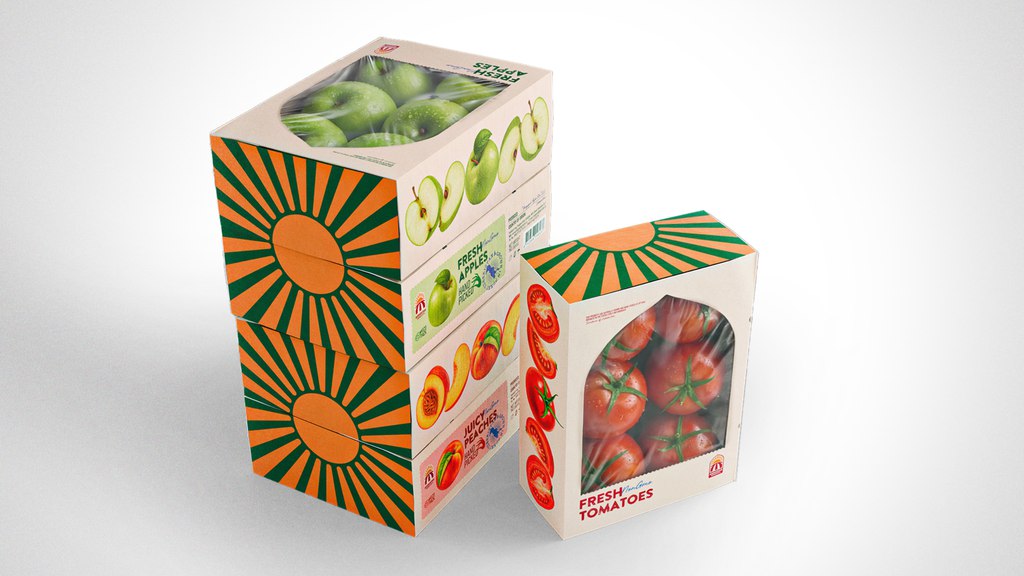
One practical example of this shift is Uzagrostar Holding, which partnered with local design firm Minim Design Agency to develop a comprehensive brand architecture. The system was designed to function across diverse product categories: dried fruits, nuts, and fresh produce, while appealing to international buyers and preserving authentic Uzbek identity.
The objective was clear: to create a unified, export-ready brand capable of competing with established foreign players.
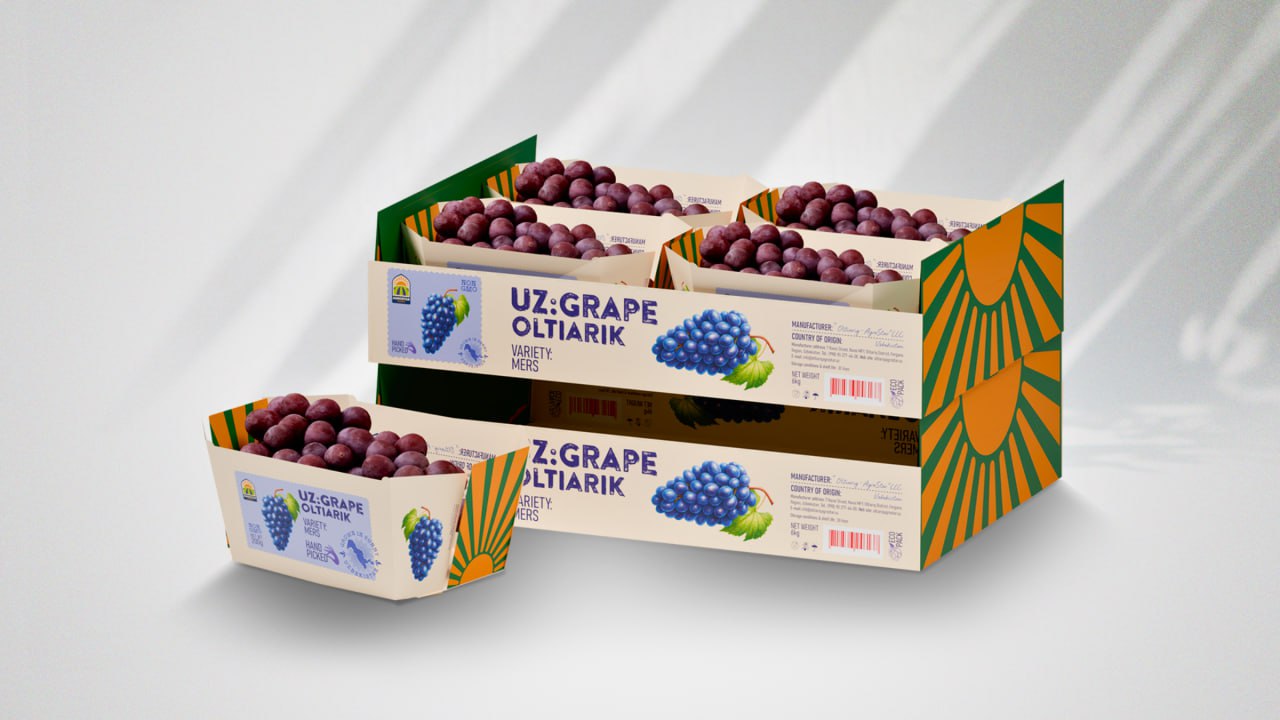
Services Delivered by Minim Design Agency:
Minim developed a comprehensive brand system that encompasses every customer touchpoint, from visual identity to physical packaging:
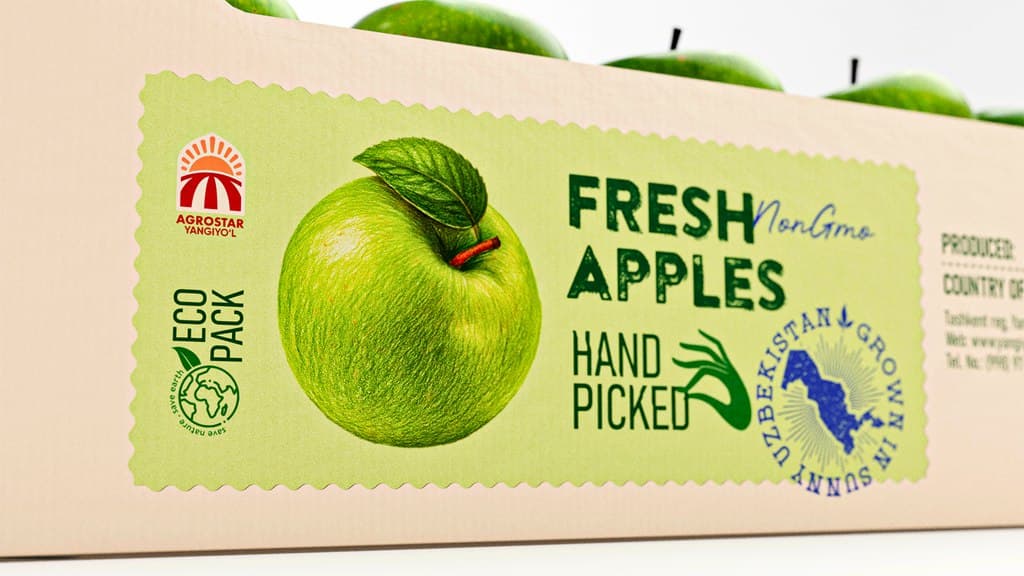
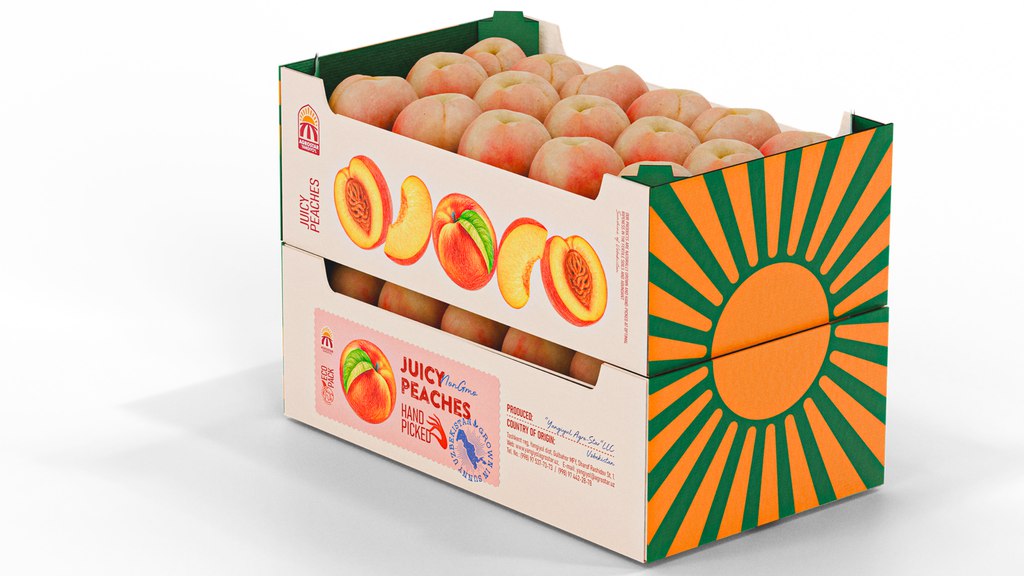
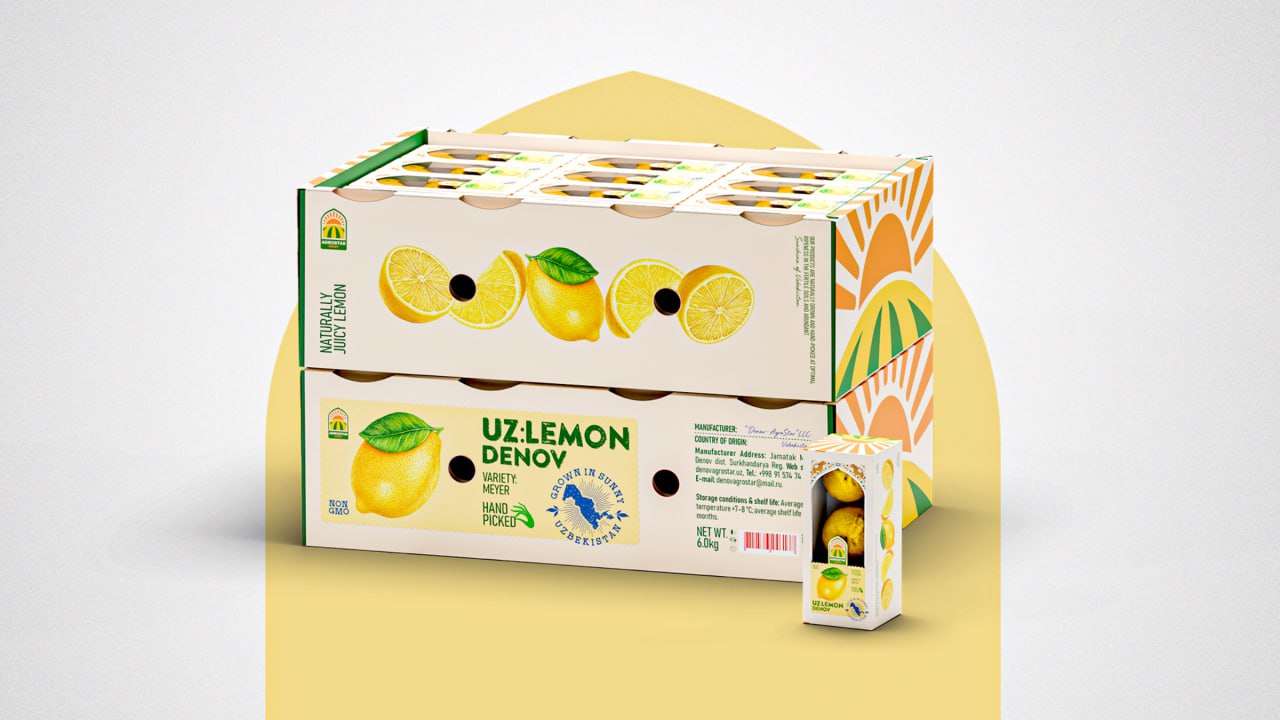
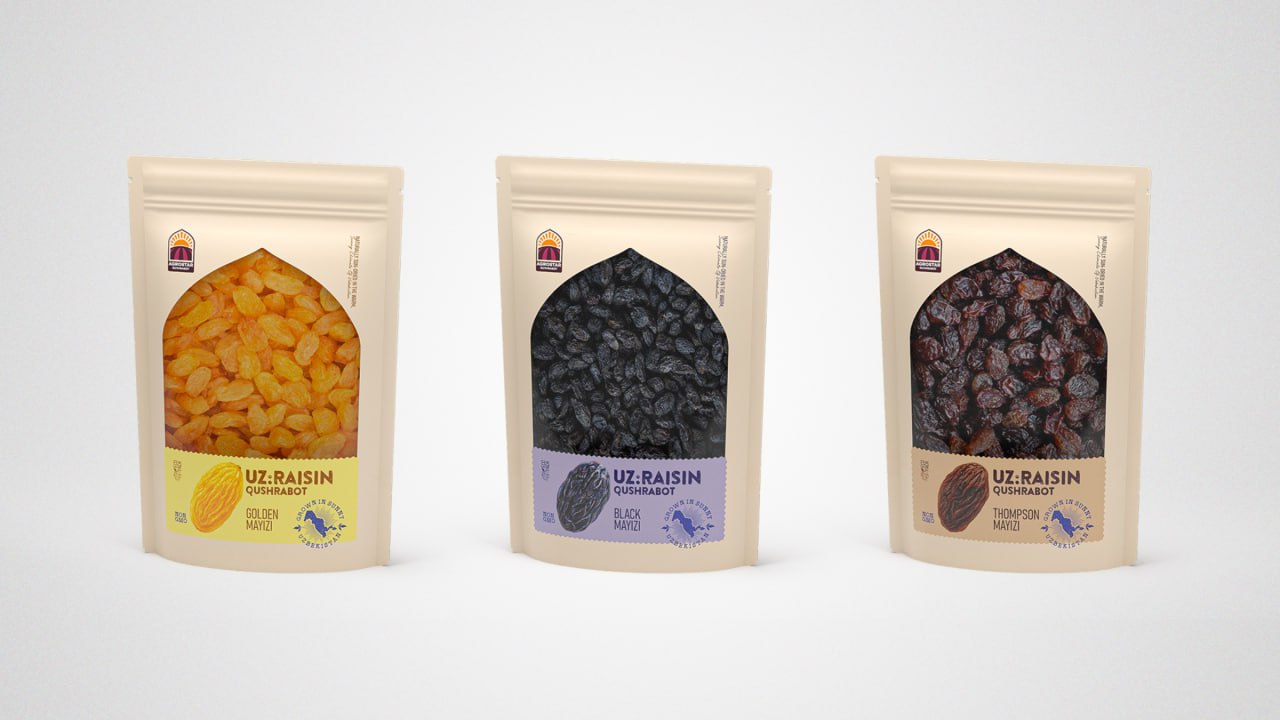
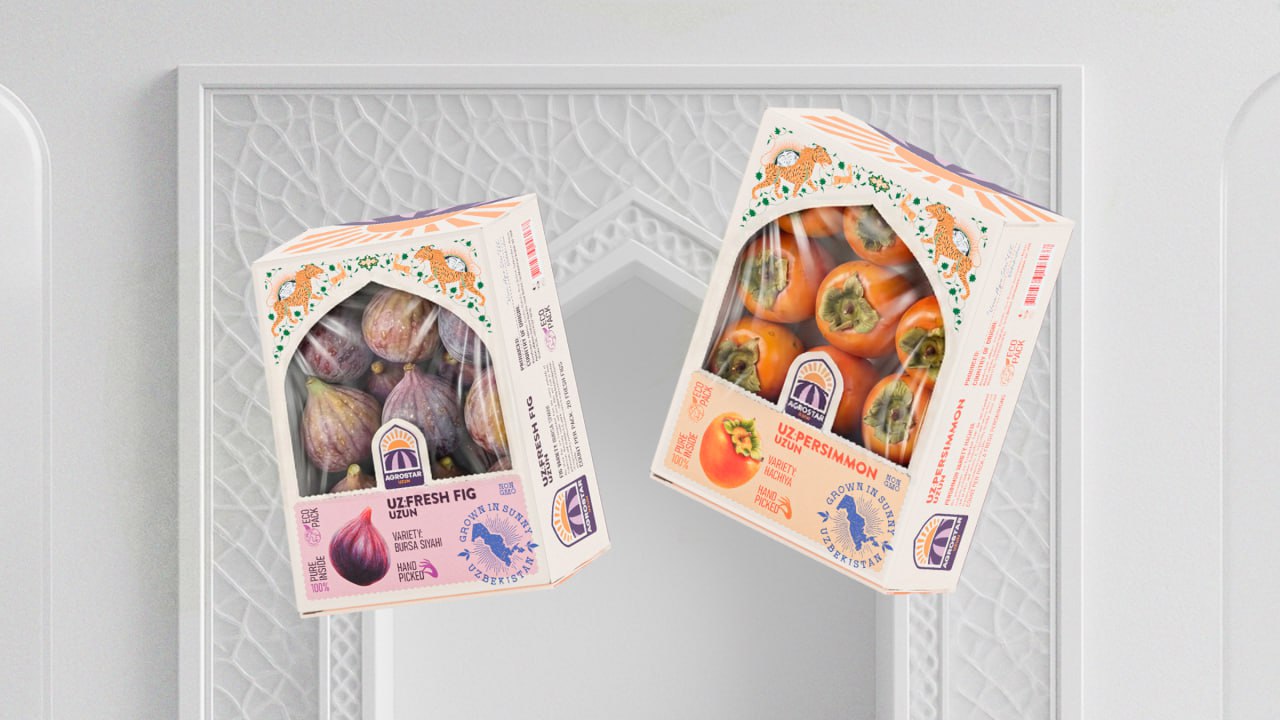
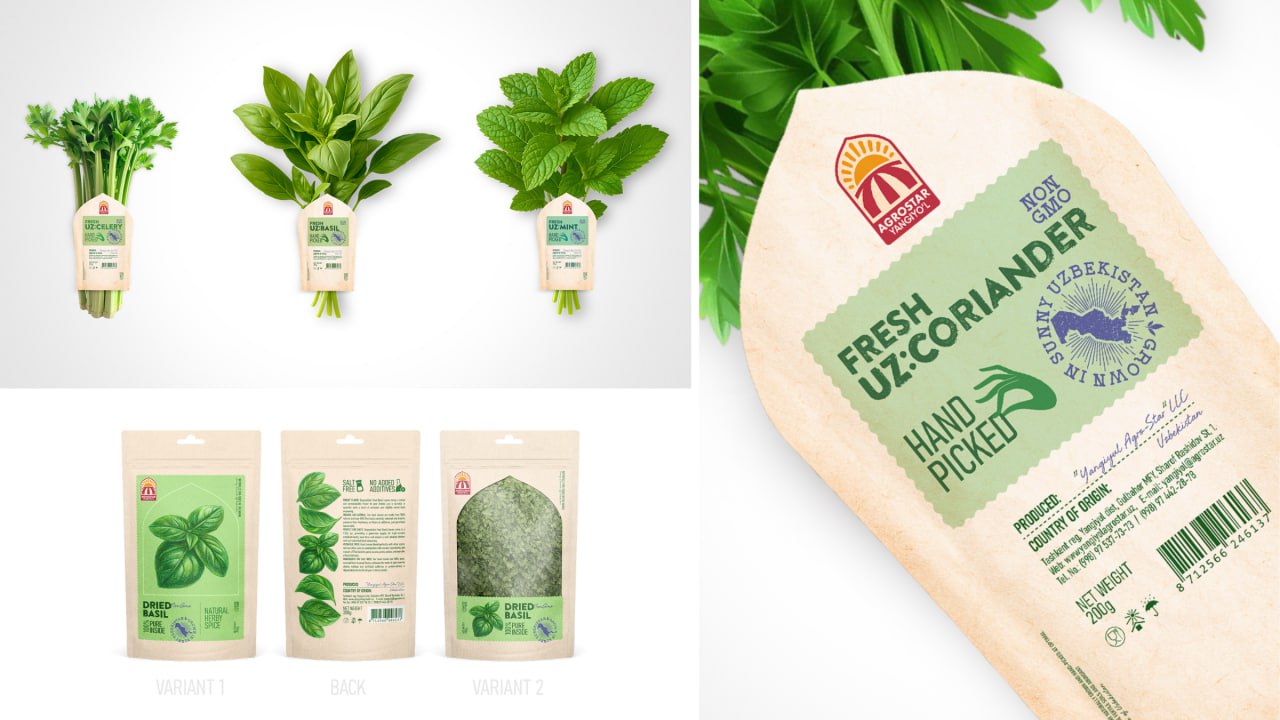
Brand Identity & Visual System: A clean, modern logo emphasizing quality and Uzbek origin, paired with a color palette that draws from traditional Uzbek blue, natural greens, and warm earth tones. The visual language includes custom photography showcasing Uzbek orchards and farmers, an illustration system featuring regional architectural patterns and landscapes (including iconic symbols like the lion from Sher-Dor Madrasah and the Simurgh bird from Nadir Devanbegi Madrasah), and icons representing quality certifications and production methods.
Packaging Architecture: A modular packaging system designed with the metaphor of "postage from Uzbekistan"—each package serves as a cultural ambassador. The design accommodates different product sizes and formats (flow-pack, boxes, and blister packs) and incorporates stamps, seals, and "Hand Picked" labels that communicate authenticity and craftsmanship.
Exhibition & Marketing Materials: Over 200 SKU-specific materials prepared for international trade shows, including booth displays, product presentations, and promotional materials tailored for exhibitions across international markets.
The brand identity's first major test came at the 2024-2025 agricultural events. Exhibitions in European states, Russia, and Middle Eastern countries provided a good base for Uzbek products to be showcased with their packaging design and brand identity.
The priorities for the agriculture segment are colossal and diverse: packaging infrastructure investments, launching branded product lines, and making "Uzbekistan" synonymous with quality dried fruits and nuts, similar to Swiss chocolate or Italian pasta. Yet, competing with established foreign brands demands strategic positioning and partnerships.
The Uzbekistan case demonstrates a defining model: when local brands partner with experienced design studios like Minim Design Agency, one of Uzbekistan's top branding agencies with over 900 projects completed, and combine this expertise with government support, the difference becomes clear.
This is what branding does: it turns origin into identity and identity into value and leverage. Uzbekistan has always had the products. Now it is time to own the story.
https://minim.uz/en/portfolio/agro-products/uzagrostar.htm
Advertisement