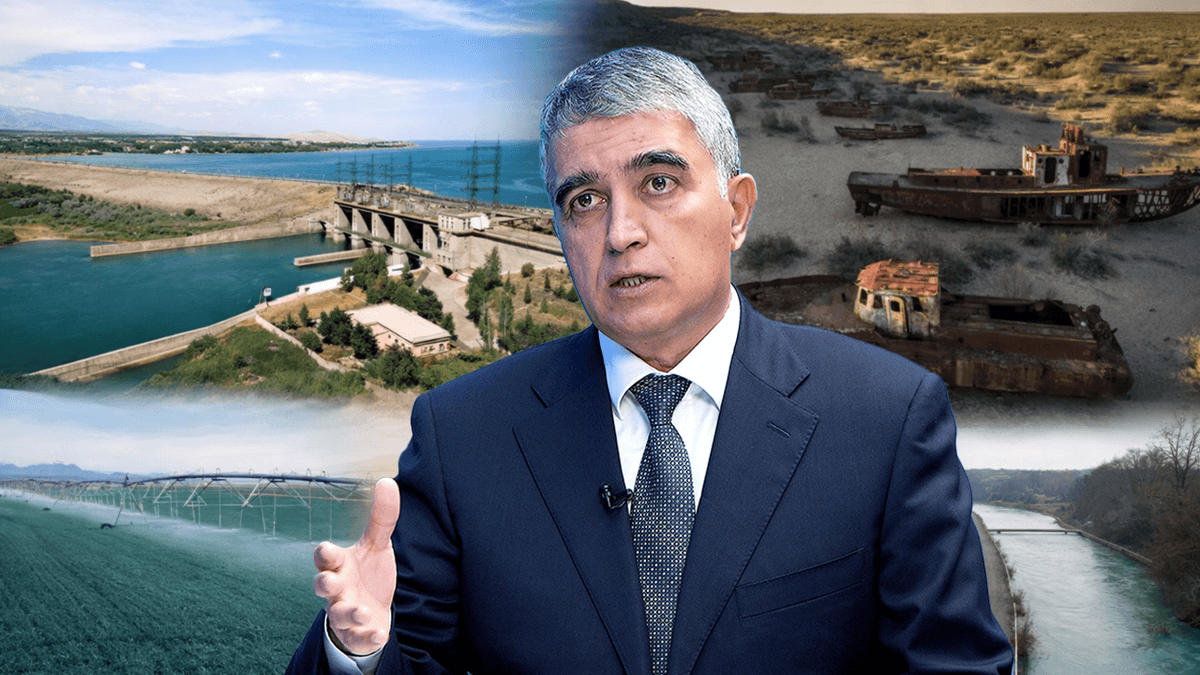
In an exclusive interview with Kun.uz, Uzbekistan’s Minister of Water Resources, Shavkat Hamroyev, provided an in-depth analysis of the country’s current water security situation. The discussion touched upon the seasonal irrigation forecast, the modernization of infrastructure, and delicate diplomatic negotiations regarding major regional projects such as the Qoshtepa Canal and the Rogun Hydropower Plant (HPP).
The Minister began by addressing the outlook for the current agricultural season. While spring has brought significant rainfall, Hamroyev emphasized that natural abundance is secondary to management. He noted that without proper infrastructure, including well-maintained canals and efficient irrigation pumps, water cannot reach the fields effectively. "Even if your father is a water master, dig your ditch deep," the Minister remarked, stressing that the priority is not just the volume of water, but the efficiency of its delivery.
A point of debate among experts has been whether Uzbekistan should focus on lining canals with concrete or shifting toward plastic piping. Hamroyev clarified that the ministry is utilizing both methods. He explained that since at least 30-40 percent of available water is currently lost to filtration and evaporation, concrete lining remains a vital tool in reducing these losses.
Turning to regional diplomacy, the Minister highlighted a significant shift in Central Asian relations. He noted that for the past decade, regional dialogue has been restored after years of silence. "We are together in our difficult days," he said, explaining that countries now operate on a basis of mutual benefit, such as Uzbekistan providing electricity in the winter in exchange for water releases in the summer.
Regarding the Aral Sea, Hamroyev offered a nuanced perspective on its desiccation. While many attribute the tragedy solely to Soviet-era water mismanagement, the Minister suggested that ecological factors played a larger role than is often acknowledged. He expressed skepticism toward the idea of diverting Siberian rivers to refill the sea, a concept occasionally revisited by some academics, calling such projects unrealistic and incorrect.
One of the most pressing issues discussed was the construction of the Qoshtepa Canal by the temporary government of Afghanistan. Hamroyev stated that while Afghanistan has a right to use the water, the critical issue is the specific volume of the withdrawal. He revealed that he has visited Afghanistan four times with a working group to negotiate these terms. According to the Minister, a withdrawal of 2 billion cubic meters would not significantly impact Uzbekistan, but if the volume reaches 4 billion cubic meters, the risk of water shortages in Uzbekistan’s agriculture becomes high. He added that while the project was initially slated for completion in 2028, progress has slowed due to technical challenges and electricity shortages required for water pumping.