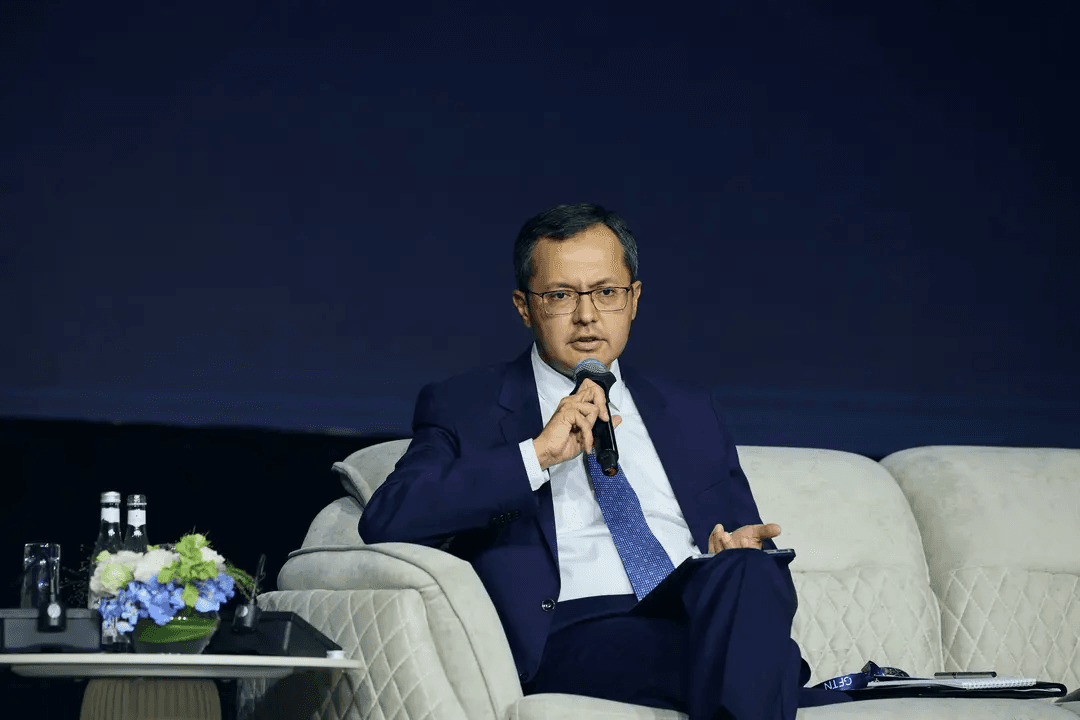
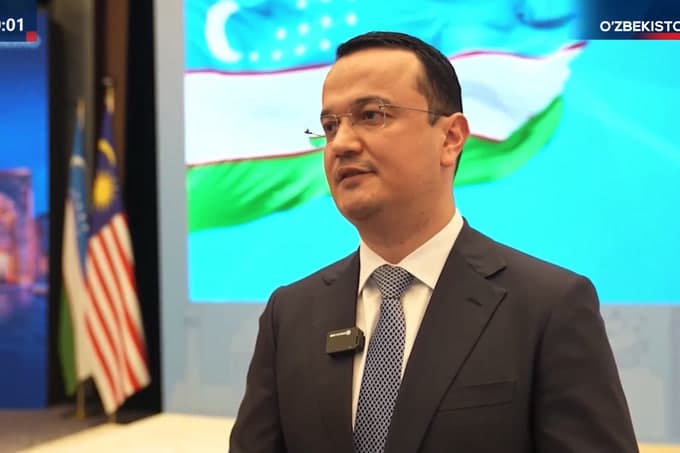
Speaking in an interview with the "Expert" project on the Alibaev.Politika YouTube channel, the minister addressed public debates regarding the country's borrowing trends, characterizing much of the debt as "essentially free money" due to highly favorable lending terms.
According to the minister, the funds are being secured from international partners on very attractive conditions, with repayment periods stretching between 20-25 and even 40-45 years at low interest rates. Kudratov argued that relying solely on the state budget to build necessary infrastructure would take decades. Instead, external borrowing allows the government to build roads, schools, hospitals, and energy networks today, ensuring that the population enjoys a higher standard of living immediately rather than in the distant future.
By the end of 2025, Uzbekistan’s state external debt-to-GDP ratio stood at 27.1 percent. Minister Kudratov pointed out that according to international standards, this figure is considered "very low and moderate." He emphasized that without these investments, the 7.7 percent GDP growth recorded last year would have been difficult to achieve. "Investors will not go where there are no roads, railways, electricity, water, schools, or hospitals," Kudratov noted, highlighting that debt creates the foundation for industrial growth.
To ensure the effective use of these funds, the minister detailed a rigorous oversight mechanism. At the direction of the President, law enforcement agencies, the Chamber of Accounts, and the Prosecutor General’s Office are involved in auditing projects. Furthermore, the Parliament exercises strict control, as every project financed under state guarantees must be approved by deputies. This system is intended to provide public and national oversight over how every dollar is spent.
Despite the minister's optimistic outlook, recent data shows that Uzbekistan’s total external debt, which includes both state and private sector liabilities, reached $75.4 billion by the end of the first three quarters of 2025. This reflects a record increase of $11.3 billion in just nine months, the highest growth since statistics began in 2013. The "private" portion of this debt largely consists of state-owned enterprises and banks, such as UzAuto Motors, Uzbekneftegaz, and the National Bank of Uzbekistan, which have actively issued debt securities in recent years.
The Ministry of Economy and Finance, along with the Central Bank, maintains that the debt level remains manageable. Central Bank Governor Mamarizo Nurmuratov has previously noted that while the absolute volume of debt is increasing, its proportion relative to the growing GDP remains stable. The government has also set a self-imposed limit on new annual external borrowing, capping it at $2.5 billion to maintain fiscal discipline while continuing to fund essential social and economic infrastructure.