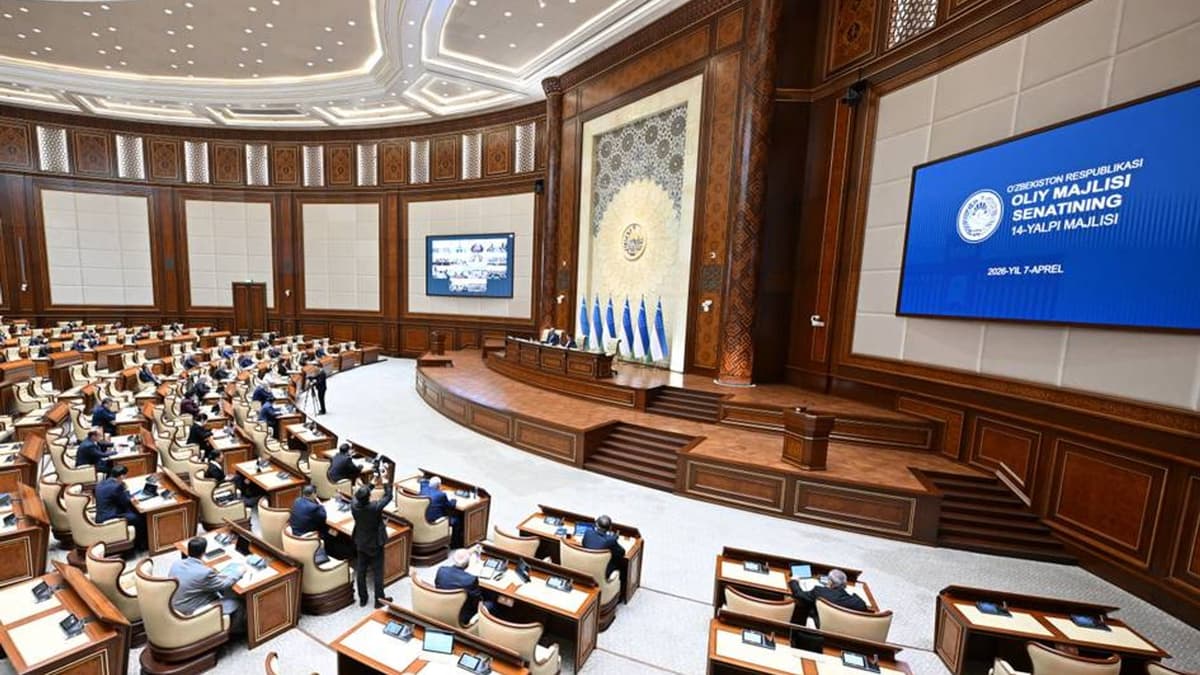
Anvar Tuychiyev, Chairman of the Senate Committee on Agrarian, Water Management Issues, and Ecology, noted that persistent challenges remain in ensuring environmental safety and maintaining air quality. Tuychiyev argued that the existing administrative code fails to provide a meaningful deterrent effect. As an example, he pointed out that despite fines ranging between UZS 20 million and UZS 41 million for unauthorized riverbed cleaning and bank reinforcement, nearly 300 deliberate violations were recorded in 2025 alone.
A significant flaw in the current system is that fines are typically imposed on individual officials rather than the companies themselves. This limits the financial impact on the entity and fosters a sense of impunity among business owners. "Enterprises that exceed permitted emission levels simply pay a UZS 2.8 million fine and continue operating as if nothing had happened," Tuychiyev said, noting that many industrial firms now view these penalties as a standard cost of doing business.
The Senate also addressed the issue of air pollution caused by greenhouses that burn hazardous waste, such as used tires, bitumen, fuel oil, and synthetic materials, instead of utilizing clean energy. To combat this, the proposed changes to the law "On Nature Protection" will introduce a new chapter dedicated to financial sanctions specifically for legal entities.
Under the new mechanism, if a company accepts responsibility, the National Committee on Ecology and Climate Change will impose sanctions directly. If a dispute arises or if the fine is not paid voluntarily within a one-month period, the case will be referred to the courts. Additionally, amendments to Article 88 of the administrative code will introduce strict penalties for the open burning of fuels and toxic materials in greenhouses and industrial premises. MPs stated that the new law would significantly enhance state environmental oversight and aid in preventing future violations.