





Additional features
-
Night mode

Uzbekistan real estate cools in April but year-to-date sales up 35%
Housing transactions in Uzbekistan fell by nearly half in April as the real estate market adjusted toward a balanced trajectory following a massive surge in March. Data from the Center for Economic Research and Reforms (CERR) reveals that 23.3 thousand property purchase agreements were registered across the country in April – a 1.9-fold drop compared to the 43.6 thousand deals recorded in March.
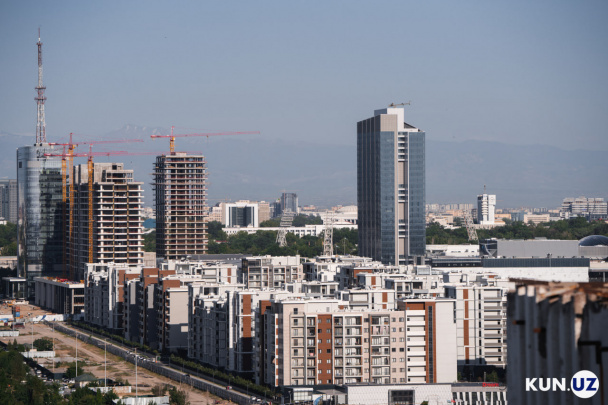
The April turnover also reflects a 4.7% decrease compared to the same month last year. Analysts note that the temporary spike in March was largely driven by buyers and sellers rushing to finalize transactions ahead of a new mandatory shift toward escrow accounts. The subsequent drop indicates a normalization of market activity rather than a broader downturn.
Despite the monthly contraction, cumulative data for the first four months of the year remains strong. Between January and April, total home sales surpassed 125 thousand transactions, marking a 34.8% increase year-on-year. Sales volumes rose across all provinces during this period, with the highest growth rates recorded in Syrdarya region at 50%, Tashkent city at 46%, and Andijan region at 42%.
Discrepancies exist between institutional metrics, as the CERR analysis does not isolate escrow-registered agreements from standard transactions. Separate figures from the Central Bank of Uzbekistan indicate that 13.6 thousand housing sales were either finalized or undergoing registration in April. Experts suggest the variation stems from alternative transactions, such as gifts and inheritances, which do not fall under the strict investment contract rules governing the escrow system.
In the secondary housing market, nationwide property prices rose by an average of 8.5% in US dollar terms compared to April last year. However, this annual growth rate indicates a slight cooling when compared to the 10% annual increase recorded in March. Regionally, the highest annual price spikes on the secondary market were documented in Syrdarya at 20%, Surkhandarya at 16.5%, and Bukhara at 16.3%. Since the beginning of the year, secondary market prices have grown by an average of 2.9% nationwide.
Tashkent remains the country's most expensive property market. The average price for a square meter of secondary housing in the capital climbed 2.3% within a month, rising from $1,124 to $1,150. Outside the capital, the highest secondary market prices per square meter were observed in the Samarkand region at nearly $900, followed by the Tashkent region at $690.
On an annual scale, secondary housing prices in Tashkent went up by 6.1%. The most pronounced price hikes were registered in Mirzo Ulugbek district at 9.2%, Mirabad district at 9%, and Chilanzar district at 8.3%. Growth was slightly more aggressive in the primary housing segment, where new apartment prices in Tashkent grew by 8.8% compared to April 2025. Yunusabad, Mirzo Ulugbek, and Bektemir districts led the capital’s primary market growth, with square meter costs rising by 17.3%, 16.8%, and 11.3% respectively.
Meanwhile, the capital's rental market outpaced property sales growth. The average monthly rent in Tashkent surged by 3.4% in April alone, reaching approximately $9.2 per square meter – a 9.1% increase compared to the same period last year. The highest rental rates remain concentrated in Mirabad, Shaykhontohur, and Yakkasaray districts, hovering around $11 per square meter. In terms of annual rental appreciation, Yashnobod, Bektemir, and Yunusabad districts experienced the steepest increases at 18.2%, 16.7%, and 14.3% respectively.
According to a Central Bank review, real estate price appreciation has slowed down compared to 2025 due to expanding construction supply. Nevertheless, long-term demand is expected to remain firm, supported by rapid demographic growth, rising household incomes, and a persistent structural housing deficit.
The ratio of available housing units to the total number of families across the country fell from 0.79 in 2024 to 0.73 in 2025, meaning there are currently only 73 separate housing units available for every 100 families. This decline demonstrates that population growth continues to outpace residential construction.
Concurrently, public purchasing power has improved significantly, with average wages expanding by 19% and per capita incomes rising by 16.6% – both surpassing the growth rate of property prices. As a result, the national house-to-income ratio has declined. In Tashkent, this affordability index improved from 1.77 to 1.38, driven by an average monthly salary of UZS 10.7 million, while the average cost of a square meter of housing stood at UZS 14.9 million.

Related News

18:55
Government tightens urban planning regulations with mandatory master plan registry
11:32 / 15.07.2026
Lower house backs bill criminalizing occupancy of unfinished apartment buildings
12:28 / 13.07.2026
Central Bank: Strong housing demand pushes up prices across Uzbekistan
15:51 / 06.07.2026