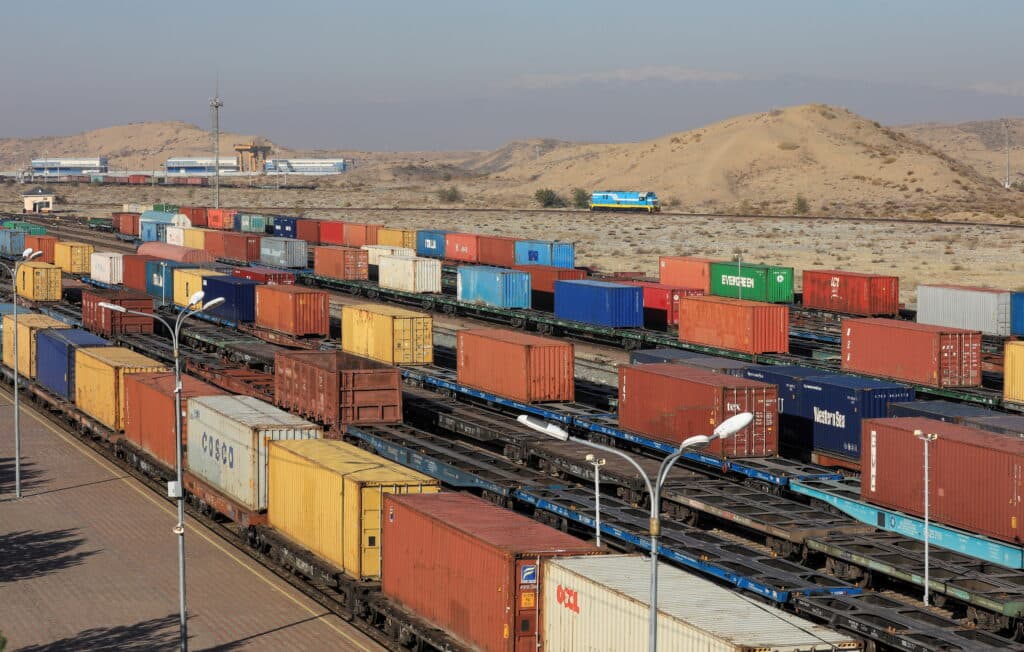
According to a Pakistani media, the two countries are expected to sign a protocol amending the Pakistan–Uzbekistan Transit Trade Agreement during the visit of Uzbekistan's Deputy Prime Minister to Pakistan on July 21. The revised protocol will formally incorporate the China corridor into the agreement, allowing cargo to move through Pakistan's Sost Dry Port, western China and onward to Central Asia.
According to Pakistani officials cited by the media, the amendment is intended to diversify transit options and ensure uninterrupted trade despite the changing regional security environment.
Under the revised framework, Pakistan will use the China corridor as an alternative route for exports destined for Central Asian countries, including Uzbekistan. Uzbekistan, in turn, will retain access to Pakistan's seaports through the updated transit arrangement.
The move comes as Pakistan faces growing difficulties using its traditional western trade routes. For years, the shortest and most commercially viable overland link between Pakistan and Uzbekistan passed through Afghanistan, with the proposed Uzbekistan – Afghanistan – Pakistan transport corridor also envisioned as the foundation for a future railway connecting Central Asia with the Arabian Sea.
However, trade through Afghanistan has been severely disrupted following a sharp deterioration in relations between Islamabad and Kabul. Pakistan closed its main border crossings, including Torkham and Chaman, after cross-border clashes in October 2025, and transit through the crossings has remained suspended.
Pakistan had also sought to expand transit through Iran earlier this year by opening new corridors linking its ports with Central Asia while bypassing Afghanistan. However, renewed military escalation involving Iran has further complicated the reliability of that route, prompting Islamabad to place greater emphasis on the China corridor.
While the new route offers an alternative that avoids both Afghanistan and Iran, it is expected to be longer and more expensive than the direct Afghan corridor because of additional border crossings, handling costs and transit time. As a result, it is likely to serve primarily as a strategic backup rather than a full replacement for the Afghan route.
Uzbekistan is Pakistan's second-largest trading partner among the Central Asian republics. According to the report, bilateral trade reached $445.9 million in 2025. Pakistan exported goods worth $120.9 million to Uzbekistan, while imports from Uzbekistan totaled $325 million.