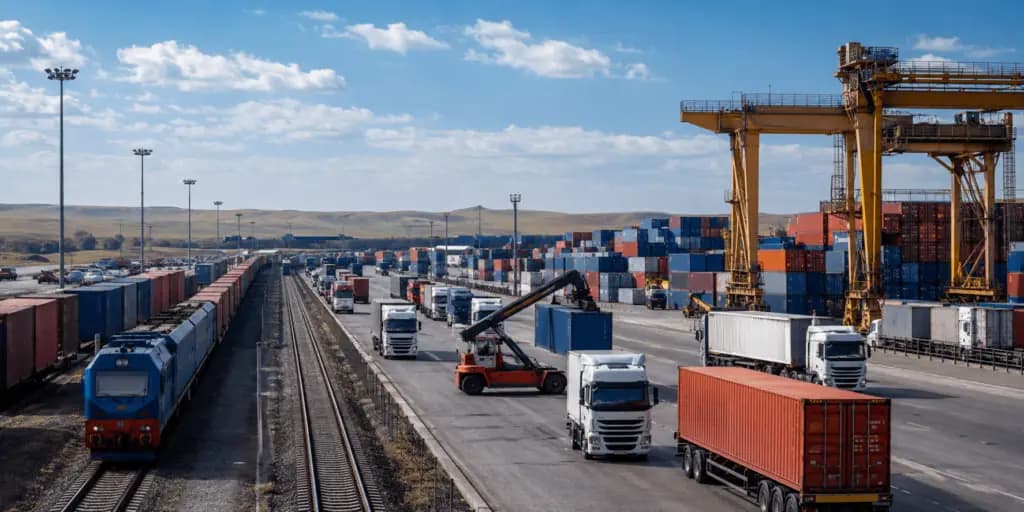
Kazakhstan and Uzbekistan’s railway administrations have agreed on preferential rates for the transit of fertilizers and petroleum products through Kuryk.
According to Bakhytkerei Alibekov, deputy general director of Kuryk Port LLP, the port has agreed on reduced tariffs for transporting petroleum products from Uzbekistan towards Georgian ports.
Kuryk’s main advantage is its geographical location, Alibekov said. The port is among the closest maritime gateways to Kazakhstan’s southern regions and Uzbekistan.
Following dredging work carried out in 2024, the time required to process a ferry at Kuryk was reduced from 20 hours to 12 hours. The ferries can also now carry an additional 500 tonnes of cargo.
The agreement is expected to support Uzbekistan’s exports to European markets through the Caspian Sea and the Caucasus.
Uzbekistan expands use of Kazakhstan’s Caspian ports
Around 50,000 tonnes of transit cargo bound for Uzbekistan and more than 1,700 containers passed through the Port of Aktau during the first half of the year, according to Arman Zhakupov, executive director of the Aktau International Sea Trade Port.
He said the port was fully open to Uzbek import and export cargo, while container trains can travel at speeds of up to 1,000 kilometers per day.
Jamoliddinkhuja Abdikarimov, Uzbekistan’s consul general in Aktau, said Mangystau region, home to four ports, was an important gateway for Uzbek exports seeking access to European markets. The Port of Aktau has already provided Uzbek exporters with temporary storage facilities, he said.
Aitkali Nurmagambetov, director of the Aktau International Container Hub, also pointed to the potential for future cooperation with Uzbek container terminals, including the Chukursay Container Hub.
The Trans-Caspian International Transport Route connects Central Asia with the Caucasus, Türkiye and Europe. The volume of Uzbek cargo handled through the ports of Aktau and Kuryk increased by more than 60% in 2025.
Aktau is Kazakhstan’s largest maritime transport hub, with an annual handling capacity of about 12 million tonnes. Together with Kuryk, the country’s Caspian maritime infrastructure has a combined capacity of about 22 million tonnes.