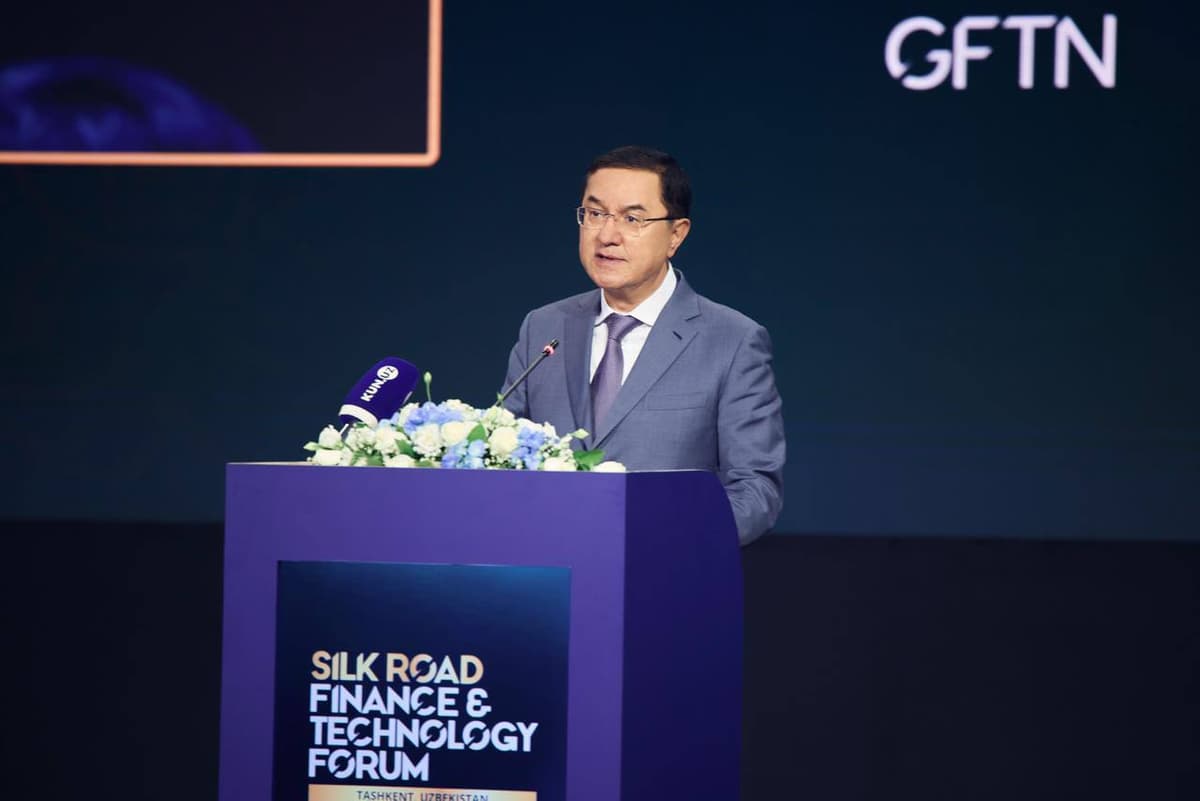
Speaking at the Silk Road Finance & Technology Forum in Tashkent on August 24, Kuchkarov said the government would continue working to bring inflation down to its target level, maintain fiscal discipline and ensure sustainable public debt.
According to the minister, Uzbekistan’s economy has grown at an average annual rate of around 6–7% in recent years. GDP per capita has increased from about $1,900 to $4,600, helping the country move into the upper-middle-income group.
“Over this period, the size of our economy has tripled, with GDP increasing from around $60 billion to $180 billion,” Kuchkarov said.
He also pointed to a decline in inflation, which has fallen from double-digit levels several years ago to single digits. Inflation is expected to reach around 6.5% this year, while the government aims to bring it down to 5% next year.
External public debt currently stands at around 27% of GDP, while the budget deficit has remained below 3% of GDP in recent years, Kuchkarov said.
The minister also noted improvements in external assessments of Uzbekistan’s economy, including upgrades to the country’s sovereign credit ratings and continued growth in foreign direct investment.
Looking ahead, the government will focus on reducing inflation to its target, preserving budget discipline, maintaining sustainable debt levels and ensuring a favorable and predictable environment for investors and market participants.
“We will work towards achieving an investment-grade credit rating, completing Uzbekistan’s accession to the World Trade Organization, further reducing the state’s presence in the economy and continuing market reforms,” Kuchkarov said.
He said these measures were expected to strengthen the private sector, deepen Uzbekistan’s integration into the global economy and create more opportunities for both domestic and foreign investors.
Kuchkarov also highlighted the development of the financial system and financial technologies as a key part of the country’s structural reform agenda. Uzbekistan aims to build a modern, competitive and inclusive financial system that is closely connected to the global economy.