Russia's growing influence in Afghanistan: What does it mean for Central Asia?
|22:10 / 26.03.20256,18116 min
The withdrawal of American troops from Afghanistan has triggered a new wave of competition among Eurasia’s leading powers for access to Afghanistan's markets and transit potential. Situated in the heartland of the continent, Afghanistan serves as a vital link facilitating regional connectivity between Central and South Asia, as well as the Middle East and China. As such major powers of the region as China and India are increasingly engaged with Afghanistan, Russians seem to be also actively leveraging strategic partnerships, geopolitical positioning, and access to Afghanistan's substantial market of 41-million people.
Amid the Ukrainian crisis and growing isolation, Russia has redirected its focus towards strengthening relations with countries in the Global South. Afghanistan, with its pivotal location and logistical potential, presents itself as a promising partner for Moscow. The Russian leadership appears committed to fostering closer political ties and expanding trade and economic relations with South Asian nations, where Afghanistan plays a crucial role as a transit corridor. On a broader scale, amidst confrontation with the West, Russia seeks to consolidate its position in Eurasia, with Afghanistan occupying a crucial geostrategic position in this equation.
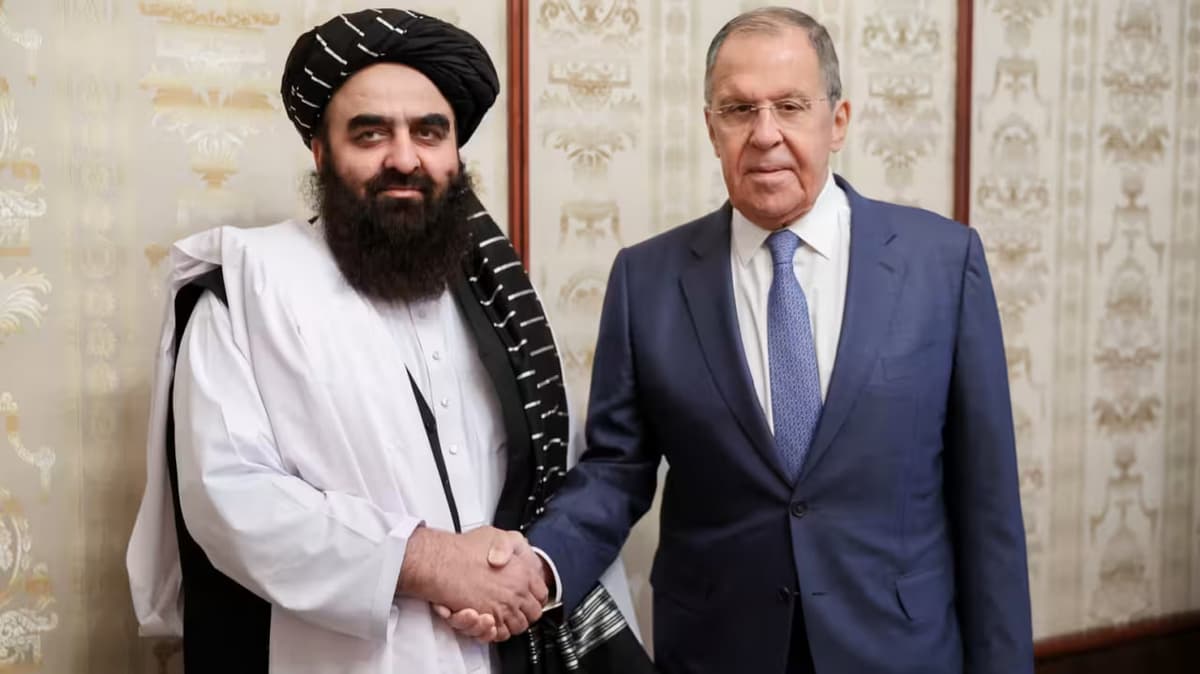
Russia has since adopted a pragmatic approach to relations with Afghanistan under the Taliban following U.S. withdrawal and it maintained its embassy in Kabul. Furthermore, in late December 2024, the Russian leadership signed a law enabling the potential removal of the Taliban from Russia’s list of terrorist organizations. In November last year, Russian Security Council Secretary Sergei Shoigu visited Afghanistan, making statements about developing transport and economic relations. These developments appear to lead to potential delisting of Taliban from a terrorist organization in 2025, paving the way for deeper engagement between Russia and Afghanistan.
Several key areas are slowly emerging in Russia’s pragmatic relations with the Taliban-ruled Afghanistan. Firstly, trade turnover between Russia and Afghanistan has exceeded $1 billion. Russia's main exports include petroleum products, wheat, and agricultural machinery, while Afghanistan primarily supplies dried fruits, textiles, and carpets. In August last year, the two sides expressed intentions to expand agro-industrial cooperation, aiming to increase trade turnover to
, collaboration began with a supply of petroleum products, signaling the expansion of energy partnerships between the two countries.
Secondly, Russia is also interested in Afghanistan's vast natural resources, including lithium, copper, and rare earth elements. Russia's interest might be driven by the global rise in demand for lithium, a key component in battery production, and rare earth elements essential for high-tech industries. Intense competition is anticipated among key Eurasian players, such as India, China, and Russia, for access to Afghanistan's mineral wealth.
Thirdly, Russia is also actively engaged in a humanitarian assistance in Afghanistan. In December 2024, Russia delivered 30 tons of humanitarian aid to Kabul under the “People Together Through the Years” project. Through such initiatives, Russia actively employs humanitarian aid as a “soft power” tool to strengthen ties with Afghan authorities. Ostensibly, with these efforts Russia seems eying to overcome historical grievances Afghans suffer from the Soviet-Afghan war.
China factor
China has emerged as a close partner of Afghanistan, capitalizing on its logistical and economic potential while increasingly influencing Kabul’s political decisions, particularly concerning Pakistan. Following the withdrawal of U.S. and NATO forces, Afghanistan seems to be transitioning into China’s economic sphere of influence. Russia, as one of Eurasia’s leading powers, may seem to view China as a competitor in the race for economic influence in Afghanistan. While China seeks to secure the Afghan market and utilize its logistical potential within the framework of the Belt and Road Initiative, Beijing leans towards Islamabad in Afghan-Pakistani relations. This dynamic poses challenges for Russia: it risks losing a promising market and faces potential isolation of Afghanistan from South Asia, fueled by Beijing's support for Pakistan. To reclaim this market and maintain Afghanistan’s stability as a gateway to South Asia, Russia is likely to deepen ties with the Taliban authorities. In this context, Beijing and Moscow may emerge as Afghanistan’s primary political and economic partners, though a renewed “Great Game” over trade and economic influence is not out of the question.
The development of a competitive scenario in Afghanistan, where major players vie for markets and mineral resources, could destabilize the broader Central Asian region, undermining its political stability and economic prospects.
India-Pakistan factor
Beyond Afghanistan's political and market advantages, Russia is also drawn to its logistical potential, which offers access to the energy markets of Pakistan and India. In 2024, trade between Russia and India reached over $66 billion, a fivefold increase since the onset of the Ukraine conflict, with India becoming Russia’s largest oil buyer. Meanwhile, Pakistan, traditionally aligned with the U.S., is emerging as a significant economic partner for Russia, particularly in agriculture and food supplies. For instance, in 2024, Russia became the leading supplier of wheat and flour to Pakistan.
To further these interests, Russia supports the construction of the Trans-Afghan Railway. This project aligns with Russia’s broader goal of strengthening its global, particularly Eurasian, standing. The railway and Afghanistan's transport infrastructure reconstruction would not only grant Russia access to Indian and Pakistani markets and ports but also enhance its geostrategic position in Afghanistan and South Asia. This will also strengthen the role of Central Asia as a transit territory.
The U.S. factor
Russia’s rapprochement with the Taliban reflects an anti-American narrative, positioning itself as a counterweight to U.S. policies in Afghanistan. Russian media has framed the U.S. withdrawal as a failure, lauding the Taliban as victorious fighters against U.S. and NATO forces. Supporting the Taliban allows Russia to project itself as an independent actor, free from Western influence.
The political and economic convergence of Russia and Afghanistan, along with China’s growing ties with Kabul, is straining U.S.-Afghan relations. This alignment could result in Russia and China becoming the leading global powers partnering with Central Asia, significantly altering the regional balance of power and undermining the multivector policies pursued by Central Asian states.
Challenges
Afghanistan presents not only political and transport-economic opportunities for strengthening Russia's position on the continent but also poses security challenges for Russia and its interests in Central Asia due to the socio-political situation in certain aspects.
First, despite three years of Taliban rule, the movement has yet to fully establish control over the country and ensure internal security. Afghanistan remains a hub of activity for terrorist organizations such as ISIS-Khorasan and Al-Qaeda. Following the events at Crocus City Hall in Moscow, Russia began viewing the Taliban as a significant partner in combating terrorism. It seems, Moscow seeks to establish close cooperation with the Taliban to contain ISIS-Khorasan in the region, strengthen ties with Afghan authorities, and prevent terrorist threats on its own territory.
Additionally, Russia supports the Taliban's efforts against ISIS-Khorasan and occasionally acts as an “advocate” to bolster Afghanistan's foreign policy image. For instance, the December 11, 2024, terrorist attack, which claimed the life of Afghanistan's Minister for Refugee Affairs, Khalil-ur-Rahman Haqqani, was portrayed in Russian media as a “tragedy” underscoring the shared threat posed by ISIS-Khorasan to both Russia and Afghanistan. Russian outlets emphasized the need for joint efforts to counter terrorist activity, a stance aimed at strengthening relations with the Taliban authorities.
Second, stability in Afghanistan directly impacts Russia's interests in Central Asia, where it maintains military bases. Amid the Ukrainian crisis, Moscow is keen to avoid new threats in Central Asia, making Afghanistan a critical aspect of its regional policy. Despite the Taliban's rise to power in Kabul, Russia has reportedly not increased its military presence at bases in Central Asia. One reason for this restraint is the absence of radicalization export by the Taliban to neighboring countries. Instead of expanding its military footprint, Russia has prioritized diplomatic tools to foster relations with the Taliban.
Russia's security policy in Afghanistan may have a dual impact on the situation in Central Asia:
1. A partnership between Russia and Afghanistan could bolster counterterrorism measures in the region. Central Asian countries might benefit from the assistance of one of the continent's leading powers in combating terrorism, a common threat to both the region and Russia.
2. Enhanced security cooperation between Russia and Afghanistan could significantly increase Russian influence in the region.
Central Asia and water balance
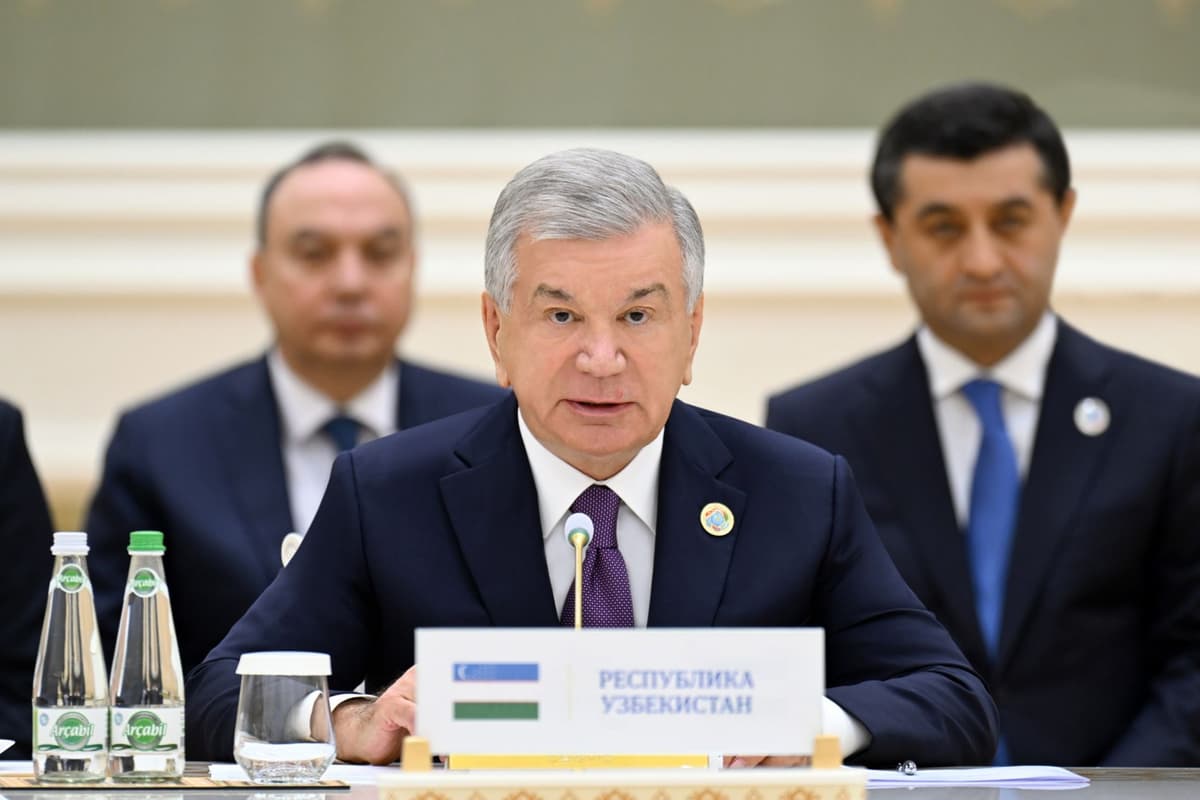
The Russia’s policy toward Afghanistan largely aligns with the interests of Central Asian countries. A key aspect of this alignment is Moscow's foreign policy perspective, which views Afghanistan as part of Central Asia. Unlike most nations, which classify Afghanistan as part of South Asia, Uzbekistan and other countries in the region consistently emphasize its belonging to Central Asia. This shared position creates opportunities for Uzbekistan to secure Russia's support in advancing its interests regarding Afghanistan. Specifically, it opens the door for collaboration in developing a unified and coordinated international strategy on Afghanistan, with Russia potentially acting as an ally to Tashkent.
Another significant aspect of Russian policy in Afghanistan that impacts Central Asia concerns the use of transboundary water resources. Despite Uzbekistan's extensive diplomatic efforts, the issue of constructing the Qosh Tepa Canal in compliance with international standards remains unresolved. Afghanistan appears to view this project not only through an economic lens but also as a foreign policy tool to gain international recognition.
Under these circumstances, Central Asian states could effectively leverage Russia's diplomatic support to urge Afghan authorities to adhere to international norms on water resource management. Moscow's involvement in this matter could significantly influence the Taliban government's decisions.
Conclusions
Russian-Afghan relations have entered a new phase following the withdrawal of U.S. forces from Afghanistan. Russia is currently considering removing the Taliban from its list of terrorist organizations. Strengthened cooperation with Afghanistan offers Russia several strategic advantages:
1. Access to a new market for goods and services;
2. Transit access to South Asian countries such as India and Pakistan;
3. Enhanced regional security measures and counterterrorism efforts;
4. Increased strategic influence in the Eurasian region.
Russia’s policy in Afghanistan could have a profound impact on Central Asian countries, including Uzbekistan. First, Russia could act as a partner in forming a unified regional strategy toward Afghanistan. Second, Moscow could facilitate the Taliban's compliance with international norms on water usage. Third, Russian-Afghan cooperation could bolster Central Asia's transit potential. Fourth, such collaboration might intensify counterterrorism efforts in the region.
However, the strengthening of Russian-Afghan relations also presents certain dynamics. Russia's growing engagement in Central Asia and Afghanistan may lead to an expanded political and economic presence, influencing the region's balance of power.