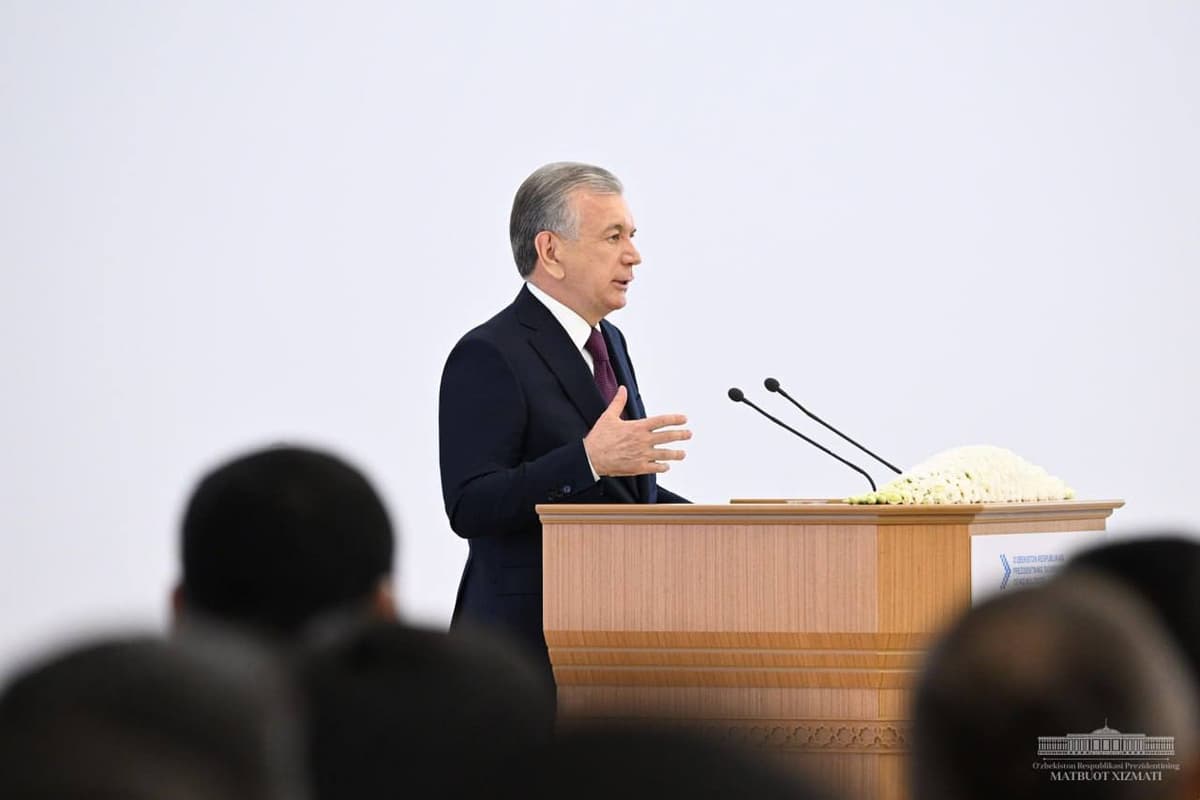
“Our economy once needed some protection in a certain sense. If we continue along this path, our opportunities will be limited,” said the president.
Creating a competitive environment in the domestic market and expanding opportunities to access international markets were highlighted as key topics in the open dialogue with entrepreneurs.
The President noted that Uzbekistan’s seven-month exports have increased by 13% to over $10 billion, with 1,610 new companies entering foreign markets.
He mentioned that significant steps have been taken toward WTO membership by 2026.
“Joining this organization is a well-considered and long-term choice, as well as an integral part of our reforms. However, some people have doubts about this, and others are concerned that 'companies will be tested, imports will flood the market.'
One must understand that import duties will remain. Therefore, we are negotiating with the members of the organization,” the president stated.
Shavkat Mirziyoyev emphasized that the future involves creating a competitive environment and a trade and industry policy focused on exports. “Our economy once needed protection in a certain sense. Continuing along this path will limit our opportunities. Economic growth will not be as expected if we do not integrate into global production chains,” he added.
The President highlighted that WTO membership would relieve Uzbekistan from extra payments or restrictions in international transit cargo transport.
“This will certainly give us an additional boost to be competitive,” said the president.
Overall, it was emphasized that improving product and service quality and adhering to international standards is necessary to secure a good position in foreign markets.
“For example, without proper pesticide control, it will be impossible to achieve the set target of $10 billion in agricultural product exports by 2030. Our products will continue to perish if we do not find a market,” said Mirziyoyev.
Significant changes in food safety are planned for this year. This includes reducing duplicative powers of quarantine, veterinary, sanitary-epidemiological control, and standards organizations, and limiting repeated inspections of entrepreneurs.