The first-instance court had previously sentenced the ENT surgeon to five years of restricted freedom and banned him from practicing medicine for two years. However, the appellate court overturned the conviction, finding no criminal misconduct in the surgeon’s actions.
What happened?
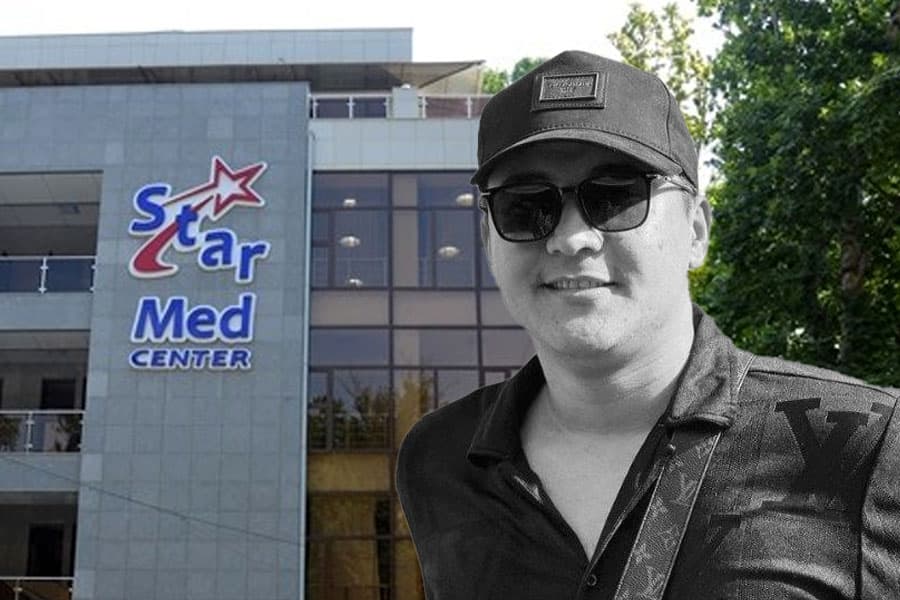
According to the court ruling reviewed by Kun.uz, during the operation at the private Star Med Center, the anesthesiologist (whose name is known to the editorial team) was speaking on the phone during critical moments of the procedure. Records showed that he had two non-medical phone conversations – one lasting 122 seconds at 14:54 and another lasting 71 seconds at 15:19. As a result, he failed to detect a rise in Mannopov’s body temperature during the surgery.
At 15:40, when the pulse oximeter on Mannopov’s finger stopped working, the anesthesiologist moved it to another finger and belatedly discovered that the patient’s temperature had spiked to 38.7°C. By that time, the anesthesia had already triggered severe metabolic changes in the patient’s body. Mannopov’s heart first stopped at 16:30, sending him into a coma.
In an attempt to reverse the damage, the anesthesiologist administered various drugs without proper coordination or full consideration of their side effects. Mannopov's heart stopped again at 17:10 and once more at 17:53. He fell into a deep coma and never regained consciousness. He died at 3:20 a.m. on March 5, 2023, from acute cardiovascular, respiratory, renal, and hepatic failure, DIC syndrome, and swelling of the brain and lungs.
According to the forensic medical examination dated March 30, 2023, the cause of death was a severe case of anaphylactic shock.
Was Novocaine the cause?
The ENT surgeon appealed the initial verdict, claiming he had conducted a full pre-surgery assessment of the patient, that no errors in his actions were proven, and that he had been wrongfully convicted. He requested a full acquittal.
A senior ENT specialist from the Ministry of Defense testified that in his experience, body temperatures rising to 40–43°C during ENT procedures are extremely rare and that the death could not be attributed to a mistake by the surgeon. He suggested that the anaphylactic shock was more likely caused by an external factor – a strong allergic reaction to a foreign substance, possibly a medication.
While the exact drug could not be determined with certainty, Novocaine – a local anesthetic injected into the nasal mucosa during the procedure – was considered a likely cause. It is known to be among the most allergenic anesthetics. Although medical records showed no known allergies, it was confirmed that the patient had denied any history of allergic reactions during his pre-surgery interview.