Earlier, Qobil Tursunov, deputy chair of the Senate Committee on Budget and Economic Issues, had sent a formal inquiry to Minister of Digital Technologies Sherzod Shermatov regarding registration issues in UzIMEI.
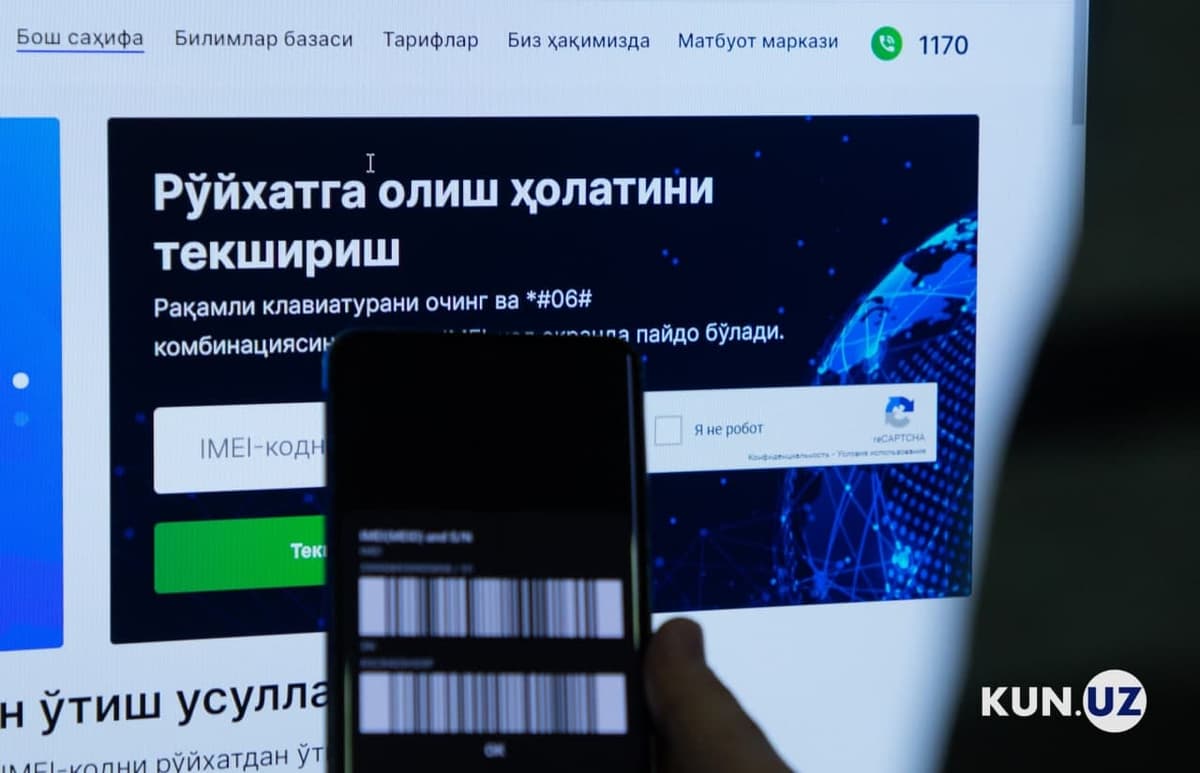
The senator asked the minister to provide a substantiated explanation about measures being taken to address technical problems on the platforms uzimei.uz, my.gov.uz and the BIRDA mobile application, as well as efforts to reduce bureaucratic requirements for registering IMEI2 codes in the UzIMEI system.
In his reply, Minister Shermatov presented the following points:
- When mobile devices are imported by individuals without a customs declaration, additional charges are linked not to IMEI registration fees but to customs duties.
- Technical problems with registering devices via uzimei.uz, my.gov.uz, or the BIRDA app are resolved promptly, and all necessary measures are being taken to ensure stable operation.
- According to existing legal regulations, all IMEI codes must be registered.
- Further steps will be taken to improve the IMEI registration system, increase convenience for the public, reduce bureaucratic requirements, and continue systemic reforms.
The ministry also outlined achievements since the system was introduced in 2019:
- The number of officially imported devices rose from 575,800 in 2019 to 3.5 million in 2024 – a 6.2-fold increase.
- Registered IMEI codes grew from 1.6 million in 2019 to 8.4 million in 2024 – a 5.2-fold increase.
- Official importers now account for 80% of imported devices, while individuals account for 20% (compared with 60% and 40% last year). The number of importers increased from 105 in 2020 to 196 in 2025, significantly reducing unofficial imports.
- Customs payments for imported devices rose from UZS 37.5 billion in 2019 to UZS 621.2 billion in 2024 – a 16.6-fold increase.
The number of public complaints to the ministry about IMEI registration fell from 1,028 in 2021 to 95 in 2024 – nearly an 11-fold drop.
The system is also widely used in law enforcement operations. Together with the Interior Ministry, 20,300 stolen, lost, or crime-related devices have been placed on the “blacklist,” 18,800 devices have been removed from it, and 47,400 devices have been placed under monitoring.