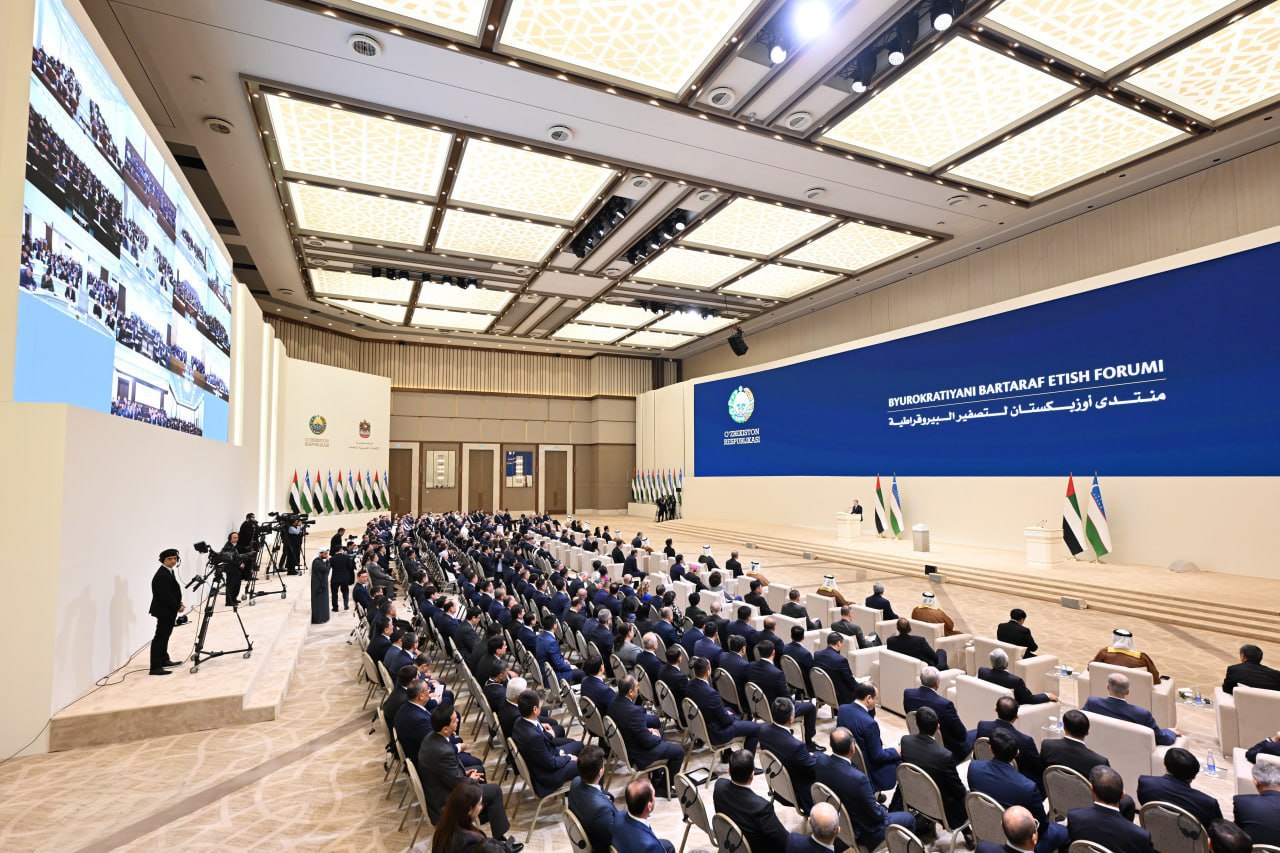
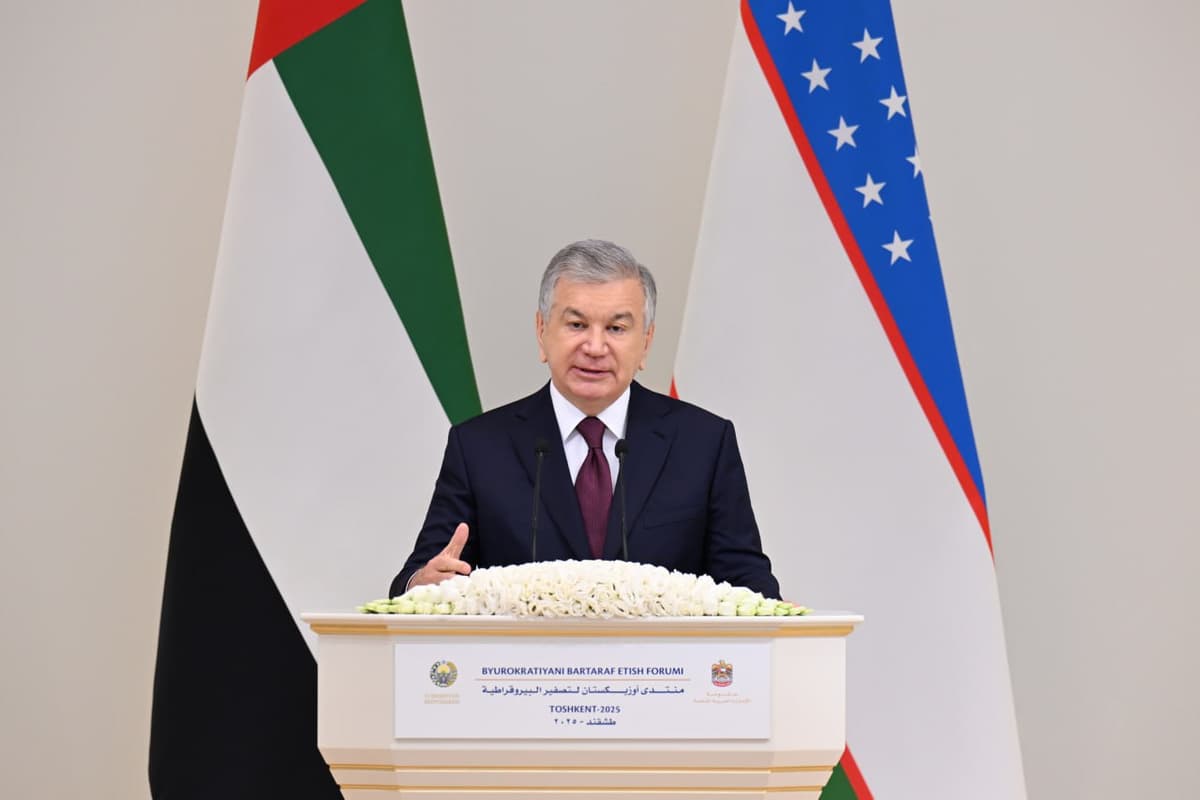
The forum, dedicated to reducing bureaucratic hurdles, has officially started in Tashkent. High-ranking representatives from the governments of Uzbekistan and the United Arab Emirates, foreign states, international organizations, and expert communities are participating.
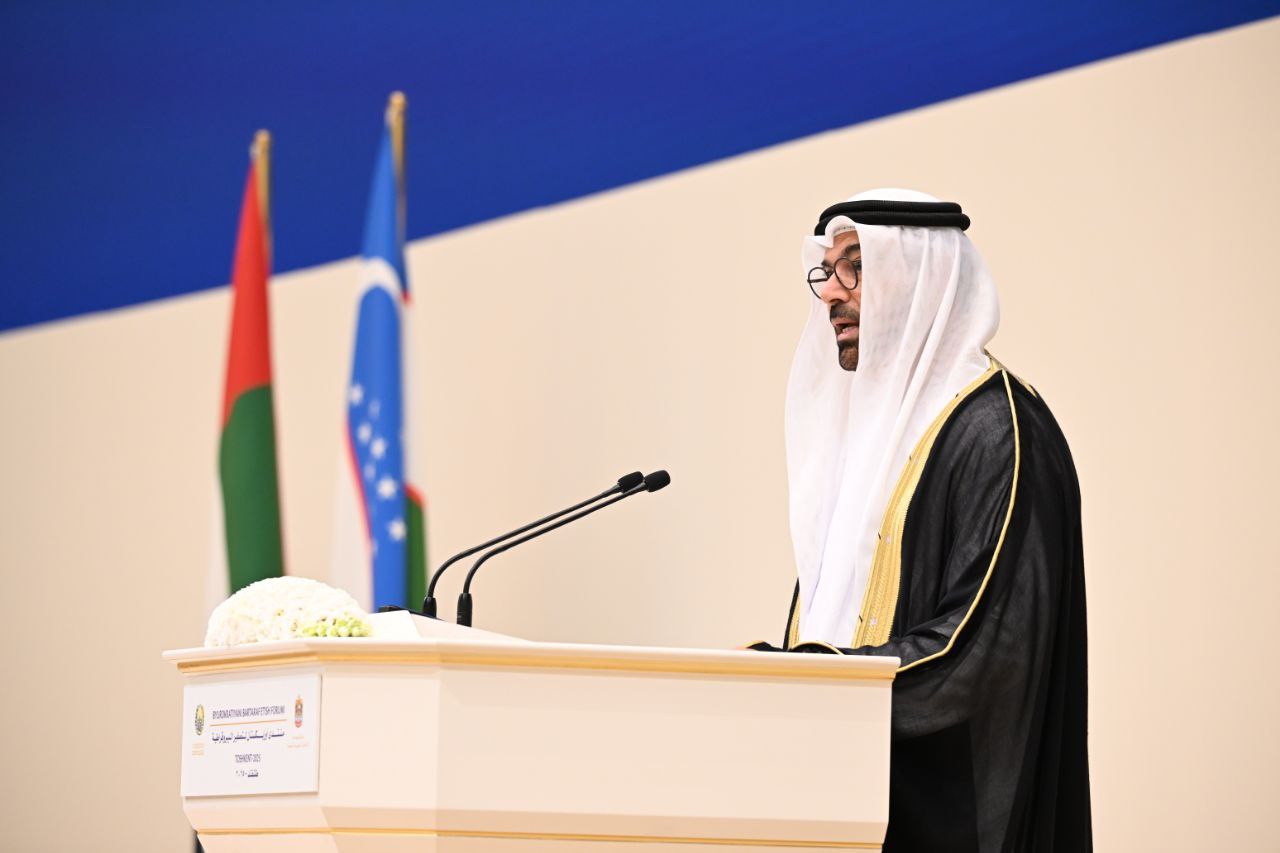
In his speech, the president expressed gratitude to UAE Minister of Cabinet Affairs Mohammad bin Abdullah Al Gergawi for supporting the forum and conveyed congratulations to the UAE leadership and people on the occasion of the country’s founding.
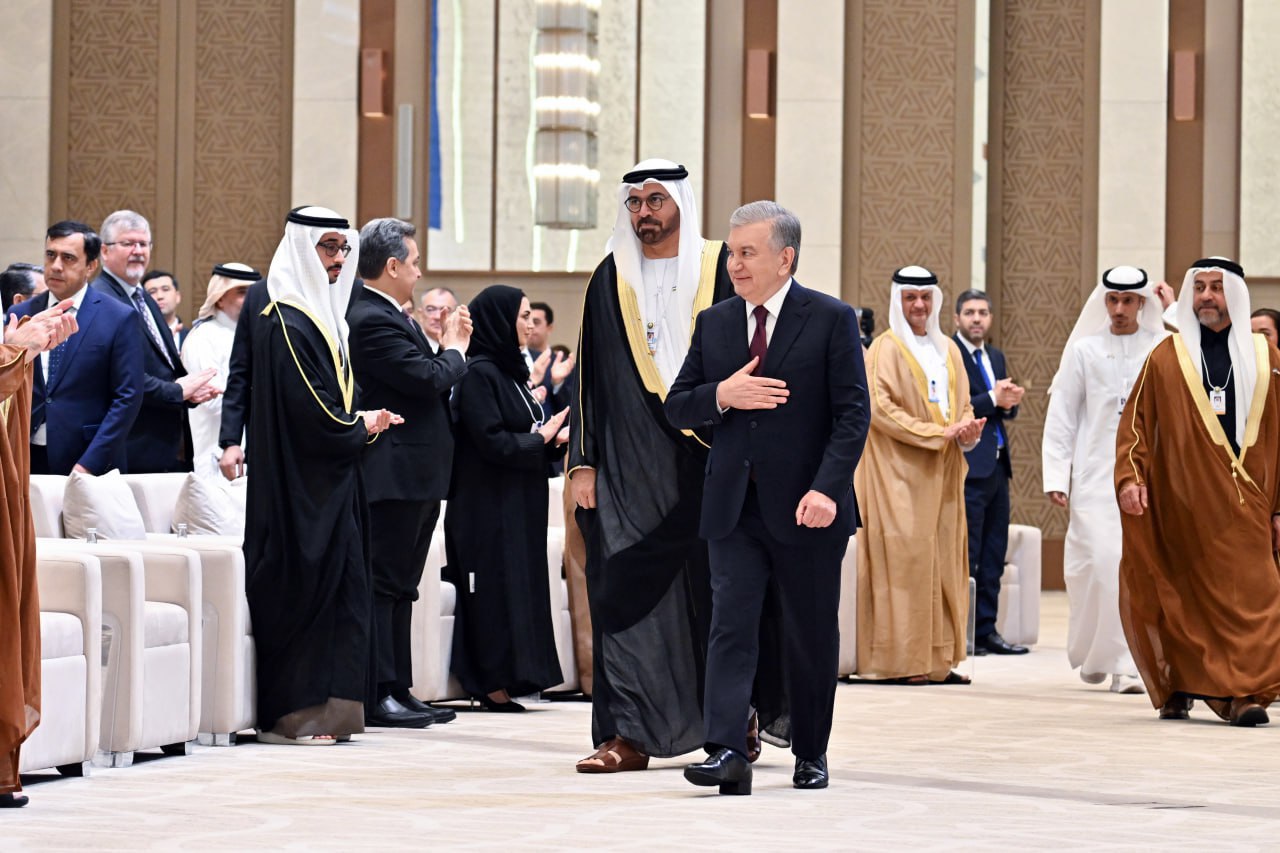
President Mirziyoyev outlined the philosophy of public administration in the “New Uzbekistan”: “In building New Uzbekistan, we follow the human-centered idea that government institutions should serve our people, not the other way around.”
He highlighted recent reforms aimed at reducing bureaucracy, simplifying public services, and implementing digital solutions. Key achievements include:
- The number of state services has increased from 444 in 2017 to 1,040 today;
- More than 55 million operations have been carried out, nearly ten times the previous volume;
- Over 90 services are provided in proactive and composite forms;
- Composite birth-related services now serve nearly 1 million citizens annually;
- Social benefits and age-related pensions are automatically assigned without citizens having to apply;
- Real-time access has been created for 30 types of services;
- Nearly 8 million services have been automatically provided this year alone;
- Transitioning document exchange to electronic format has saved citizens 23 billion UZS annually.
Significant measures have also eased conditions for businesses: over 160 licenses and permits have been canceled, more than 150 are now issued electronically, and the practice of requesting 140 types of documents has been abolished. The “Start a business in 15 minutes” principle is being implemented.
The president noted that nine decrees and resolutions on reducing bureaucracy have been adopted in recent years, and platforms such as the “Single Portal”, “Digital Government”, and public service centers are delivering tangible results.