





Additional features
-
Night mode

Central Bank attributes dollar decline to rising exports, remittances and investment
Uzbekistan’s national currency continued its upward trajectory in November, strengthening against the US dollar for the seventh month in a row amid increased foreign currency inflows and improved external balances, according to Central Bank data.
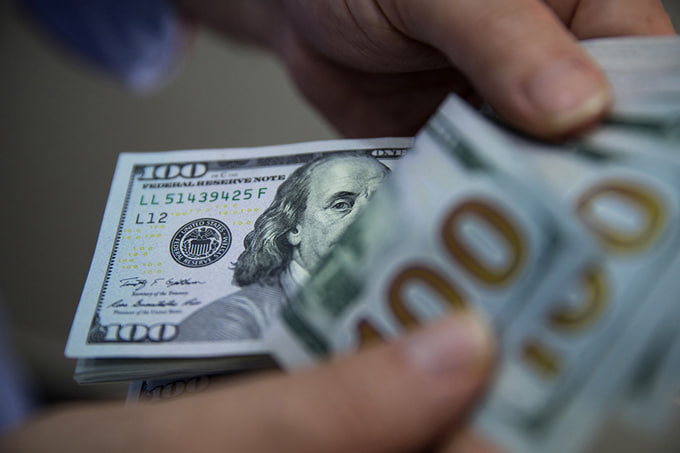
In November, Uzbekistan’s national currency appreciated by UZS 122.92, or 1.02%, reaching UZS 11,902.3 per US dollar. During the first half of the month, the exchange rate briefly exceeded the psychological threshold of UZS 12,000, but later strengthened to below UZS 11,900 – the lowest level since August 2023. The dollar regained some ground in the final trading days of the month.
By the end of November, most commercial banks were buying dollars at around or below UZS 11,900. The highest purchase rate of UZS 11,900 was offered by Hamkorbank, the National Bank of Uzbekistan (NBU), and Trustbank. The most favorable selling rate, UZS 11,940, was recorded at Openbank (formerly Smart Bank) and Octobank.
Over the first eleven months of 2025, the national currency rose by 7.88%, gaining more than UZS 1,018 against the dollar. By comparison, in 2024 the sum weakened by just 4.71% (UZS 581.78) in absolute terms.
Central Bank explains reasons for dollar’s decline
The Central Bank attributed the strengthening of the sum to a substantial increase in foreign currency supply. The rise in foreign inflows was driven by higher export revenues, foreign loans, remittances, investment inflows, and a stabilizing import dynamic.
From January to October, people in Uzbekistan sold $17.4 billion in foreign currency to banks, up 31.8% year-on-year, while purchases grew by 24% to $9.6 billion. The resulting net sale of $7.8 billion was 41.8% higher than last year.
Cross-border remittances reached $15.8 billion in the first ten months, a 25% increase year-on-year. Between July and October alone, remittances remained at historically high levels of $1.8–1.9 billion per month. Outbound transfers stood at $2.2 billion — $147 million less than in the same period of 2024.
Foreign trade turnover reached $66.5 billion during the ten-month period, up 21.5% from the previous year. Exports grew by 27.8% to $29 billion, while imports rose by 16.9% to $37.53 billion. As a result, the trade deficit decreased to $8.52 billion compared to $9.4 billion a year earlier.
Gold exports also hit a record high, reaching $9.9 billion — a 49.4% increase and surpassing the previous peak of $8.15 billion set in 2023.
Foreign investment flows strengthened as well. Net FDI inflows reached $1.6 billion in the first half of the year, up 42% from the same period in 2024. Net portfolio investments, mostly linked to Eurobond transactions, totaled $3.1 billion. Despite these inflows, the financial account still posted a negative balance of $895.9 million in the first half of 2025.
How the stronger sum benefits Uzbekistan’s economy
On 27 November, Central Bank Deputy Chairman Nodirbek Achilov said the declining dollar rate helped slow inflation on imported goods. In October, price growth for industrial goods eased to 5.8%, although service prices continued to rise.
A stronger UZS also sharply reduced exchange-rate-linked inflation expectations, from 51% in November 2024 to 22% last month. Growing confidence in the national currency has led to an expansion of the money supply in sum terms, rising from UZS 220.1 trillion in 2024 to UZS 282.3 trillion in October – a 28.1% increase.
The economy is also experiencing further depolarization. Over the past ten months, the share of foreign-currency loans declined from 41% to 38%, while foreign-currency deposits fell from 26% to 23%. Since 2021, depolarization has reduced the share of such loans by 10 percentage points and deposits by 16 percentage points.
The stronger sum has also reduced external debt servicing costs. Government spending on external debt fell by 4.7%, while businesses saved around 5%.
Central Bank Governor Timur Ishmetov reported in October that currency strengthening helped cut state external debt servicing costs by UZS 1.3 trillion and corporate debt costs by UZS 3.6 trillion – a combined reduction of UZS 4.9 trillion for the economy.

Related News
11:52
Central Bank penalizes 16 banks and 2 microfinance organizations over consumer protection failures
18:10 / 30.06.2026
Uzbek soum among world's most resilient currencies as dollar strengthens globally
15:45 / 29.06.2026
Central Bank of Uzbekistan increases gold holdings to 414 tonnes amid global reserve build-up
15:25 / 29.06.2026