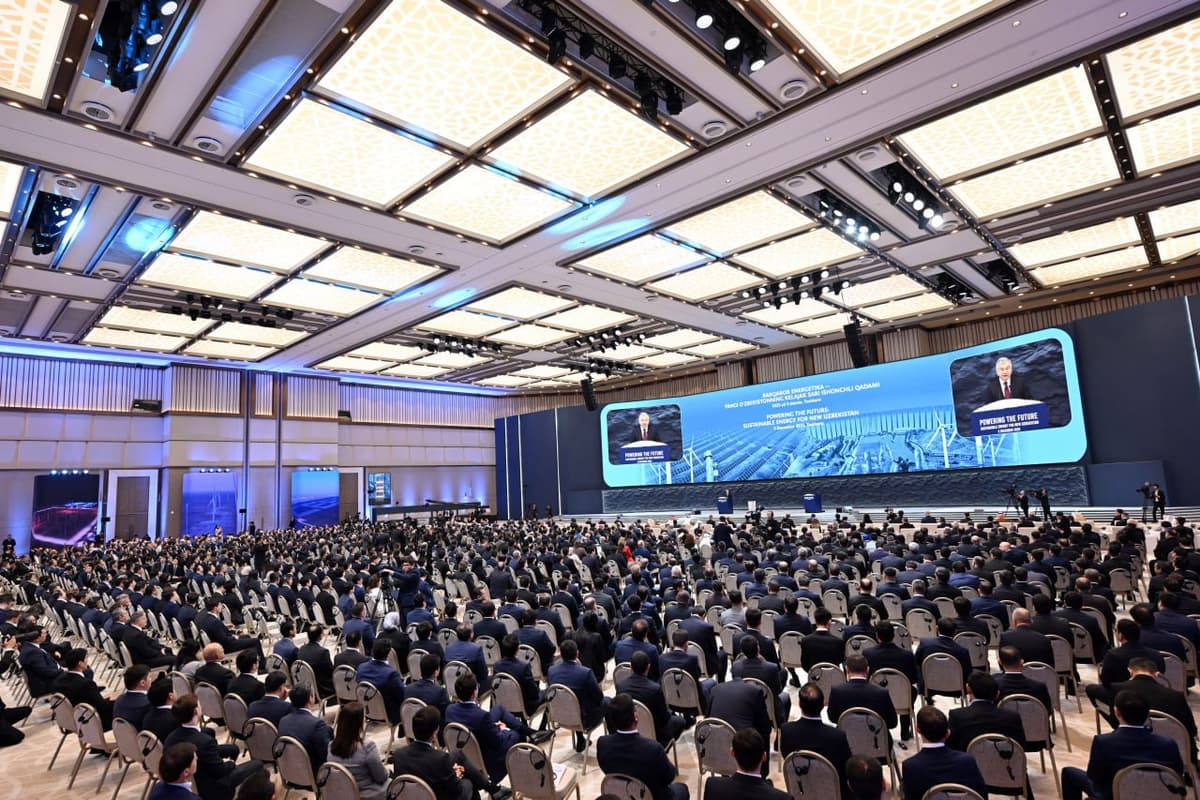
According to the president, reforms in electricity generation have already attracted significant foreign investment through public–private partnerships, and the government is now applying the same approach to power distribution.
“We have begun introducing private partnerships not only in electricity generation but also in its delivery to consumers,” Mirziyoyev said.
He recalled that Uzbekistan reached an agreement with Turkey’s Aksa Elektrik to transfer operational control of the Samarkand regional electricity network to the company. Under the project, Aksa will manage the network, invest in modernization and gradually halve technical losses, generating an estimated annual savings of $20 million.
A similar model will now be offered to investors in other regions. Jizzakh and Syrdarya networks will be proposed for private management in 2026, followed by Namangan and Tashkent regions in 2027.
Aksa Enerji previously won the international tender to manage and modernize Samarkand’s distribution network and plans to invest $1 billion over a 30-year concession. Nine other bidders had also expressed interest in the project.
Under Uzbekistan’s broader PPP program, all regional electricity distribution networks are expected to be transferred to private operators under long-term contracts by 1 July 2027.
Last year, Sherzod Khodjayev, head of the Agency for the Development and Regulation of the Energy Market, explained that each regional distribution network will be handed over on a concession basis. Investors will manage, repair and expand the networks and earn a fee for each kilowatt-hour transmitted, while end users will continue paying through existing digital platforms. A portion of those payments will go to the private operator managing the network.