Both chambers of Uzbekistan’s Oliy Majlis have passed a law that lowers penalties for tax reporting violations, revises inspection procedures, and broadens tax incentives for businesses. The document has been sent to the president for consideration.
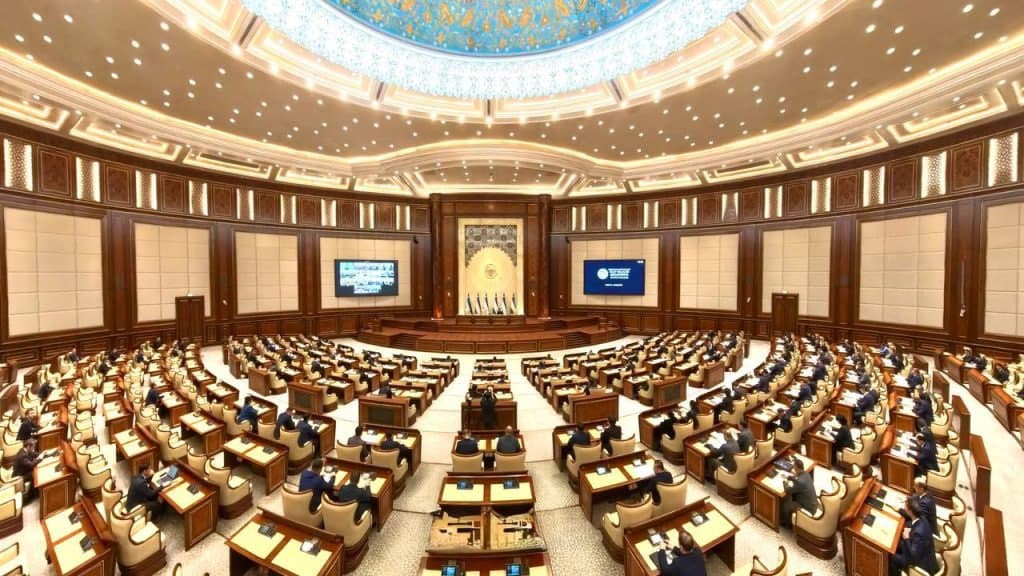
Speaking in the Legislative Chamber on December 3, Deputy Minister of Economy and Finance Akhadbek Khaydarov said the bill was drafted in line with the key directions of tax and fiscal policy for 2026.
The document aims to implement initiatives proposed by entrepreneurs during their dialogue with the president in August and to improve tax administration.
In particular, the law proposes to:
- apply a single fine for late submission of tax reports covering multiple types of taxes;
- reduce administrative fines for late reporting – from 10 to 3 base calculation units for officials of small businesses, and to 1 base calculation unit for individuals. Over the first nine months of this year, administrative fines totaling UZS 956.4 billion were imposed on officials of 111,900 enterprises;
- waive fines for delays of up to five days for entrepreneurs who submitted reports on time over the previous three months. Over nine months, about 6,000 entrepreneurs were fined UZS 2.8 billion for reporting delays of up to five days;
- allow self-employed individuals to sell goods to customers on the basis of invoices;
- introduce a mechanism to recover tax arrears from a taxpayer’s accounts receivable based on reconciliation statements;
- suspend VAT payer certificates for more than 30 days only by court order.
In addition, the law introduces automatic preparation of tax reports for property tax, land tax, personal income tax, social tax, value-added tax, and turnover tax. These reports will be generated by tax authority staff.
Taxpayers will also be offered the option to pay financial sanctions imposed following on-site tax inspections in equal installments over six months.
“Currently, this option is available only following tax audits. In 2024, based on audit results, 277 entrepreneurs were allowed to pay fines totaling UZS 302 billion over six months,” the deputy minister noted.
The law also provides for confirmation of export operations involving goods sold through domestic and international marketplaces, as well as limits on repeated desk audits for the same issue without prior analysis.