The president announced the launch of an industrial development program aimed at transitioning to a new technological stage and expanding value chains. In particular, the government has set a goal to increase industrial value added from the current $36.5 billion to at least $60 billion over the next five years and to boost output in high- and medium-high-technology sectors by 2.5 times.
In 2026, Uzbekistan will launch 782 new industrial and infrastructure projects worth a total of $52 billion. As early as next year, 228 major new production facilities with a combined value of $14 billion are expected to come online.
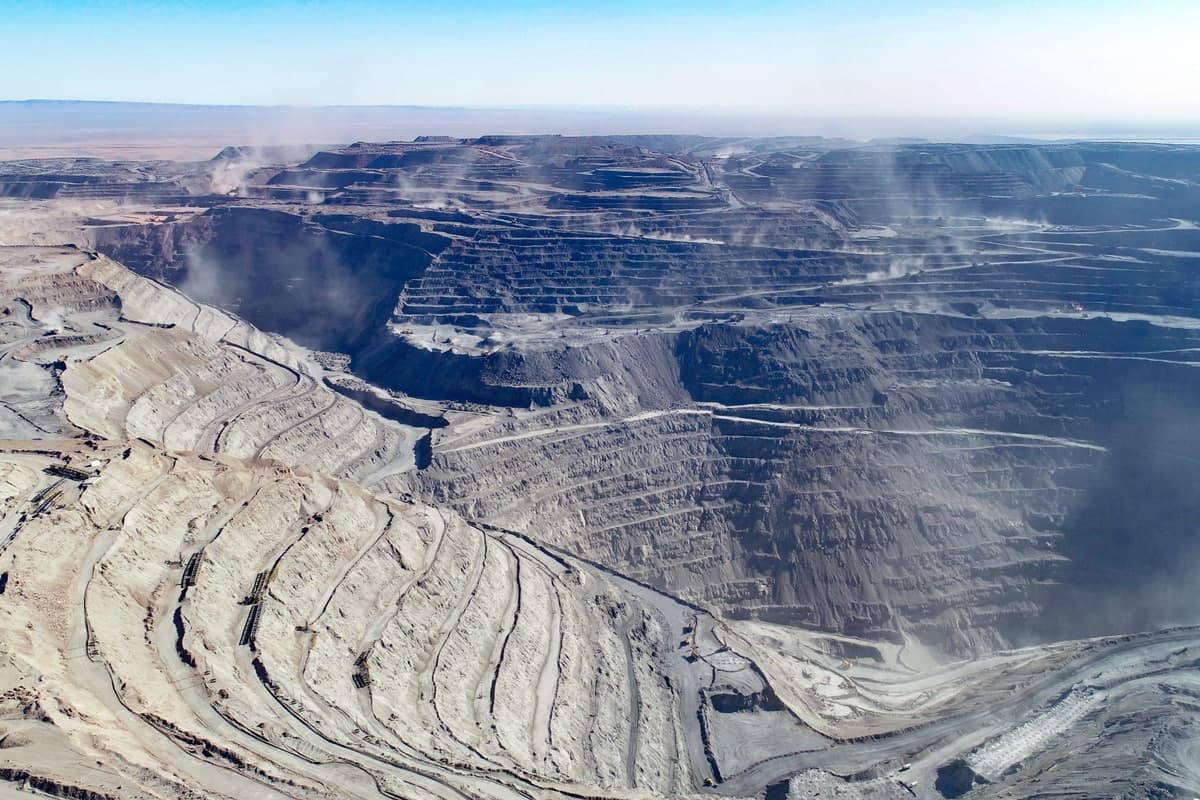
At gold deposits in the Navoi region, a $320 million ore mining project will be launched, enabling the additional processing of 2 million tons of ore. Further stages of development at the Muruntau deposit are also planned, along with large-scale silver mining projects worth $2.3 billion. As a result, ore processing capacity will reach 18 million tons per year, and gold output is expected to rise to 175 tons by 2030.
Another major project involves the start of construction in 2026 of a new metallurgical complex at Almalyk Mining and Metallurgical Combine. The $2.7 billion facility will have an annual capacity of 300,000 tons of copper cathode.
At the Samarkandkimyo plant, investments of $381 million will be used to establish annual production of 370,000 tons of phosphate fertilizers and 540,000 tons of complex fertilizers. In Kashkadarya, construction will begin on a $200 million chemical plant that will produce 50,000 tons of alkylbenzene annually for household chemicals, polymers, and synthetic fuels.
More broadly, new projects worth $4.5 billion are planned in the chemical industry in 2026. Additional projects totaling $3 billion each are expected in the mining and metallurgical, oil and gas, automotive, textile, and construction materials sectors, while $2 billion will be invested in electrical engineering and $800 million in pharmaceuticals.
As a result of these initiatives, total exports are expected to reach $40 billion by next year, with finished and semi-finished products accounting for more than 55 percent of exports.