





Additional features
-
Night mode

Do investments save lives? A data-driven look at traffic safety in Uzbekistan
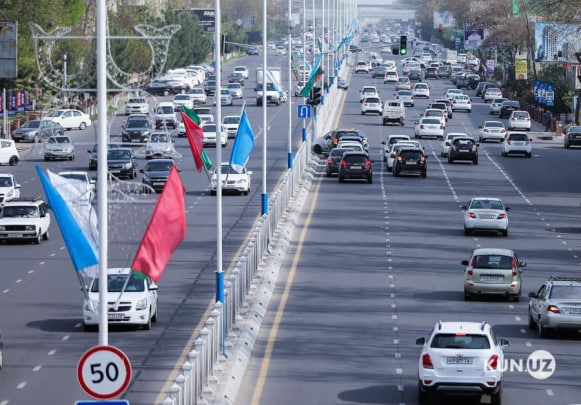
Every day, people in Uzbekistan leave their homes for work or study, but some never return because of road accidents. Official data show that between 8,000 and 9,000 traffic accidents occur each year, leaving 8,000–12,000 people affected – some losing their lives, others suffering serious injuries.
Over the past seven years, the government has invested UZS 61 trillion in road infrastructure and traffic safety. New systems, regulations, and technologies have been introduced with the stated goal of protecting lives.
This raises a fundamental question: Are these efforts actually saving lives, or are accident and victim numbers continuing to rise despite massive investment?
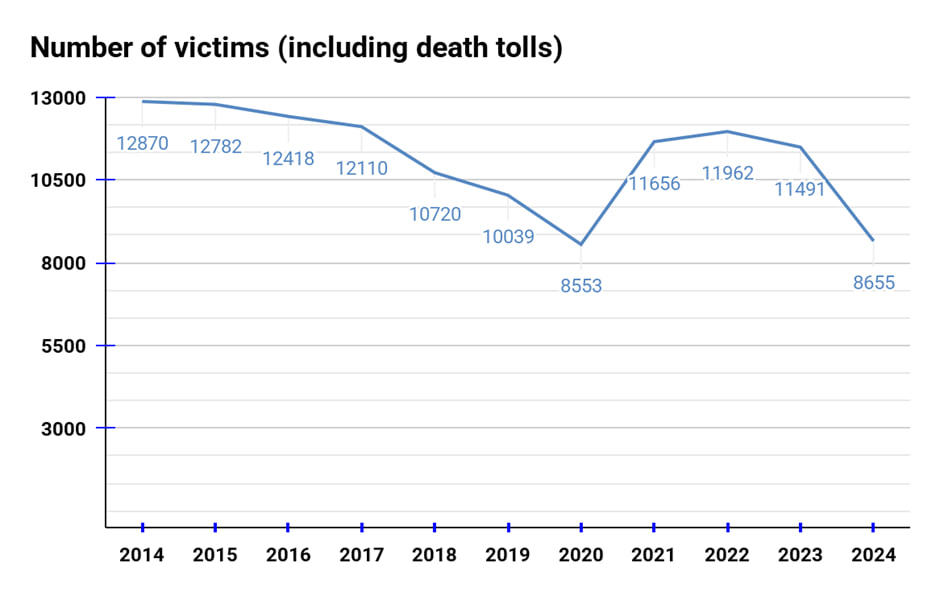
Source: Open Data portal of Uzbekistan (2014–2023); Integrated Information System–Statistic Committee (2024)
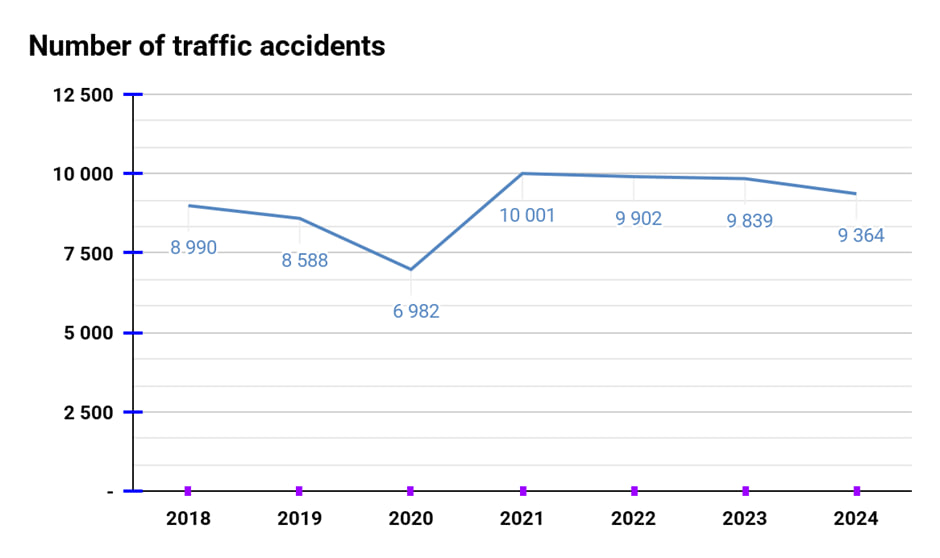
An examination of Figures 1 and 2 reveals a clear and consistent pattern: traffic accidents and the number of victims move in tandem. When accidents rise, injuries and fatalities rise as well; when accidents fall, victim numbers decline accordingly.
The diagrams track changes in traffic accidents and victims, including both injuries and fatalities, over the past decade. At their peak, annual victim numbers approached 13,000. By contrast, in 2024 – a full reporting year – the figure fell to around 8,600, marking one of the lowest full-year totals in recent records.
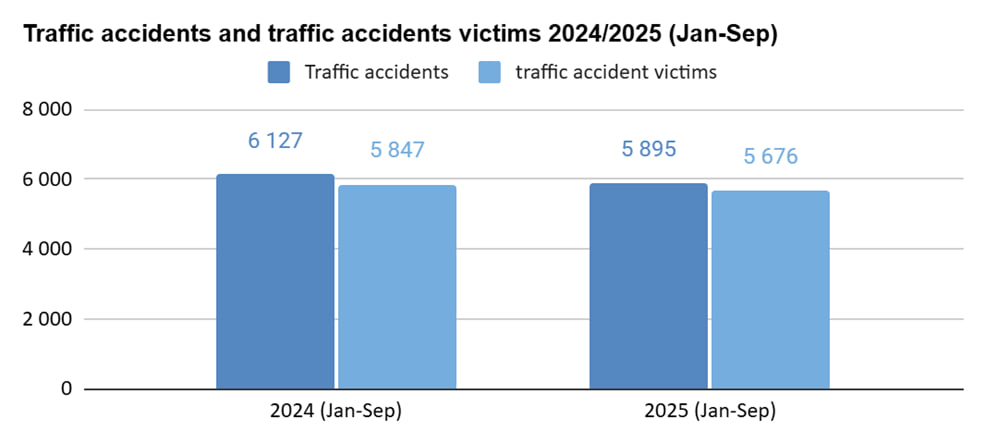
Data for 2025 appear even lower, but since they cover only January–September, they are not directly comparable with full-year figures. A more accurate comparison can be made using January–September data for both years (Figure 3). On this basis, 2025 recorded fewer accidents and fewer victims than 2024 during the same nine-month period, indicating a clear year-over-year improvement within an identical seasonal window.
Both diagrams show a steady decline in accidents and victims up to 2020. The COVID-19 pandemic and strict mobility restrictions played a decisive role in reducing traffic volumes during this period. However, as normal life resumed in 2021, accidents and victim numbers rose sharply, marking one of the most challenging phases in the dataset.
From 2023 onward, the trend began to improve again. During this period, the government tightened road safety regulations, including reducing speed limits from 70 km/h to 60 km/h in many areas – a measure officially introduced on April 5, 2023. At the same time, camera surveillance expanded and enforcement intensified.
These measures appear to have contributed to the renewed downward trend visible in both accident and victim statistics.
Regional patterns and long-term risk
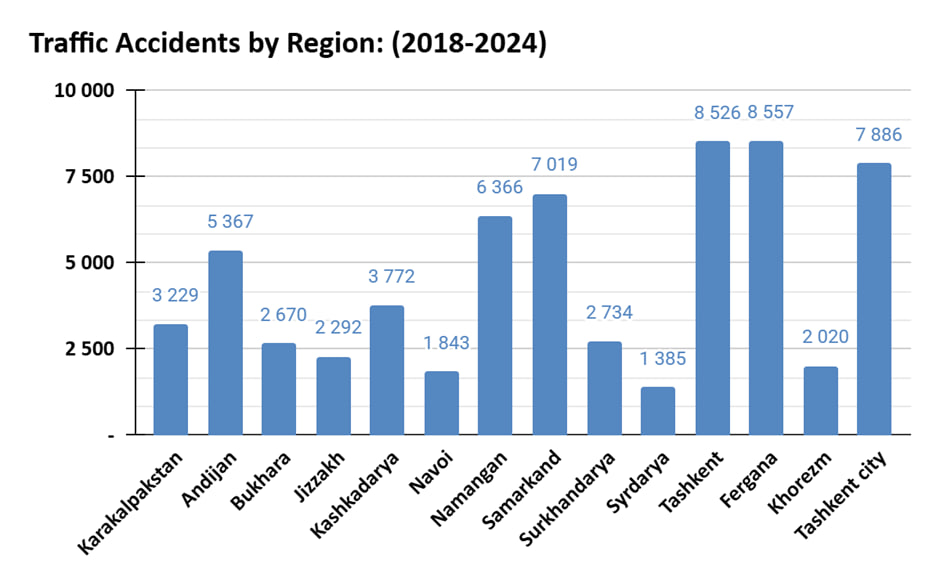
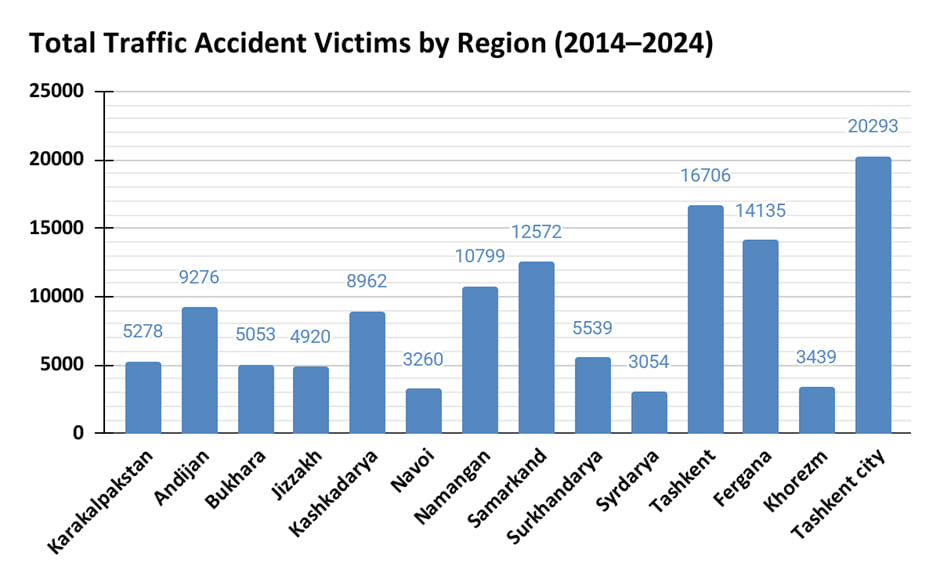
A regional breakdown of total traffic accidents over the past ten years reveals clear and persistent patterns. Tashkent city, Tashkent region, Fergana, and Samarkand consistently record the highest numbers of accidents, making them the country’s primary road safety hotspots.
This concentration is not unexpected. These regions have the fastest-growing populations, major universities, large employment centers, and heavy daily traffic flows. More vehicles and higher mobility naturally increase exposure to road risk. As expected, higher accident numbers in these regions are matched by higher numbers of victims – the two indicators move together (Figures 4 and 5).
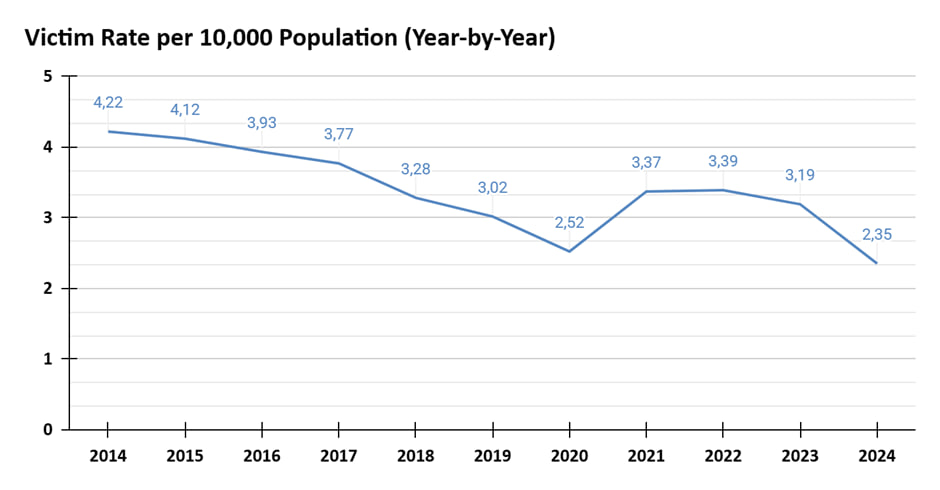
At the national level, however, the victim rate per capita tells a more encouraging story. In 2014, around four out of every 10,000 people were injured or killed in traffic accidents. Over the decade, this figure steadily declined, reaching approximately 2.3 victims per 10,000 people in 2024. While there were temporary increases in some years, the overall trend points to a gradual reduction in individual risk (Figure 7).
What makes this trend particularly noteworthy is that it has occurred alongside rapid growth in car ownership. In 2015, Uzbekistan had roughly 6–7 cars per 100 people. By 2025, that figure had nearly doubled to around 12 (Figure 6).
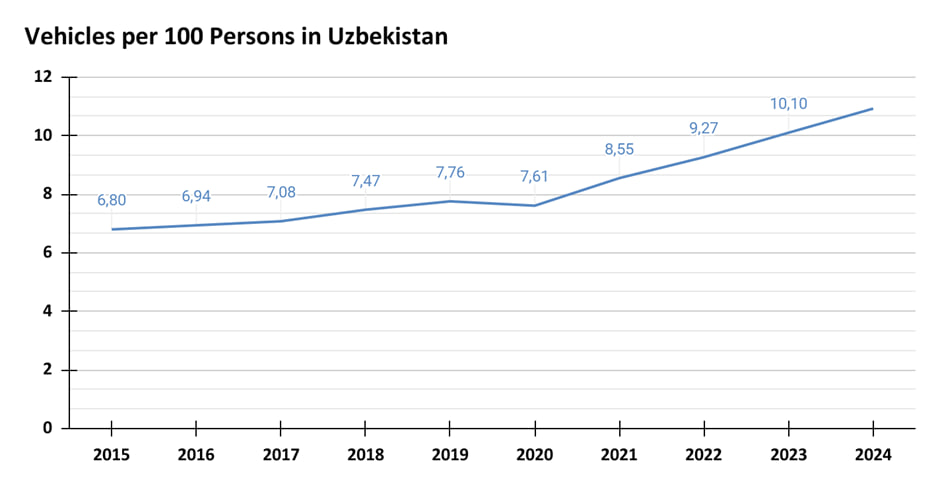
Under normal circumstances, rising motorization would be expected to increase accident risk. Instead, the data suggest the opposite: even as the number of vehicles grows, the victim rate per population continues to decline. This indicates that road safety reforms, stricter enforcement, and infrastructure improvements may be offsetting the risks associated with higher traffic volumes.
By contrast, regions such as Syrdarya, Navoiy, and Khorezm consistently report the lowest numbers of accidents and victims. These areas have smaller populations, lighter traffic, and less congestion, which helps keep accident levels relatively low. While population density remains a key factor, differences in infrastructure quality, enforcement intensity, and mobility patterns also play a significant role in shaping regional outcomes.
Government efforts
Over the past seven years, government attention to road safety has increased significantly, a shift clearly reflected in the data. Nearly UZS 61 trillion has been invested in improving road infrastructure, strengthening safety systems, and modernizing traffic management.
As part of these efforts, several road-related services were outsourced to private companies, allowing specialized firms to focus on tasks such as road markings, vehicle inspections, and driver examinations. Dedicated lanes for public transport were expanded, and a number of regulatory changes were introduced to ease daytime traffic flows in urban areas.
Government investments and safety reforms
One of the central initiatives is the “Safe Road” program, which aims to reduce accidents by addressing high-risk road sections. The program focuses on improving road surfaces, installing clearer signage, upgrading street lighting, and modernizing pedestrian infrastructure.
Technological improvements
Traffic safety officers have been equipped with modern tools, including electronic tablets and body cameras. In parallel, an artificial intelligence–based system for the automatic detection of traffic violations has been introduced. These technologies are designed to improve monitoring accuracy, increase transparency, and reduce human error in enforcement.
Intelligent transport system
To further reduce congestion in the capital, the government is preparing to launch an Intelligent Transport System in Tashkent. The system will integrate more than 700 intersections, linking traffic lights, cameras, and monitoring devices into a single digital platform. By adjusting signal timing based on real-time traffic conditions, authorities expect congestion, and potentially accident rates, to fall by 25–30 percent.
International partnerships
International cooperation has also played an important role in Uzbekistan’s road safety progress. The country has expanded partnerships with global institutions to support infrastructure development and transport modernization. One notable example is cooperation with the Asian Infrastructure Investment Bank, which has supported projects aimed at improving road quality and traffic efficiency.
Conclusion
When we bring all the findings together, the overall picture becomes clearer. The number of traffic accidents and victims in Uzbekistan has declined in recent years, but the changes are gradual rather than dramatic. This steady improvement aligns with increased government attention, new regulations, investments in road safety, and the introduction of modern monitoring systems.
However, regional data show that progress has been uneven. High-risk regions, such as Tashkent city, Tashkent region, Fergana, and Samarkand, still record the highest accident numbers in the country. Although their figures show slight decreases, the changes are not sharp enough to claim a major transformation. This means the underlying issues in busy regions remain serious and require continued attention.
Some countries can be powerful lessons for Uzbekistan. In Turkey and Korea, traffic education begins early – children study road safety through books and even mock intersections, showing that real safety starts in the classroom. Singapore leads with pedestrian-first urban design, proving that safe walking is at the heart of safer cities. Korea’s citizen-reporting apps and Malaysia’s reward systems for good drivers also show that engaging the public and encouraging positive behavior can be just as effective as enforcement.
The analysis began with a simple reality: every day, thousands of people leave their homes without knowing whether they will return safely. The gradual improvements in recent years show that change is possible, but the responsibility to protect lives is shared. With continued commitment from both the government and the public, Uzbekistan can turn today’s steady progress into a safer future for everyone.
Valijon Turakulov, PhD, Associate Professor
Islombek Shuxratov, student
School of Business and Logistics
Inha University in Tashkent

Related News
11:52 / 19.06.2026
President Mirziyoyev reviews 120 new investor proposals to boost digital economy and energy sectors

11:30 / 19.06.2026
China leads foreign corporate footprint in Uzbekistan with over 5,800 businesses

17:25 / 17.06.2026
Uzbekistan’s mineral wealth valued at $3 trillion, Shavkat Mirziyoyev says

16:30 / 17.06.2026