
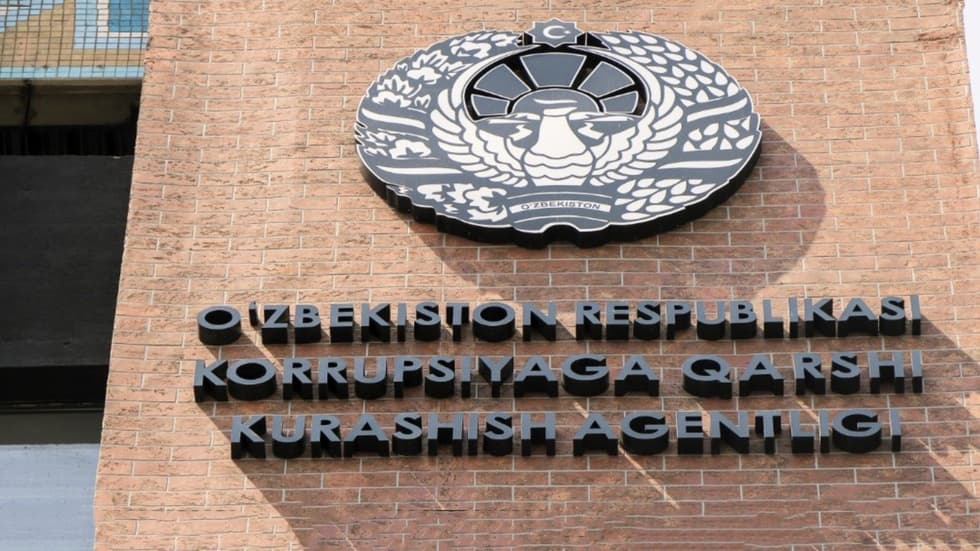
President Shavkat Mirziyoyev signed a decree on combating corruption on December 30, 2025.
Under the decree, the following additional tasks have been assigned to the Anti-Corruption Agency:
- forming a unified law enforcement practice in government bodies and organizations to prevent corruption and providing ongoing methodological assistance;
- introducing a National Anti-Corruption Certification Management System in government bodies and organizations;
- conducting anti-corruption reviews of existing regulatory legal acts and coordinating activities aimed at eliminating corruption-related risks identified in them;
- developing proposals and minimum requirements for digitizing tasks and functions in government bodies and organizations that have a high level of corruption risk;
- monitoring compliance with transparency legislation when publishing documents adopted in the “E-qaror” system and applying effective measures to ensure openness;
- identifying and preventing corruption factors, including conflicts of interest, when decisions are made on projects financed by international financial institutions and foreign government financial organizations.
Oversight of transparency in E-qaror
“It is stipulated that the unjustified failure to publish documents adopted by republican and local executive authorities in the ‘E-qaror’ electronic system shall be considered a violation of legislation on the openness of the activities of state authorities and administration bodies and shall serve as grounds for bringing those responsible to account,” the decree states.
Protection order
In order to protect individuals who report corruption-related offenses from violations of labor legislation, including persecution and pressure in their employment activities, the practice of issuing protection orders by the Agency is being introduced.
Internal control units
The activities of internal anti-corruption control units within government bodies and organizations will be organized in close cooperation with the Agency.
Key performance indicators (KPIs) will not be applied to the heads and employees of internal anti-corruption control units. At the same time, bonuses linked to KPIs will be paid to them at the maximum level.
In addition, disciplinary action against employees of internal anti-corruption control units will require the consent of the Agency.
The Agency has been granted the authority to introduce additional staff positions for up to two years within the structures of internal anti-corruption control units of government bodies and organizations with a high level of corruption risk and violations. In this process:
- additional staff positions are introduced within the existing staffing levels of the respective organizations based on a submission by the Director of the Agency;
- appointment to and dismissal from these additional positions are carried out by the Agency.
Anti-corruption review
The Agency has been designated as the body responsible for coordinating the activities of government bodies and organizations related to conducting anti-corruption reviews of existing regulatory legal acts and eliminating corruption-related risks identified in them. In this regard:
- documents based on the results of anti-corruption reviews conducted by government bodies and organizations must be submitted to the Agency;
- starting from 2027, the Agency will annually approve and publish, by April 1, a mandatory annual schedule for government bodies to conduct anti-corruption reviews of existing regulatory legal acts, based on analytical assessments;
- information on the implementation of the annual schedule will be submitted by the Agency to the National Council on Combating Corruption and the Presidential Administration.
Anti-corruption cluster
An integrated corruption prevention system, the Corruption Prevention Cluster, will be introduced, based on permanent cooperation between the Anti-Corruption Agency, law enforcement and oversight bodies, scientific institutions, internal anti-corruption control units, and civil society institutions.
Within the framework of the cluster:
- law enforcement agencies will provide the Agency with analytical and statistical data on corruption factors and potential risks identified during pre-investigation checks, inquiries, and preliminary investigations into corruption-related offenses;
- the Agency will be granted access, via information systems, to the results of analyses and studies conducted by the Accounts Chamber and the State Financial Control Inspectorate on public procurement, conflicts of interest, and financial risks in the course of financial control and audits;
- designated scientific institutions will conduct research in the field of combating corruption, develop scientifically grounded solutions at the request of the Agency, and organize professional development programs;
- internal anti-corruption control units will submit quarterly information to the Agency on the state and trends of corruption-related offenses within their systems, along with proposals to eliminate them;
- civil society institutions will carry out public oversight of anti-corruption efforts, including public hearings and monitoring, as well as public opinion research.
Digital compliance
Starting from July 1, 2026, the “Digital Compliance” information software complex is to be launched in pilot mode. The system must be fully operational by the end of 2026.
Information systems of government bodies and organizations will be integrated into “Digital Compliance,” thereby ensuring information support for the Agency’s activities.
Within the “E-Compliance” module of the software complex, the activities of internal anti-corruption control units will be fully digitized.
The software complex will also include artificial intelligence, which will be used to:
- identify corruption risks based on analysis of data from the software complex and other information resources and develop solutions aimed at preventing them;
- detect affiliation and conflicts of interest when responding to public offers in public procurement and automatically restrict the participation of such entities.
Provision of requested information is mandatory
Failure to fully or partially provide information related to the full, high-quality, and effective performance of the Agency’s assigned tasks, provision of false information, or unjustified resistance to the integration of necessary information systems will be assessed as obstruction of the lawful activities of the Agency.
The Agency is granted the right to issue mandatory instructions to the internal anti-corruption control units of central offices and subordinate organizations of government bodies and organizations on the prevention of violations, as well as submissions on eliminating identified violations.
Management certification
Starting from July 1, 2026, a National Anti-Corruption Certification Management System will be introduced in government bodies and organizations in stages through 2030. In this process:
- the system will be introduced first in government bodies and organizations that have been rated “unsatisfactory” based on the results of the rating system assessing the effectiveness of anti-corruption efforts;
- implementation will be carried out in stages in accordance with a schedule approved by the Agency;
- failure to introduce the system within the established timeframes will result in the suspension of all incentive payments to the head and deputy heads of the relevant government body or organization until the system is implemented.
Project offices
The Agency is authorized to develop proposals and initiatives to establish “compliance control” systems tailored to the specific activities of government bodies and organizations and to set up project offices to address the development of anti-corruption systems across sectors and industries. In this context:
- project offices will be formed by order of the Director of the Agency and will include Agency staff, employees of internal anti-corruption control units of government bodies and organizations, as well as experts and specialists;
- orders of the Director of the Agency on engaging employees of government bodies and organizations in project offices are mandatory for execution;
- during the period of involvement in project office activities, employees will retain their monthly salaries and all additional payments;
- employees, experts, and specialists involved in project office activities may receive additional remuneration from the extra-budgetary funds of the government body or organization under review and from other sources not prohibited by law.
Commemorative badge
In order to encourage employees of government bodies and organizations, representatives of civil society institutions, and active citizens who have made a достой contribution to preventing and combating corruption, a commemorative badge titled “For contribution to the fight against corruption” will be established.
The Agency will organize the awarding of the badge annually on the eve of December 9 – International Anti-Corruption Day.