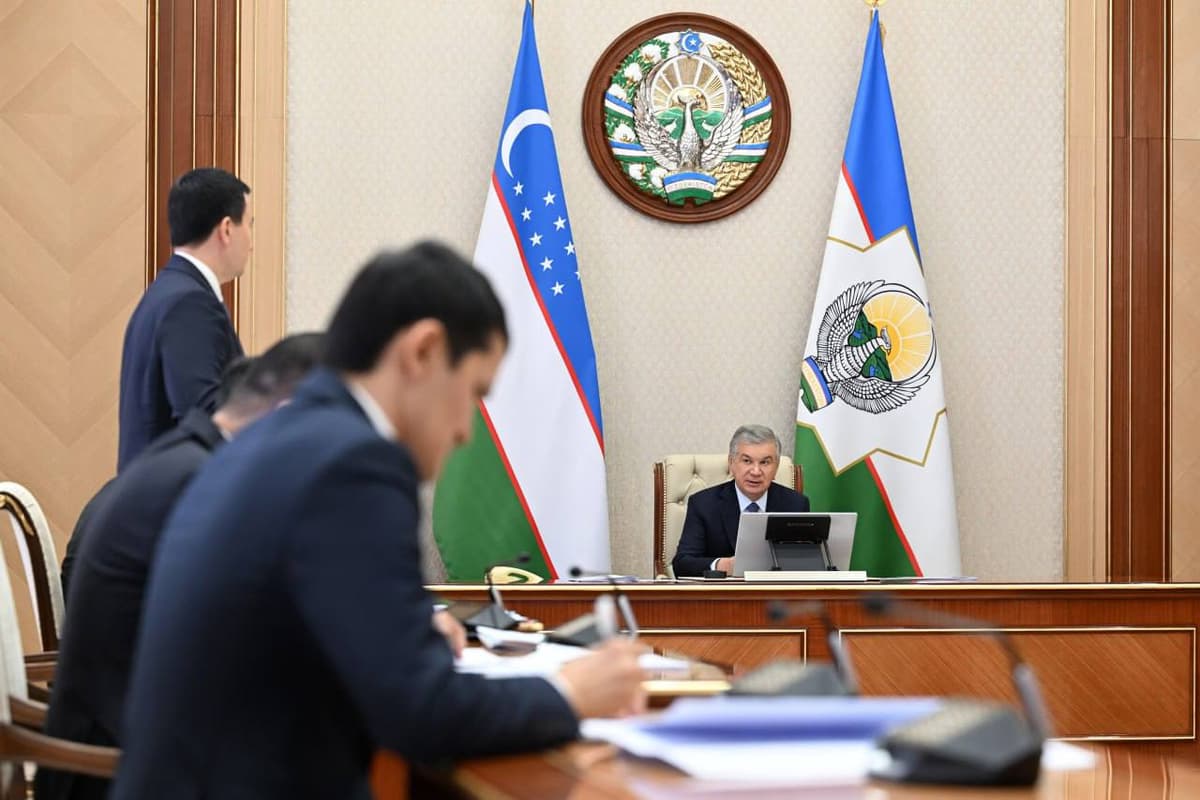
President Mirziyoyev set a rigorous agenda for the region, directing officials to increase the volume of foreign direct investment (FDI) by 2.5 times – jumping from last year’s $3.5 billion to $8.75 billion. This surge in capital is intended to support the realization of industrial and service projects valued at $7.2 billion over the coming years.
The government aims to transform the regional economy significantly by 2030:
- Economic scale: The regional economy is projected to reach UZS 102.5 trillion, nearly doubling the 2025 forecast of UZS 54.3 trillion.
- Per capita income: Targets are set at UZS 51 million per person.
- Export growth: Annual exports in industry, services, and tourism are expected to reach $900 million, up from $435 million projected for 2025.
A primary focus of the meeting was the social welfare of the population. By the end of 2026, the administration plans to reduce the unemployment rate to 4.2% and the poverty rate to 3.2%.
Specific geographic targets were identified to create "poverty-free zones":
- Nukus City, Kungrad, and Chimbay districts, along with 109 neighborhoods, are slated to become areas completely free of unemployment and poverty.
- In regions with more challenging conditions – namely Bozatau, Kanlykul, Muynak, and Shumanay districts – the goal is to halve current poverty levels across 90 neighborhoods.
The presentation highlighted Karakalpakstan’s immense industrial potential, underpinned by substantial mineral reserves. The region holds:
- 270 million tons of cement and 200 million tons of lime.
- 256 million cubic meters of decorative and building stone.
- 6.9 million tons of glass raw materials and 6.5 million tons of gypsum.
- Significant deposits of vermiculite, expanded clay, and brick raw materials.
This resource base has already contributed to a shift in the regional economy. Eight years ago, Karakalpakstan ranked last in Uzbekistan for GDP per capita; today, it has climbed to seventh place. Furthermore, the share of industrial goods being exported has risen from 4% to 30% in recent years.