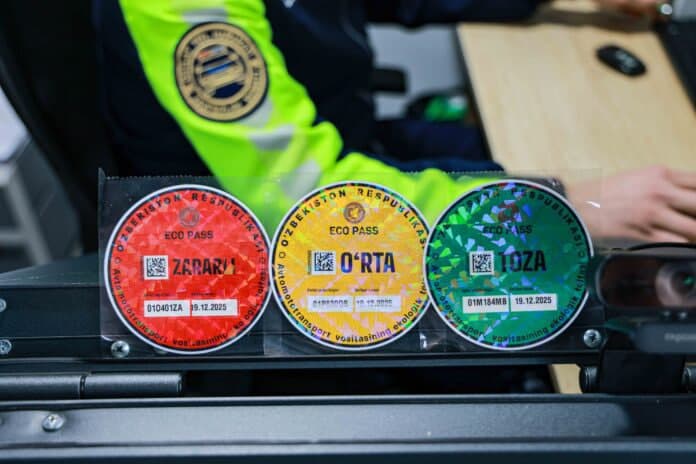
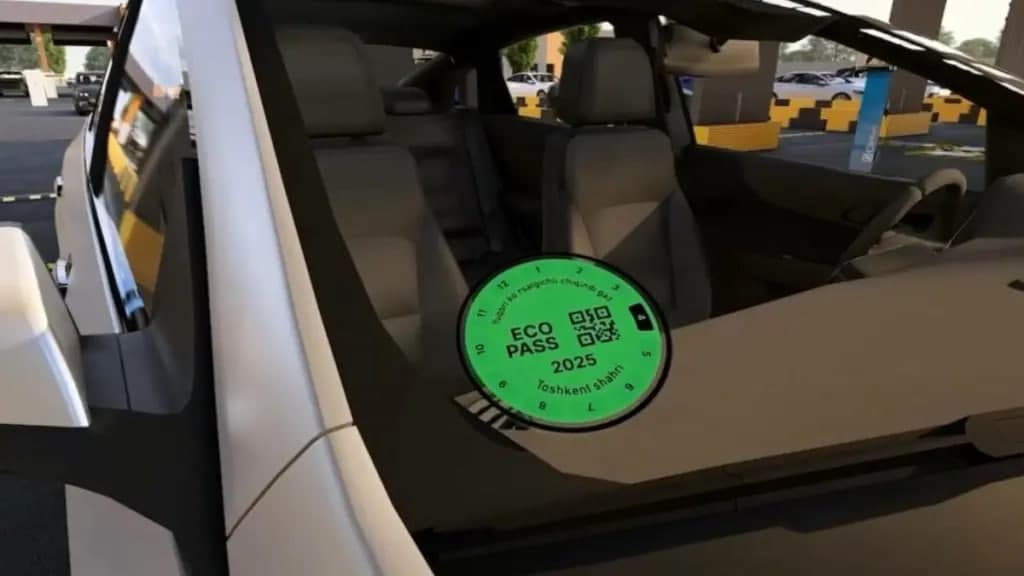
Starting from January 1, 2026, Uzbekistan began issuing environmental stickers for vehicles. The decision to introduce the system was adopted in 2025.
Photo: National Committee on Ecology and Climate ChangePhoto: National Committee on Ecology and Climate Change
Tashkent regularly ranks among the most polluted cities, and the main source of emissions is vehicles - there are already more than 4.7 million cars in the country. Eco-stickers are a system designed to regulate transport with high emission levels.
We applied for an eco-sticker online ourselves. In this article, we explain how the system works, which color category is assigned to your car, and how to obtain the sticker without unnecessary complications.
Where the system applies and when it will expand
The eco-sticker system has been operating in Tashkent since January 1, 2026. The capital serves as a pilot region.
Implementation is planned over ten years in stages:
2026 - Tashkent
2028–2030 - Nukus, regional centers, and designated environmental zones
2031–2035 - throughout Uzbekistan
Fines for the absence of an eco-sticker are expected to be introduced no earlier than 2028.
Types of Eco-Stickers and which one your vehicle gets
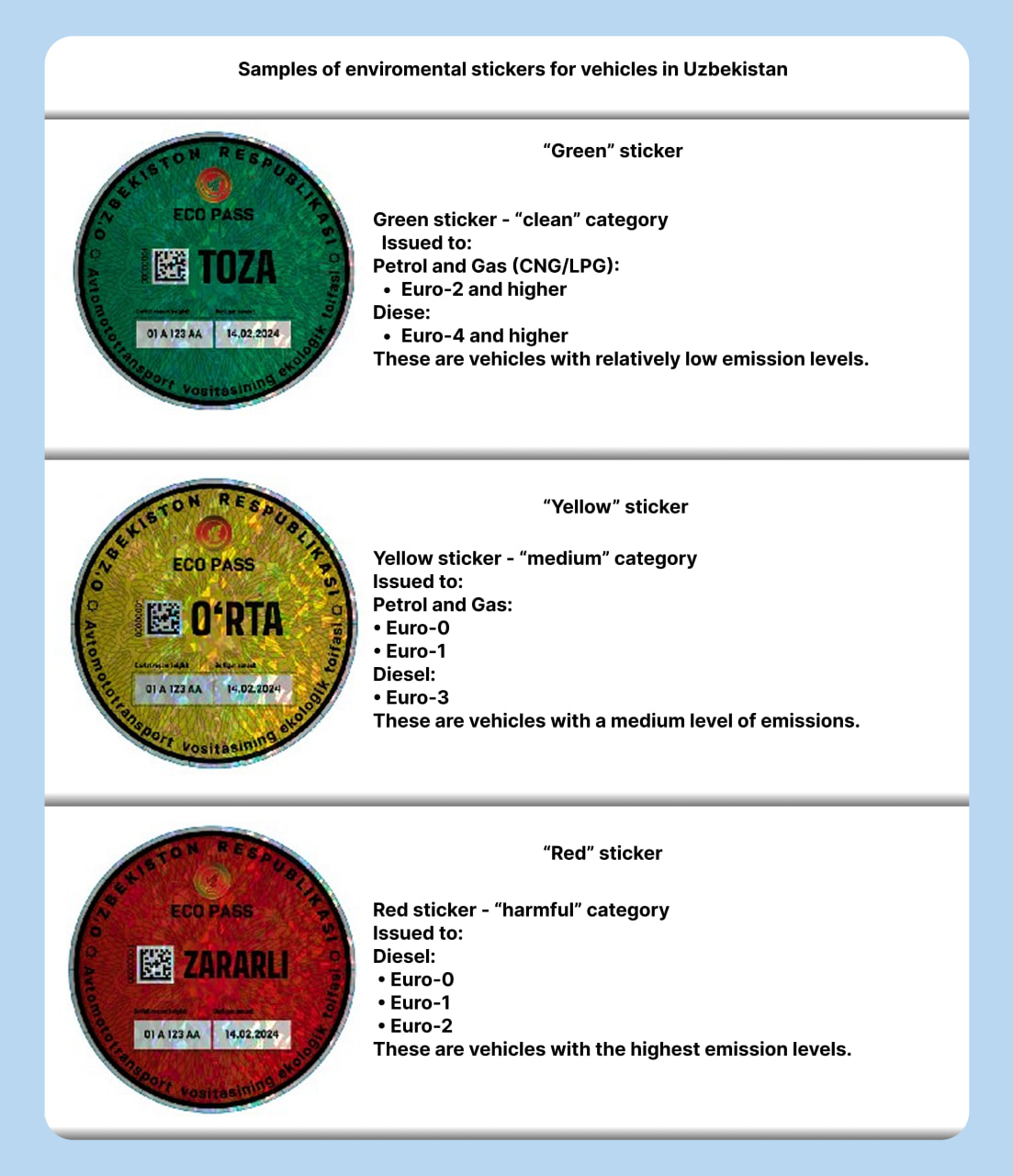
The system divides vehicles into three categories based on emission levels. The sticker color depends on fuel type and the engine’s environmental class (Euro standard).
Diesel vehicles have stricter requirements. To receive a green sticker, a diesel car must meet at least Euro-4, while gasoline vehicles only need Euro-2.
Vehicles that receive a green sticker without additional diagnostics include:
Samples of environmental stickers issued in Uzbekistan.
electric vehicles
hybrids (including plug-in hybrids)
cars under three years old - even if formally Euro-2
vehicles running on alternative fuels (except gas)
Cars manufactured before 1986 cannot receive a green sticker -only yellow or red.
Related topics
What is the “Euro” environmental standard?
This is an international emissions classification system. The higher the number, the cleaner the engine:
Euro-0 - oldest vehicles
Euro-1, 2 - basic standards
Euro-3, 4 - reduced emissions
Euro-5, 6 - modern standards
Sticker issuance is based on these indicators.
Do you need to replace the sticker?
The eco-sticker is issued without an expiration date. Reissuance is required only in three cases:
change of ownership
windshield replacement
damage or fading of the sticker
The category is determined automatically by the system, but the sticker itself must be ordered separately.
How to get an Eco-sticker
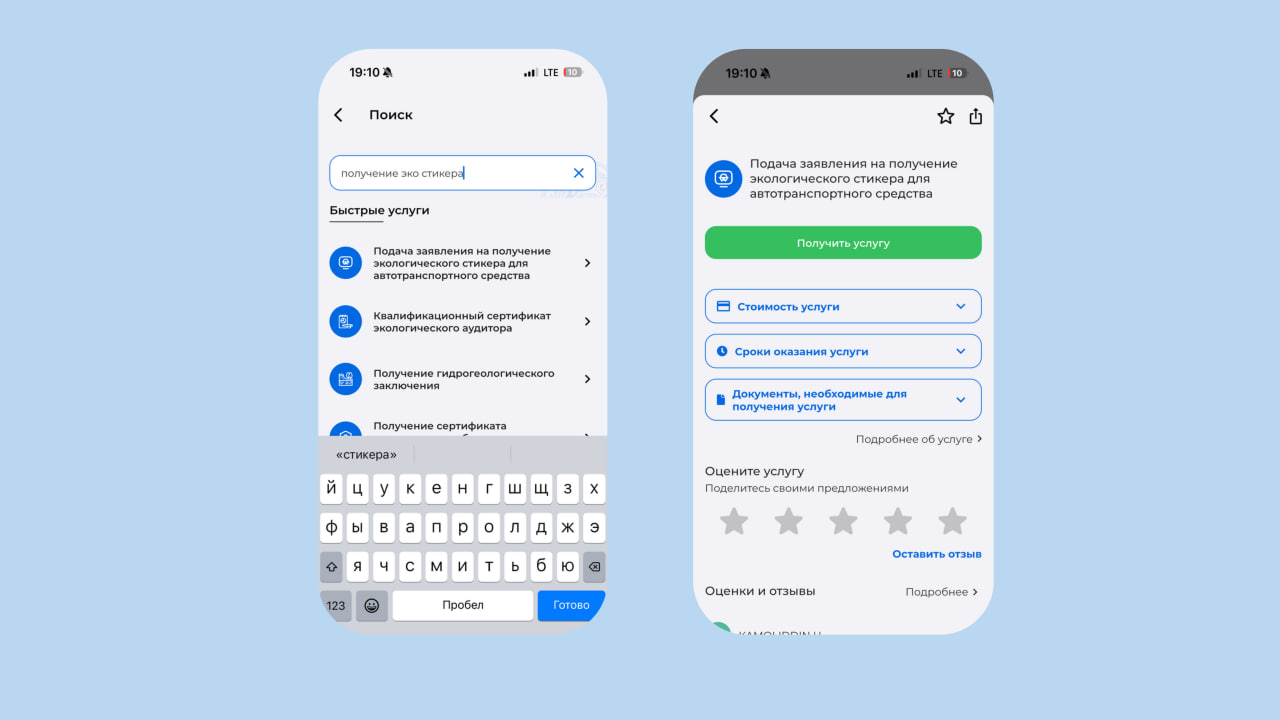
You can apply through the portal my.gov.uz or receive it when registering a vehicle at an SBDD office. Below is the online application process.
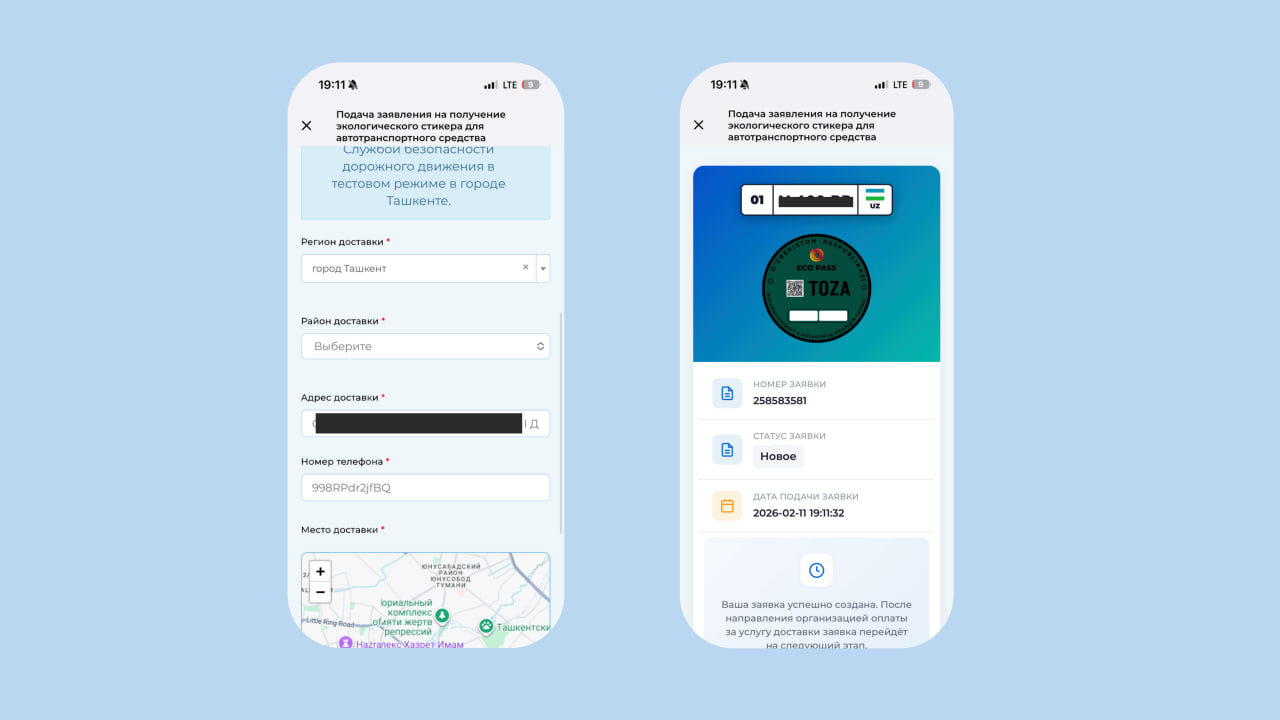
Submission of an application for an eco-sticker through the government services portal.
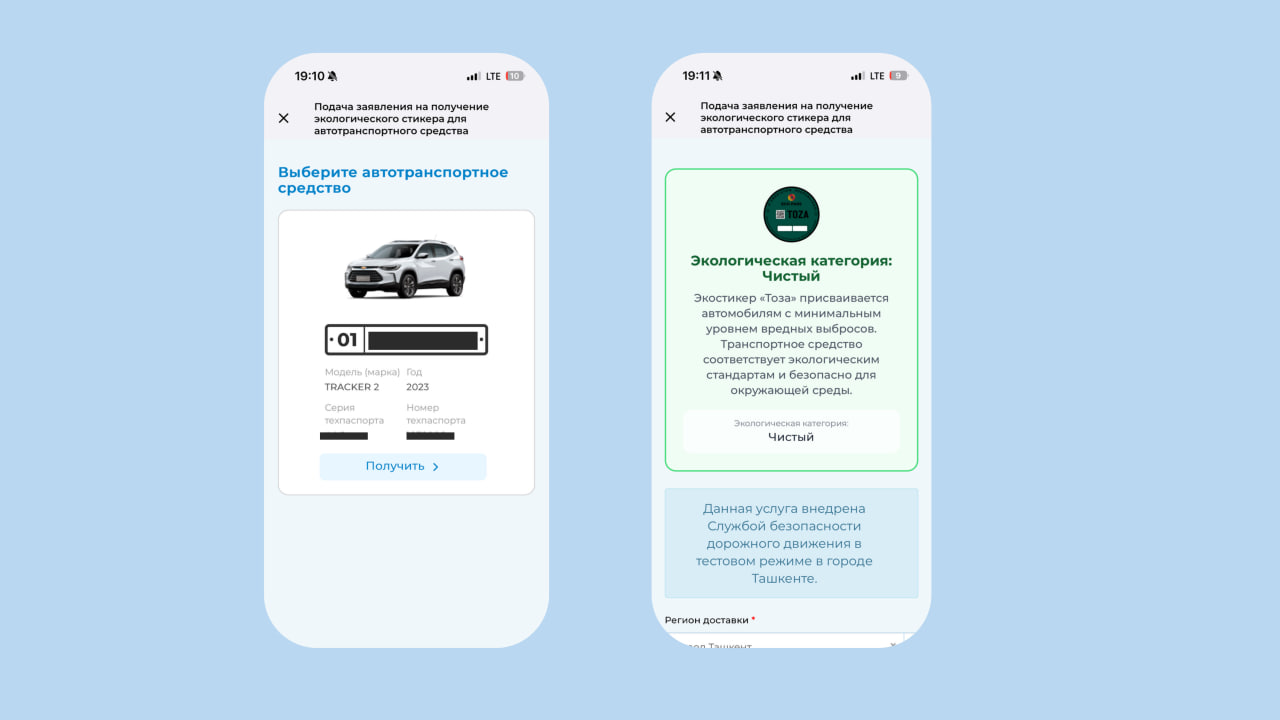
2. Verify vehicle data
The system automatically loads data from the database:
vehicle details
year of manufacture
fuel type
VIN
If the data is correct, confirm it.
Automatic determination of a vehicle’s environmental category when applying for an eco-sticker through the government services portal.
3. Enter delivery address
Provide your home address where the finished sticker will be delivered.
Entering delivery details and confirming the submitted application for an eco-sticker through the government services portal.
4. Pay for delivery
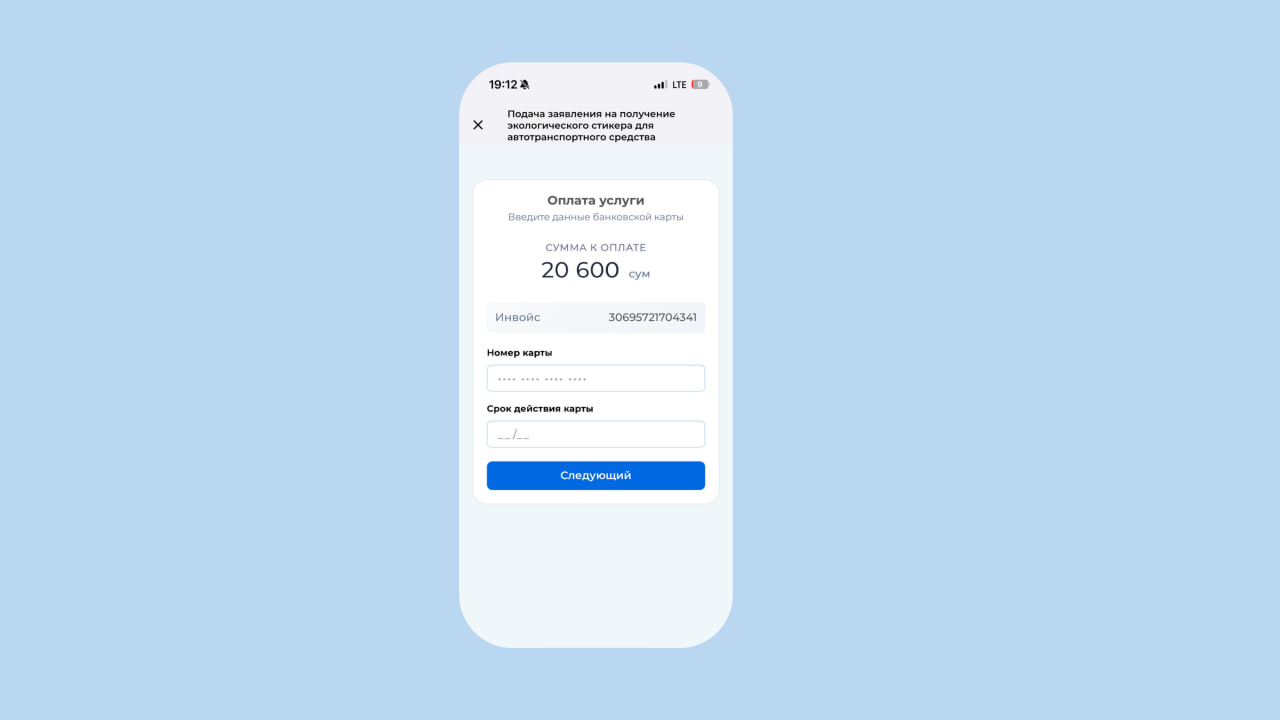
The eco-sticker itself is free. You only pay for postal delivery - 5% of the Base Calculation Unit (around 20,600 UZS).
Payment is made by bank card. After clicking confirm, the bank sends an SMS code, which must be entered to complete the transaction.
Online payment for eco-sticker delivery.
5. Confirm via SMS Code
Enter the one-time SMS code to finalize the payment and move the application to the next stage.
Payment confirmation via SMS code.
6. Track the status
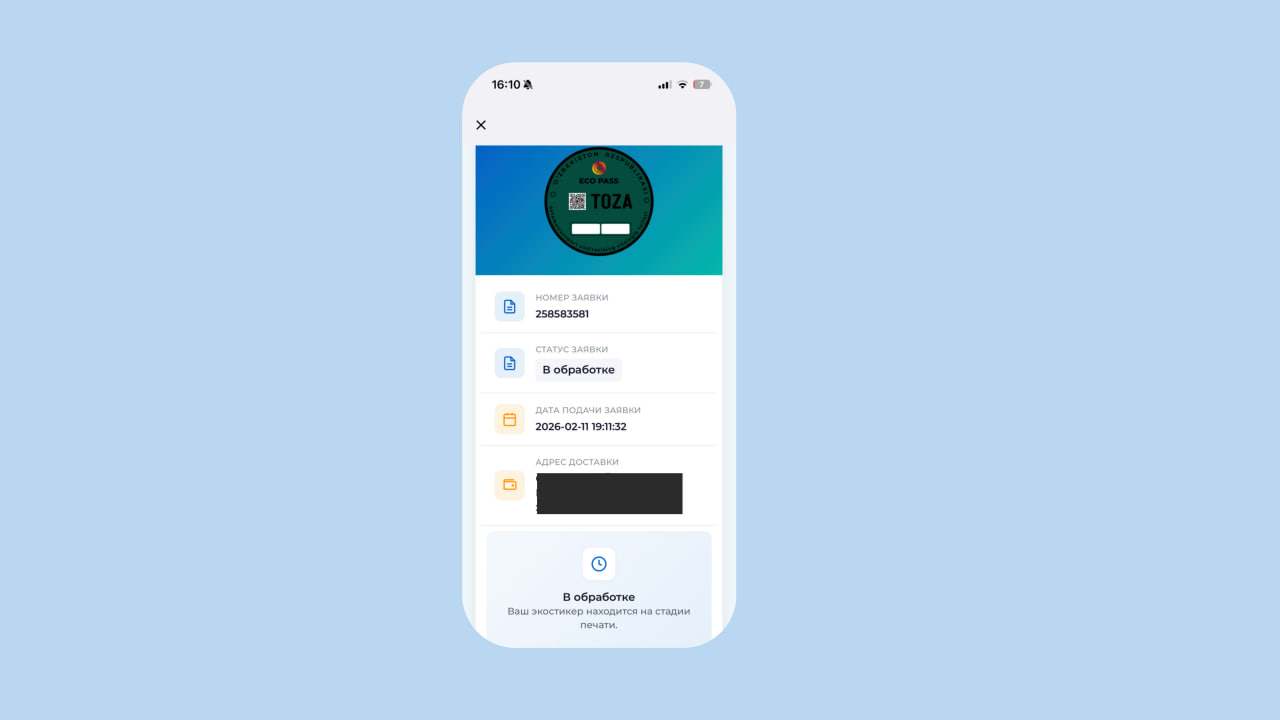
You can monitor the status in your personal account. Delivery takes up to 10 days.
Application status screen for an eco-sticker - showing the application number, submission date, and “in progress” status.
Where to place the sticker
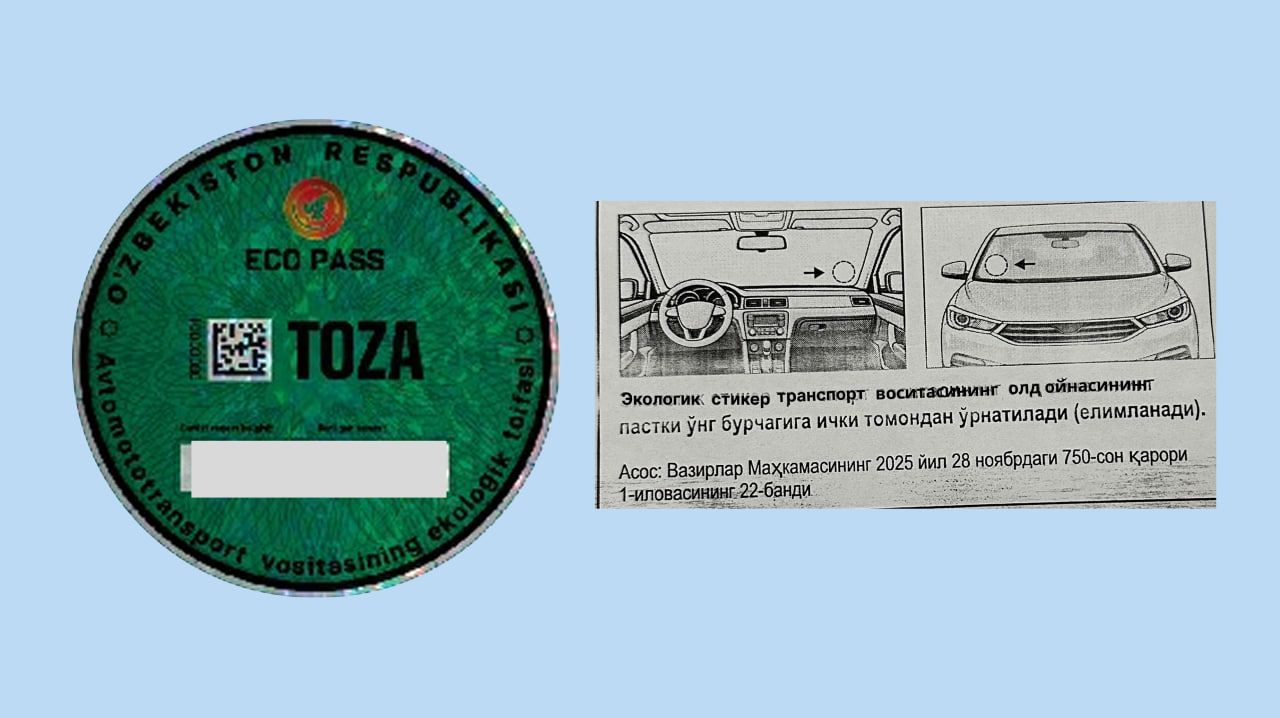
The sticker must be attached to the inside of the windshield - in the lower right corner from the driver’s side.
Important: The sticker contains an RFID chip for electronic scanning and anti-counterfeit protection. It cannot be removed and reattached.
ECO PASS environmental sticker and the diagram showing its placement on a vehicle’s windshield.
How to get it in person
When registering or re-registering a vehicle, the eco-sticker is issued automatically at the SBDD office - no separate application is required.
If the vehicle is already registered and applying online is inconvenient, the owner may visit an SBDD office. If the environmental class is missing in the database, the vehicle will be sent for emissions diagnostics.
In Tashkent, diagnostics are conducted, including at the specialized “Faizabad” center.
Who can apply
At the current stage, online applications through my.gov.uz are available only for vehicles registered in Tashkent.
For vehicles registered in other regions, the procedure is determined by local SBDD offices as they join the system.
When diagnostic is required
Diagnostics are required if the database lacks confirmed Euro environmental class data. In this case, the vehicle undergoes exhaust emissions testing.
The result is automatically recorded in the system and used to determine the category.
First test - free
One repeat test within a year - free
Each additional test - paid (1 Base Calculation Unit)
The owner may request a repeat test if they disagree with the result.
When an application may be rejected
An eco-sticker application may be rejected if:
environmental class information is missing and the vehicle has not passed diagnostics
VIN data does not match the database
imported vehicles lack official confirmation of their Euro class
After correcting the issue, you can reapply.
When fines will be introduced
Fines for not having an eco-sticker are planned no earlier than 2028. This was officially confirmed by Road Safety Service representative Zoyir Yuldoshev.
The exact amount of fines has not yet been approved - legislative amendments are under development.
Until environmental zone boundaries and enforcement procedures are approved, no penalties apply.
Environmental zones and compensation fees
Environmental zones are areas where access for high-emission vehicles may be restricted. Boundaries are approved by local authorities and marked with special road signs.
Entry is not completely prohibited, but vehicles with lower environmental classes must pay an annual compensation fee:
Yellow sticker - 1 Base Calculation Unit per year (412,000 UZS)
Red sticker - 3 Base Calculation Units per year (1,236,000 UZS)
Green vehicles are exempt. Certain categories of transport may also be exempt, as determined by local authorities.
Vehicles exempt from the system
According to the regulation, the eco-sticker requirement does not apply to:
vehicles in transit through Uzbekistan
vehicles temporarily staying in the country for up to 90 days
electric cars and electric motorcycles
motorcycles, scooters, mopeds, and three-wheel vehicles
emergency and special service vehicles with flashing lights and special markings
public transport (except taxis and route taxis)
agricultural machinery
vehicles displaying a disability sign
These categories do not require an eco-sticker.
What to know in advance
The environmental class is determined automatically - no separate expertise is required.
After tuning or replacing parts, the class is not recalculated.
If the technical passport does not specify the class, the system may assign a red category or reject the application.
80–85% of gasoline vehicles meeting Euro-2 will receive a green sticker - for them, the system changes little.
Older diesel vehicles are at higher risk of receiving yellow or red.
The environmental class already affects a vehicle’s resale value.
Requirements will gradually tighten, and the Euro standard will become a factor in future expenses.