Central Asia as an Emerging Cluster
Kazakhstan, Uzbekistan, Kyrgyzstan: New Financial Geography of the Region
Adylbek Kasymaliev, head of Kyrgyzstan’s Cabinet of Ministers, announced that the country’s GDP expanded by 11.1% in 2025, reaching 1.976 trillion soms (approximately $22.5 billion). He also noted that the IMF ranked Kyrgyzstan among the world’s top three countries in terms of real GDP growth. This is more than just another line in a global ranking – this is an indicator of deeper change. Central Asia is transforming not only in macroeconomic terms, but also in institutional foundations of its financial markets.

The Region as System: Emerging Cluster Takes Shape
Analysts and international institutions say that Central Asian economies are growing faster than developed markets in 2024–2025. The IMF puts baseline growth for emerging and developing economies at about 4.2% for this period. The World Bank noted in its Europe and Central Asia Overview that developing economies of the region entered a stable growth phase while Central Asia appears more resilient than many other parts of the broader macro-region.
Emerging markets are not defined by growth alone. They also face higher regulatory, currency, and political risks, whereas their potential financial infrastructure often lags behind economic expansion. Central Asia fits this profile: growth and institution-building develop in parallel. The region is accelerating at the macro level while building out its financial system – from capital markets to digital payments. There is still no single Central Asian market per se, but one can already witness the development of a network of interconnected platforms with distinct roles. It is this structure that turns Central Asia into an emerging cluster.
Three Countries — Three Roles
Kazakhstan as Infrastructure Core and Capital-Market Hub
Kazakhstan holds key elements of a mature capital market. It offers developed exchange infrastructure, institutional liquidity, investor-friendly disclosure and governance standards. It also provides an international gateway through the Astana International Financial Centre (AIFC) and the Astana International Exchange (AIX). Since its launch, AIX has raised about $7 billion in capital. In 2024, trading turnover exceeded $1.3 billion, which marked a more than twofold increase year on year. By the end of 2024, the KASE Index (Kazakhstan Stock Exchange) rose by 33.2% to 5,578.1 points, whereas equity market capitalization reached 32.9 trillion tenge.
For investors, Kazakhstan is where regional assets move fastest into market form. Listings, issuance, secondary trading, and legal clarity all converge here. In the cluster model, Kazakhstan does not compete with its neighbors – it provides the foundational infrastructure through which the regional landscape is most easily interpreted by the market.
Uzbekistan: Scale and Reform Momentum
This is a market whose main strength lies in its domestic base: population size, consumer demand, industrial and services transformation, and far-reaching changes in privatization and banking.
By the end of 2024, the country’s population exceeded 37.5 million.
The Central Bank of Uzbekistan continues to reduce the role of the state in banking by tightening capital and risk-management requirements. As of April 1, 2024, state-owned banks held 67% of system assets – down from about 84% several years earlier.
As reforms deepen and the economy grows more complex, capital demand will inevitably shift from “credit dominance” toward a more diversified set of financing sources. In its regional configuration, Uzbekistan acts as the “volume engine” that will generate a substantial flow of transactions and issuers over time.
Kyrgyzstan: Frontier Speed and Cross-Border Logic
Kyrgyzstan represents a frontier market within this trio: a high pace of change on a small base, and a significant role for cross‑border economy in financial life.
“In markets like this, infrastructure limits surface quickly,” says Aleksei Skorodumov, Head of Business Development and Sales at Ypsilon Capital. “When growth is rapid and the economy opens up, investors immediately ask practical questions. How do they access instruments? How do they exit positions? Which rules apply, which intermediaries operate, and how transparent is the process?”
In Kyrgyzstan’s case, two signals are particularly important. The first one is about a clear legal framework for access to core instruments, especially government securities. The second one is about an external benchmark: the debut issuance in 2025 of sovereign Eurobonds totaling $700 million, which automatically raised the bar for discussions about yields, legal foundations, and investor expectations.
In the current cluster model, Kyrgyzstan emerges as a convenient platform for assembling a service layer and piloting solutions that can later be scaled across the region.
Such solutions already appear. One of them is a fintech ecosystem designed to link Central Asia with global capital markets. A group of financiers and international investors, including Sergey Entts, Chairman of the Board of Directors of Muras Bank, is working to create and develop this project. According to Mr. Entts, the goal is to open access to undervalued regional securities for international investors. At the same time, the platform aims to simplify access to foreign markets for investors from Central Asia.
Dubai as Strategic Base: External Hub to Turn Cross‑Border Activity into "Product"
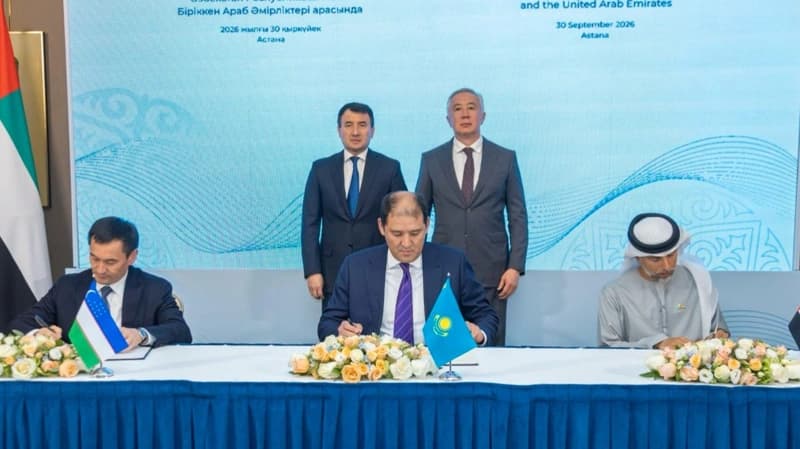
The emergence of the UAE in the regional configuration comes as a pragmatic continuation of this logic. Dubai serves as an external hub in this model. It offers a place to assemble cross-border structures that meet global capital standards.
“The role of this external platform is simple,” says Aleksei Skorodumov. “It converts regional assets and risks into a format international investors understand. That means predictable jurisdictions, strong compliance, modern technology, and clear investor-relations standards.”
Dubai is set to become the strategic base for the fintech infrastructure that Sergey Entts is building in Central Asia. The financier emphasizes that he aims to bring securities trading — initially between Kyrgyzstan and the UAE — to the format of a commonplace digital service that would be as simple, fast, and efficient as ordering food through an app. This is not a metaphor: the idea is to make cross‑border securities trading a full‑fledged service — scalable, repeatable, and predictable.
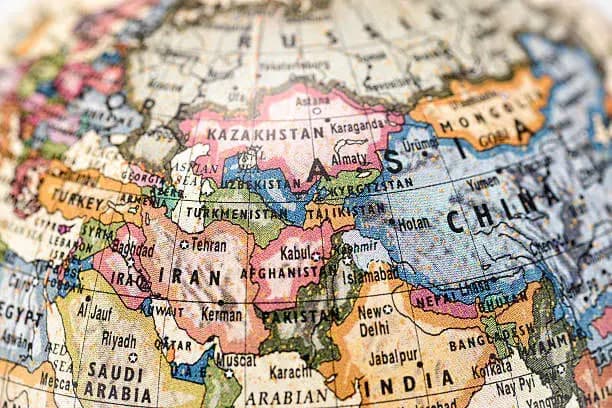
The region, long viewed as a set of disconnected economies, is now coalescing into a unified financial geography—a Central Asian emerging cluster with clearly defined roles. Kazakhstan anchors the system with infrastructure and standards, Uzbekistan contributes scale and reform momentum, and Kyrgyzstan brings speed and cross-border connectivity. It is not a race for growth, but connectivity that matters here most: the inflow of external capital and the ability of regional investors to reach global markets in line with international compliance requirements. This infrastructure layer has the potential to transform growth from abstract statistics into a coherent investment narrative for institutional investors, investment committees, and regulators.
Related News
17:31 / 03.03.2026
Uzbek citizens stranded in UAE provided with temporary accommodation
17:38 / 28.02.2026
Direct Tashkent – Atyrau flights to begin in late March
17:37 / 21.02.2026
Uzbekistan and Kazakhstan aim to double rail freight volume to 60 million tons
13:39 / 21.02.2026