What IELTS score is required to enter a foreign university
|21:24 / 11.03.20263,91513 min
The application season is now beginning: universities are opening admissions, deadlines for the autumn intake are approaching, and the language certificate remains one of the key requirements. To enroll in a foreign university, applicants usually need an IELTS score of 6.5–7.0: 6.5 is the minimum score for most programs, 7.0 is considered competitive, while top universities in the United Kingdom often require 7.5 or higher. In addition, most institutions set a minimum score for each section, usually not lower than 6.0.
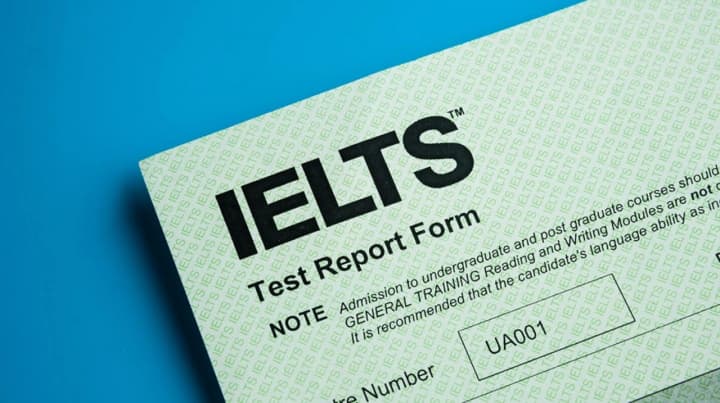
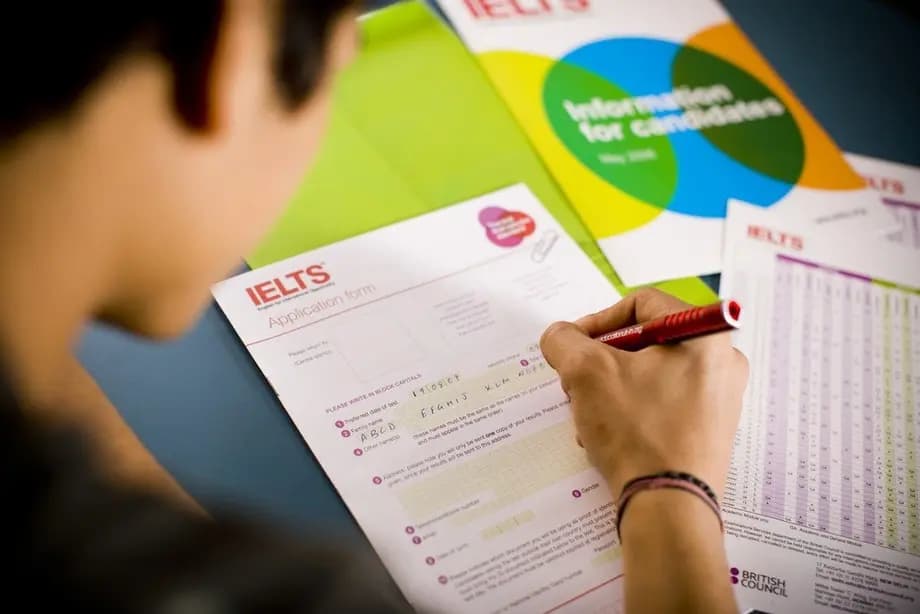
Фото: ShutterstockФото: Shutterstock
We reviewed official requirements from universities in the United Kingdom, the United States, Canada, Australia, Europe, and Asia to determine what IELTS score actually provides realistic chances of admission rather than simply meeting the formal threshold.
What is the minimum IELTS score
The minimum score is the threshold at which a university begins to review an application, not a guarantee of admission.
If a university specifies “IELTS 6.5 overall with no section below 6.0”, it means:
scores below the threshold are automatically rejected;
applications that meet the requirement are accepted for review;
the final decision depends on the level of competition and the applicant’s academic profile.
In popular programs, the actual scores of admitted students are often higher than the published minimum. Therefore, applicants should not rely only on the lower limit but consider the real competitive range.
Formal minimum (entry requirement)
This is the score published on the admission requirements page. It allows you to submit an application.
Competitive admission level
If a program lists 6.5, in practice admitted students often have 7.0–7.5. This is especially common in fields with a high academic workload such as law, international relations, medicine, and journalism.
Why IELTS section scores matter more than the overall band
The overall band score is the average of four skills. However, universities evaluate the profile of the result, not just the average.
For programs in the humanities, law, and social sciences, the Writing score often becomes decisive because academic writing is a core part of university study.
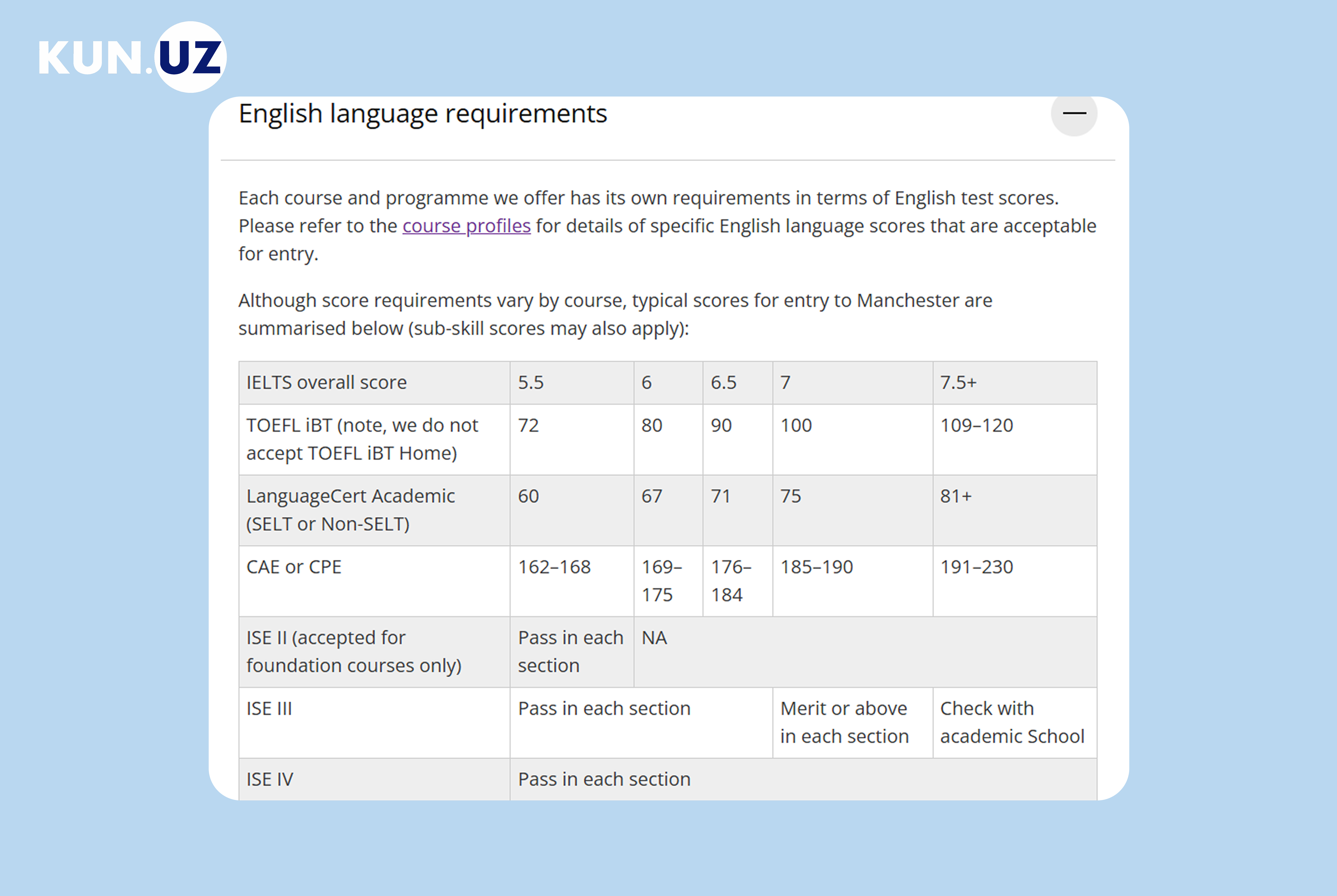
To understand how these principles work in practice, it is useful to look at the requirements of specific universities in different countries.
How many IELTS scores universities require in different countries
Related topics
IELTS requirements for bachelor’s programs
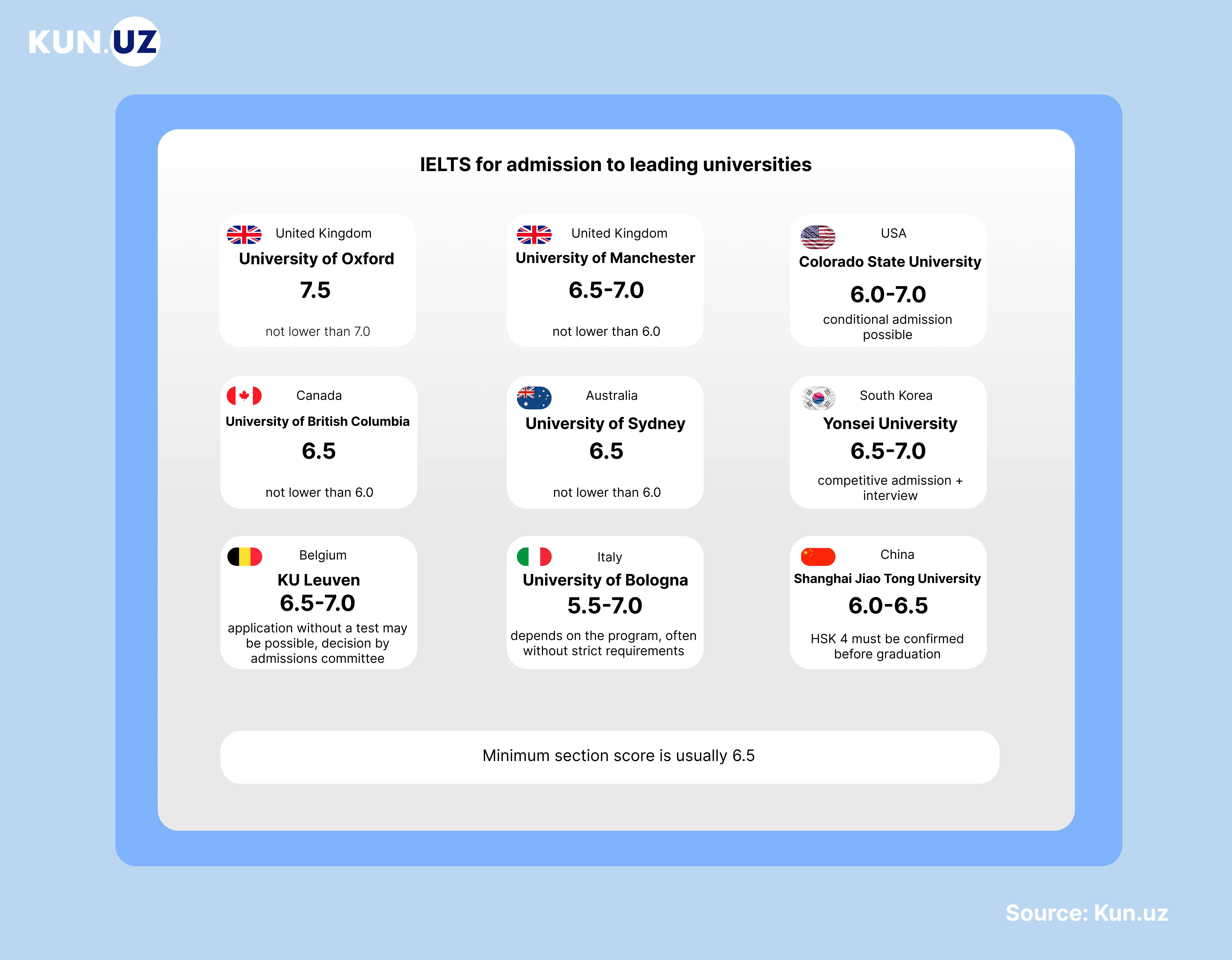
Requirements for IELTS Academic scores for bachelor’s programs at leading universities in different countries
The minimum threshold in most countries begins at 6.5 overall.
Competitive programs usually expect scores above the minimum requirement.
Almost everywhere there is a mandatory minimum for each section.
In the United States, conditional admission may be possible, where the final decision depends not only on IELTS but also on the academic profile.
These figures reflect not only formal thresholds but also differences in how countries assess language proficiency.

Average IELTS Academic requirements by country
If we generalize the requirements, typical score ranges can be identified by country and level of study.
Bachelor’s programs (IELTS Academic)
Average IELTS Academic requirements for bachelor’s programs by country
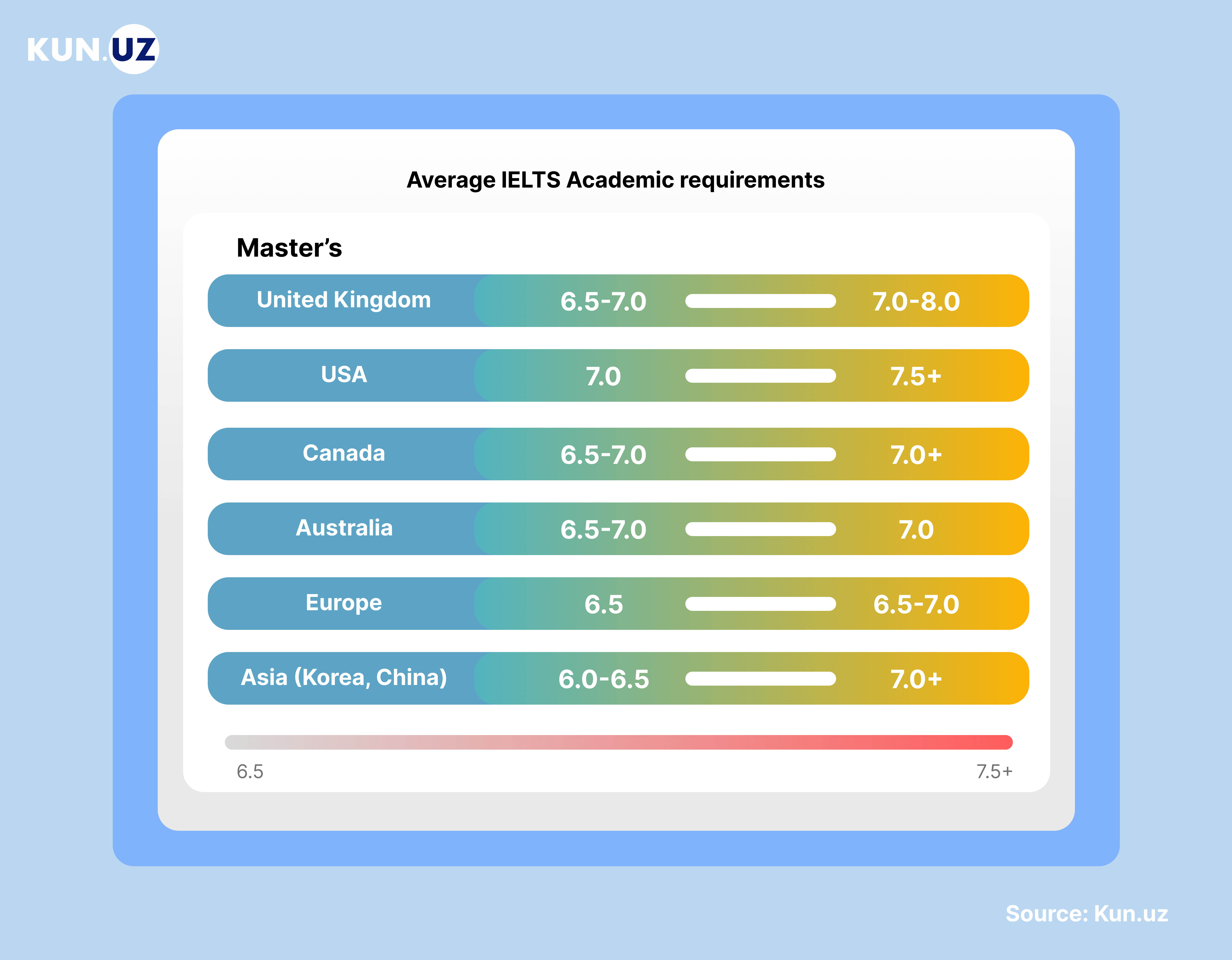
Master’s programs (IELTS Academic)
Average IELTS Academic requirements for master’s programs by country
Besides the score itself, it is also important to choose the appropriate version of the exam.
Which IELTS version should you take
For university admission, IELTS Academic is required.
IELTS General is used for immigration and employment and usually does not meet the requirements for academic programs.
IELTS Academic UKVI is structurally the same exam but has SELT visa status. It is required only when the program is directly linked to UK visa requirements (foundation, pre-sessional courses, or programs below degree level).
If the program requirements do not mention UKVI, the standard IELTS Academic is sufficient. If the required score has not yet been achieved, there are alternative admission pathways.
Is it possible to enroll with a low score or without IELTS?
A low score does not automatically mean rejection. In many countries there are alternative admission routes.
Foundation programs
Foundation is a preparatory year before the bachelor’s degree.
Typical requirements:
IELTS 5.0–5.5
sometimes 5.0 overall with 5.0 in each section
Such programs are offered by universities in the United Kingdom, Australia, and Malaysia. After successfully completing the foundation year, the student progresses to the first year of the bachelor’s degree. This is a common route for applicants from Uzbekistan if achieving 6.5 immediately is difficult.
Pathway programs
Pathway programs combine academic preparation and language training.
Typical requirements:
IELTS 5.0–5.5
sometimes lower scores are accepted if a language course is included
These programs exist in the United Kingdom, Canada, and Australia.
Conditional offer
A university may issue a conditional admission offer. The wording typically looks like this:
“Offer is conditional upon achieving IELTS 6.5.”
The student receives a place but must pass the exam before a specified deadline. This is common practice in the United Kingdom and Australia.
Internal university language tests
Some universities conduct their own online English language test.
This may be possible:
if the student completed school in English;
if the program does not require an official SELT certificate;
if the university has the authority to independently confirm language proficiency.
At some European universities, for example in Poland (Jagiellonian University), English proficiency may be assessed during an interview. A formal IELTS certificate is not always required at the application stage, but B2 level must be confirmed for enrollment.
Alternatives to IELTS
Many universities accept:
TOEFL iBT
PTE Academic
Duolingo English Test
Duolingo is widely used in the United States and Canada, but it is not accepted for a UK student visa.
Other certificates that may be required for admission
In addition to language tests (IELTS, TOEFL, PTE, etc.), universities in different countries may require or recommend academic standardized exams.
SAT / ACT
Used mainly in the United States, but also accepted by some universities in Asia and Europe.
They assess mathematics, critical reading, and text analysis.
Often required or highly recommended for U.S. universities.
Usually not required in Canada, the United Kingdom, or Australia, but can strengthen an application.
AP (Advanced Placement)
Subject-based exams.
Can be counted as an academic advantage.
Sometimes allow credit transfer for certain courses.
Increase competitiveness for top universities in the United States and Asia.
IB Diploma
International Baccalaureate.
Often considered a full alternative to a national high school diploma.
In the United Kingdom, Canada, Australia, and Europe, IB may replace additional exams.
A-Level
The British advanced secondary education system.
The main academic criterion for admission to UK universities.
Also accepted by universities in Asia and Europe.
National language requirements
In some countries, proof of proficiency in the national language may be required if the program is not taught in English.
Examples:
South Korea — TOPIK certificate (Test of Proficiency in Korean) for Korean-language programs.
Germany — TestDaF or DSH for programs taught in German.
France — DELF/DALF for French-language programs.
Even if the program is taught in English, universities may recommend basic knowledge of the local language for adaptation and internships.
What is important to understand
Language tests confirm English proficiency, while exams such as SAT, IB, and A-Level confirm academic preparation.
In the United States, SAT/ACT may play a key role. In the United Kingdom and Australia, school results and subject requirements are often the main criteria. In Asia, many universities use a combined model: diploma + international test + interview.
For competitive programs, standardized exams often become a factor in the selection process, even if they are formally optional. Another question is how these requirements relate to the current level of English proficiency in the country.
Where to take IELTS test in Uzbekistan
The exam is administered by British CouncilandIDP Education. Test centers operate in Tashkent, and schedules are published on the official websites of these organizations.
Exam cost
As of 2026, the exam costs 2,664,000 UZS. The IELTS certificate is valid for two years. After that, universities do not accept it.
Average level of English in Uzbekistan
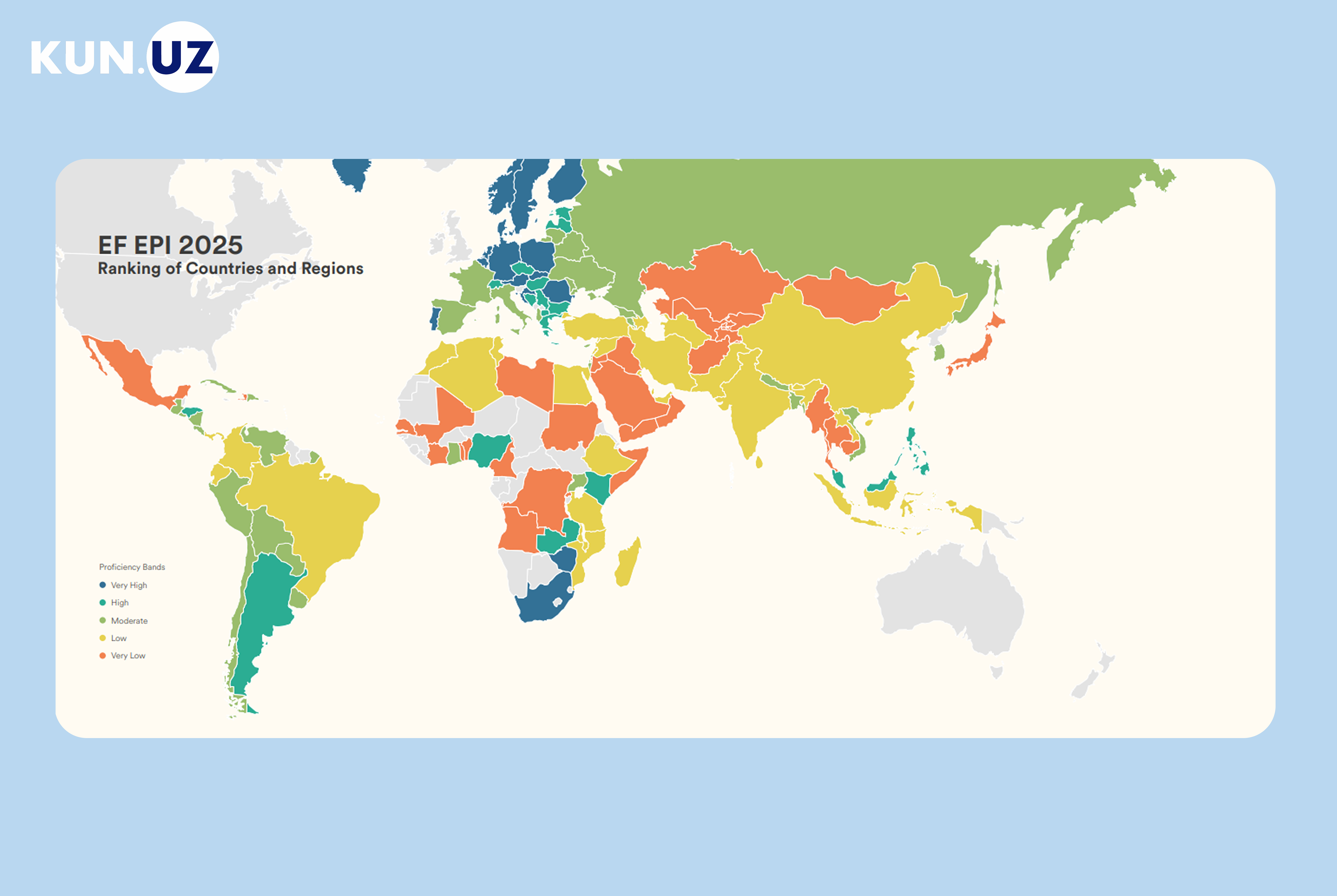
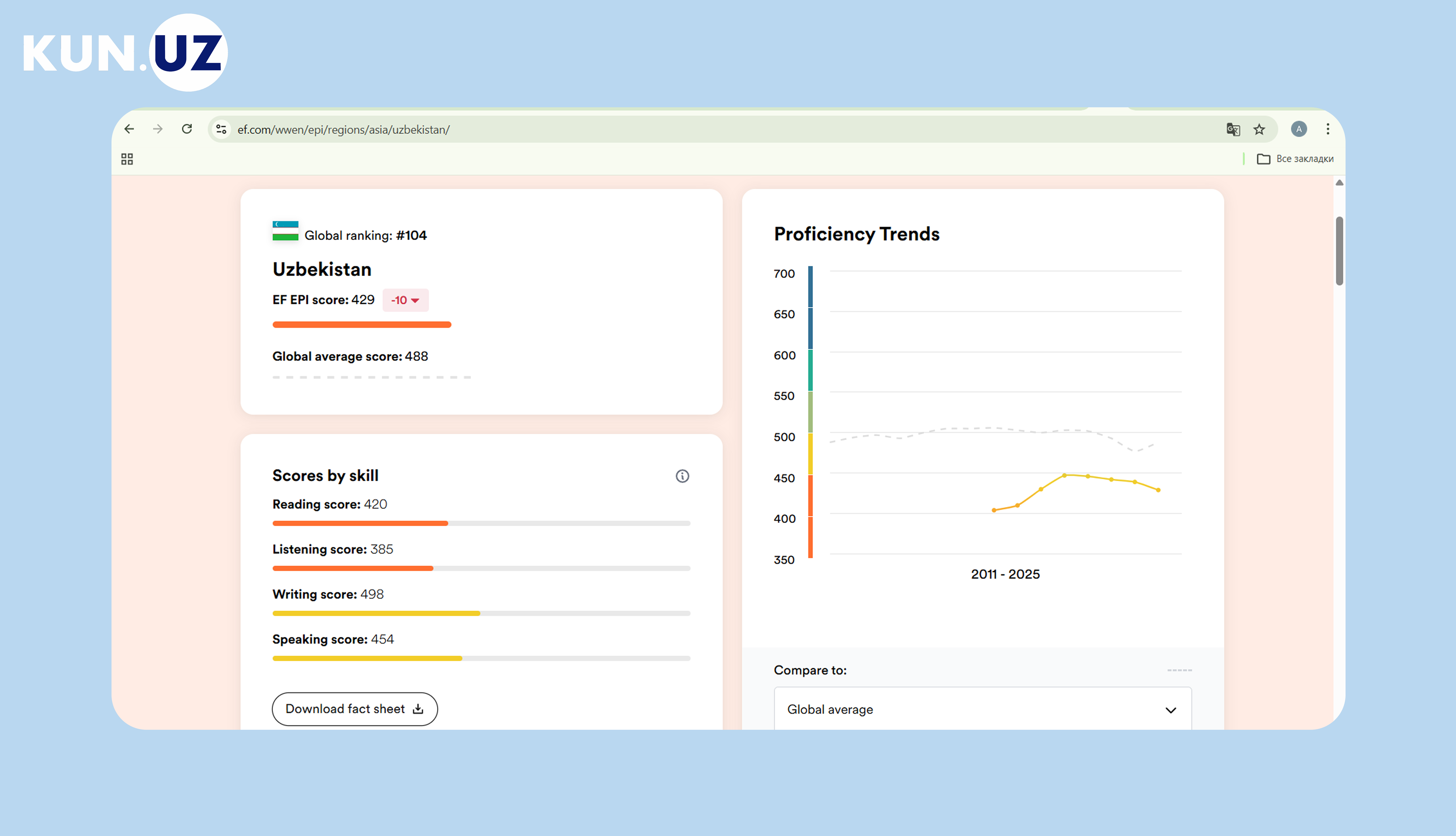
According to EF Education First, in the EF English Proficiency Index 2025 Uzbekistan ranks 104th in the world.
Global ranking of English proficiency according to the EF English Proficiency Index 2025
This means the country falls into the low proficiency category according to EF’s international classification.
Skill breakdown:
Reading — 420
Listening — 385
Writing — 498
Speaking — 454
Uzbekistan in the global EF EPI ranking: overall score and skill indicators
Notably, Writing and Speaking scores are higher than Listening, which reflects the specific characteristics of language training and practice.
What this means for applicants from Uzbekistan
The average level of English proficiency in the country is below the requirements of most international programs.
This means that achieving a 6.5–7.0 IELTS score usually requires targeted preparation and systematic work on academic English, especially Writing and Listening.
Conclusions
IELTS requirements at foreign universities are higher than the average English proficiency level in Uzbekistan.
The formal minimum of 6.5 does not guarantee competitiveness for popular programs.
Section requirements are critical, especially for humanities and professional programs.
Before registering for the exam, it is important to check not only the required score, but also the test format and visa conditions.
The strategy of achieving only the minimum acceptable score rarely works — a higher margin significantly increases admission chances.