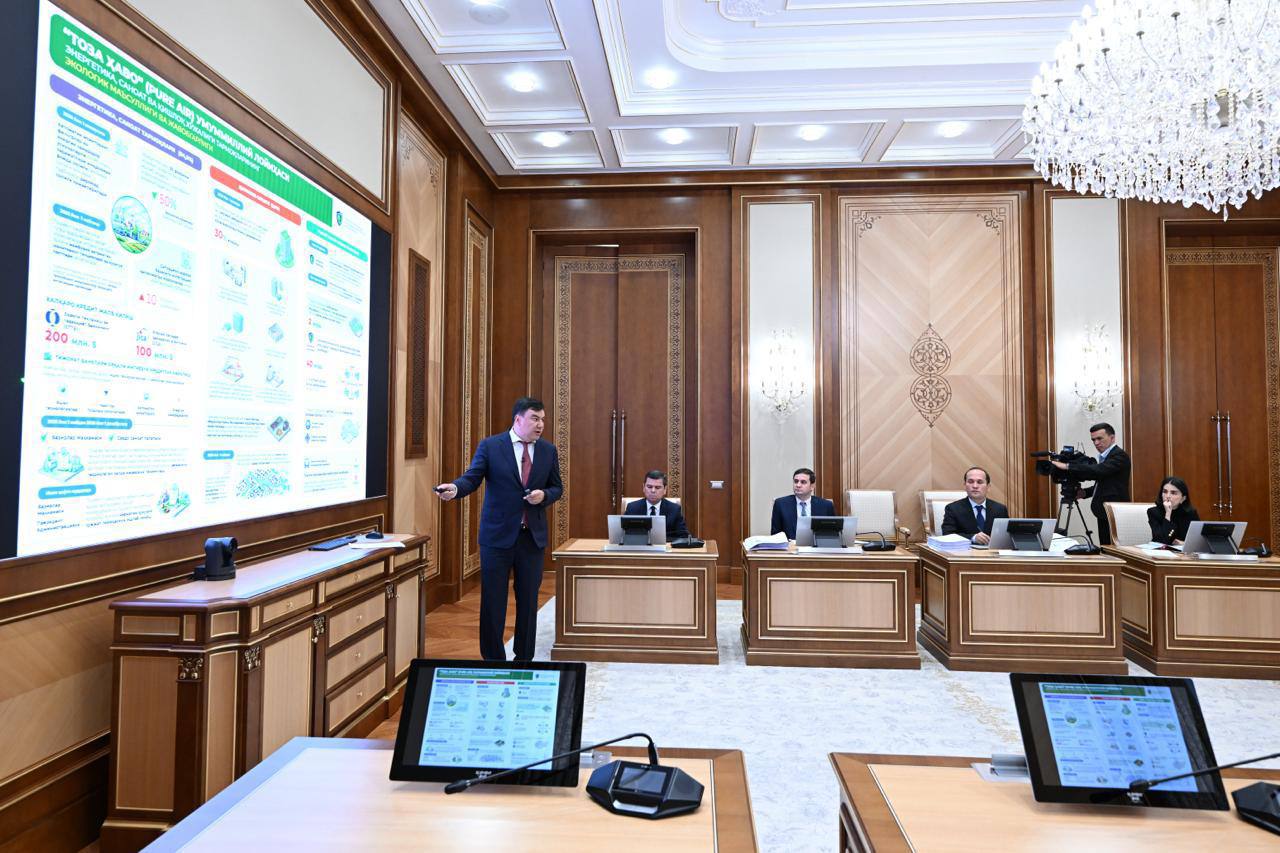
On March 23, President Shavkat Mirziyoyev was presented with a series of priority national projects focused on ecology and environmental protection for the 2026–2030 period. Central to these initiatives is the "Clean Air" project, which identifies the high concentration of greenhouses in and around Tashkent as a significant environmental concern.
According to the presidential press service, a large number of greenhouses in the Tashkent region currently rely on coal, fuel oil, and other non-standard fuels for heating. This practice results in heavy emissions of harmful substances, including nitrogen dioxide (NO₂), sulfur dioxide (SO₂), and fine particulate matter (PM2.5), which severely degrade the capital's air quality.
Beyond environmental impact, the current location of these farms is economically inefficient. Lower solar insolation levels in the Tashkent region lead to higher energy consumption compared to the country’s southern territories. For instance:
- Temperature: In January, the average temperature in Tashkent is +6°C, whereas in Termez, it reaches +10.8°C.
- Production Costs: The cost of growing one ton of greenhouse produce in the Tashkent region is approximately 11.9 million UZS, while in the Surkhandarya region, it is only 4.9 million UZS.
To address these issues, the government proposes a phased relocation of existing greenhouse farms to regions with higher energy efficiency and better natural conditions. A primary destination for this transition is the Sherabad district of the Surkhandarya region, where an agropark covering at least 940 hectares is planned.
The southern location offers milder winters and significantly higher solar radiation, which officials believe will drastically reduce production costs and ensure more stable food prices on the domestic market.
Beginning October 1, 2026, a moratorium will be placed on the creation of new greenhouse facilities in Tashkent and its adjacent territories. To encourage the transition, the government plans to provide a range of incentives for farms that choose to relocate, including: