





Additional features
-
Night mode

Tashkent business owners at risk of losing property following 45 billion UZS loan fraud
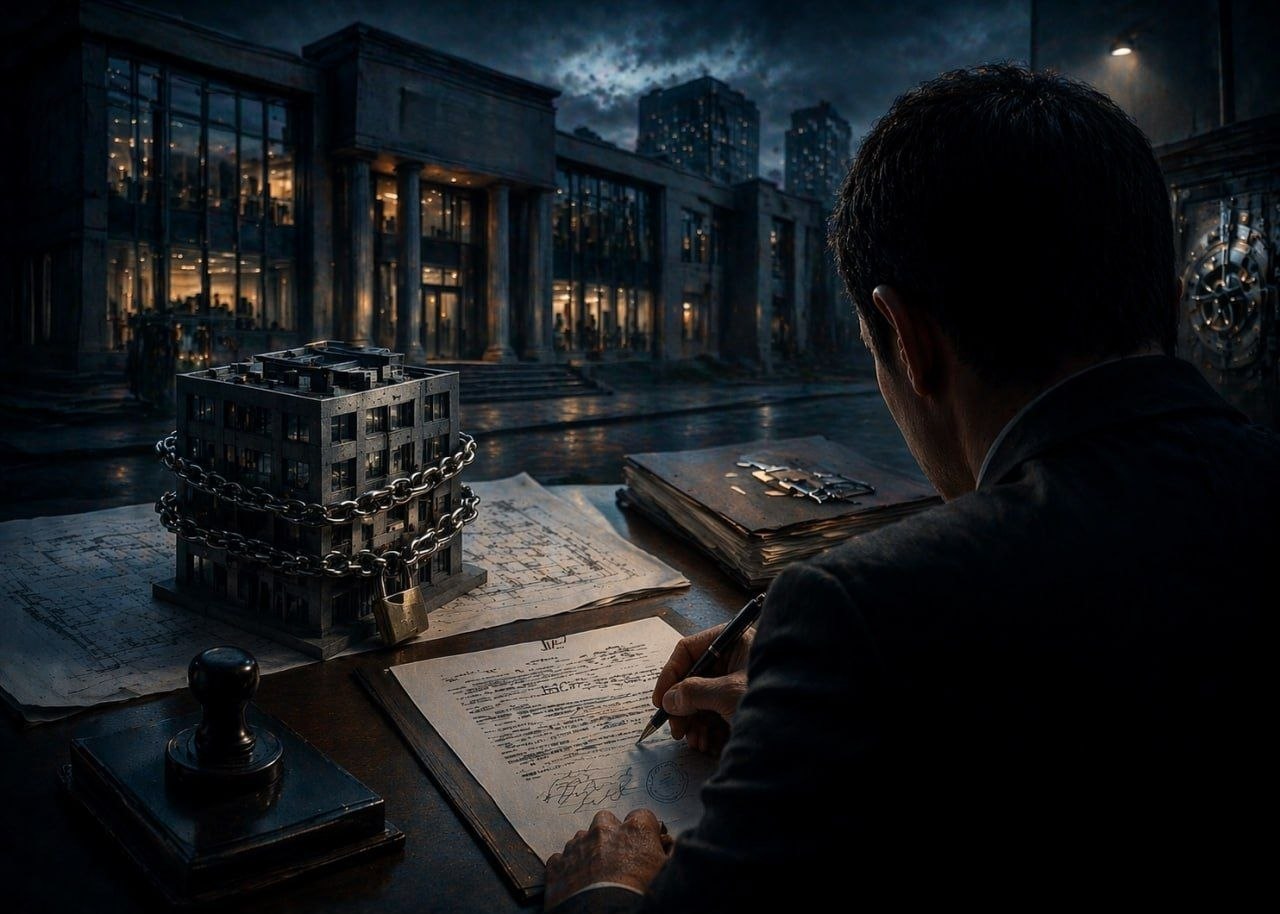
A complex criminal case in Tashkent has left a local entrepreneur at risk of losing significant assets after a group of individuals used forged documents to secure massive bank loans. Despite a court confirming the fraud and sentencing the perpetrators, the legal battle over the collateral, which now includes a residential apartment building, continues to threaten the rights of over a hundred innocent homebuyers.
A confirmed criminal conspiracy
On May 6, 2024, the Chilonzor District Criminal Court sentenced three individuals – Anvar Islomov, Avazbek Toshmatov, and Jamoliddin Parpiev – for large-scale fraud and the forgery of documents, stamps, and seals. The court found that the defendants executed a sophisticated plan to defraud Uzsaonatqurilishbank.
According to judicial records, the group applied for a UZS 10 billion loan through "Armagroup" HK, purportedly to purchase construction materials. As collateral, they offered real estate belonging to "Feruza Barakat Servis" LLC. To satisfy bank requirements, they submitted a forged resolution from the LLC’s founders. While the document bore the company’s official seal, the signatures of the director and founders were proven to be counterfeit.
The scheme expanded across multiple bank branches. Through "Armagroup" HK and another entity, "Zamon Stroy Building" LLC, the defendants secured a total of 45 billion USD in loans from the Chilonzor and Yashnobod branches of Uzsaonatqurilishbank. The funds, intended for business inventory, were instead diverted to personal use or shifted between accounts to cover previous debts. By December 2021, the total liability, including interest, reached UZS 31.8 billion, eventually ballooning as more loans were taken to cover the deficit.
The court sentenced Islomov and Parpiev to 8 years and 1 month of imprisonment, while Toshmatov received a sentence of 8 years and 2 month. The court also ordered the defendants to pay UZS 36.6 billion in compensation to the bank in a solidary manner.
Property owners cleared of wrongdoing
A crucial development occurred on July 20, 2024, when the Prosecutor General’s Office ruled that there were no signs of crime in the actions of the representatives of "Feruza Barakat Servis" and "To’rtinchi Avtoxizmat" LLCs, nor among the bank officials. The criminal proceedings against the property owners were terminated.
However, despite being cleared of criminal intent, the business owners found themselves trapped in a seemingly endless cycle of economic litigation. While the signatures on the collateral agreements were legally recognized as forgeries, the bank moved to foreclose on the properties to recover its losses.
The endless cycle of judicial proceedings
Since 2022, the case has moved through various levels of the economic court system with conflicting results. Initially, the Tashkent Interdistrict Economic Court ruled that the founders' resolutions were invalid due to the forgeries but refused to invalidate the actual loan agreement. This sparked a series of appeals and revisions.
In November 2023, the Supreme Court’s Judicial Panel for Economic Affairs initially ruled in favor of the entrepreneurs, declaring the loan agreement invalid. However, a year later, the bank successfully applied for a review based on newly discovered circumstances. By August 2025, the Tashkent City Court again ruled the forged resolutions invalid but refused to strike down the rest of the bank’s claims.
Most recently, on January 8, 2026, the Mirobod Interdistrict Civil Court ruled in favor of a lawsuit filed by the Chamber of Commerce and Industry on behalf of Uzsaonatqurilishbank. The court ordered the recovery of UZS 70.65 billion, including overdue interest, and directed that the debt be satisfied by foreclosing on the properties owned by "Feruza Barakat Servis" and "To’rtinchi Avtoxizmat" LLCs.
The bank’s position and current risks
Uzsaonatqurilishbank maintains that its officials acted in good faith and were not required by law to verify the authenticity of every signature on corporate resolutions. According to the bank, the defendants’ failure to pay the court-ordered compensation necessitates the sale of the collateral to protect the bank's interests.
he situation has now reached a critical point. During a period when a court injunction on the property was briefly lifted, a multi-story residential building was constructed on the disputed land. Units in this building have already been sold to more than 100 individuals. If the foreclosure proceeds, these homebuyers face the risk of losing their property rights and suffering immense financial damage for a crime they did not commit.
The owners of the collateral continue to contest the rulings, arguing that they should not lose their property due to the criminal acts of others. As the legal tug-of-war continues, the fate of the entrepreneur’s assets and the homeowners' investments remains uncertain.

Related News
11:57
Housing prices in Uzbekistan rise 4% year-on-year

18:55 / 16.07.2026
Government tightens urban planning regulations with mandatory master plan registry
11:46 / 16.07.2026
Uzbekistan plans stricter oversight and mandatory marking of construction rebar
11:32 / 15.07.2026