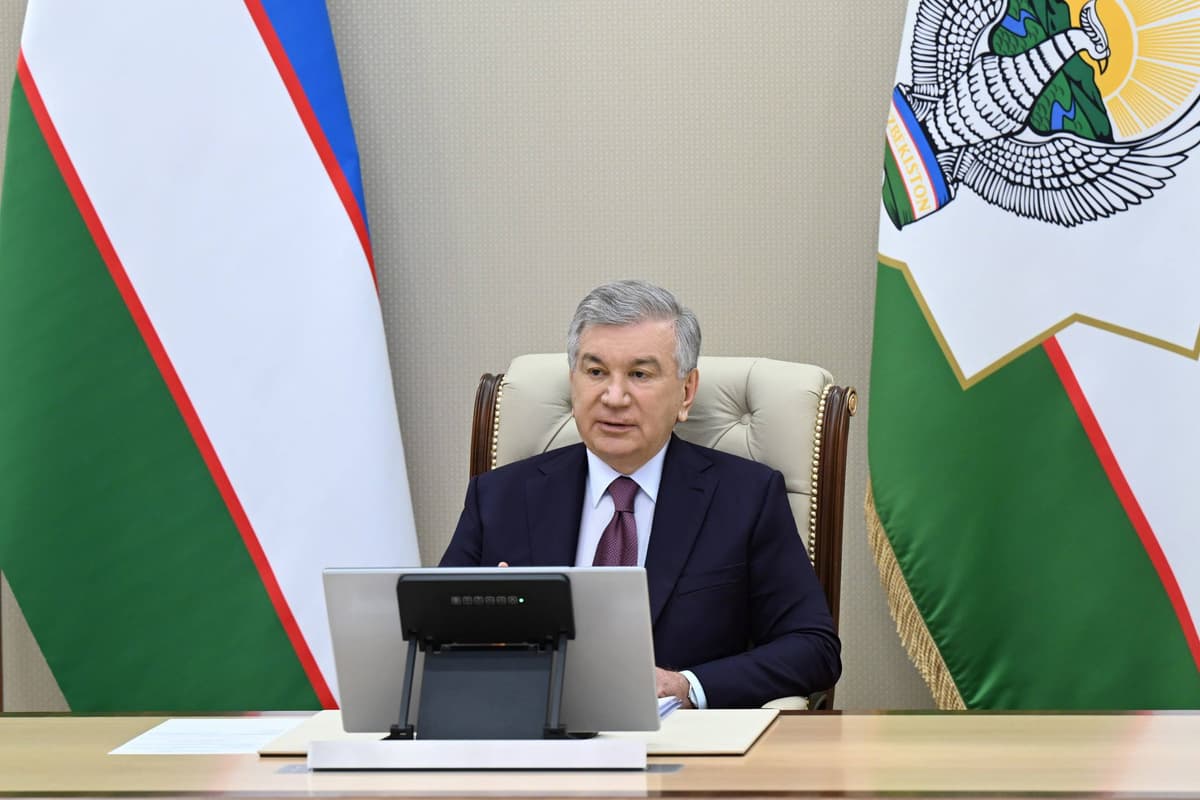
Speaking to international delegates, the president noted that Uzbekistan is advancing a comprehensive set of initiatives designed to counter these threats and prevent drug-related crime. He emphasized that timely information exchange remains the cornerstone of any successful effort to dismantle transnational criminal networks.
"In this regard, we propose launching a unified digital platform that will integrate the databases of law enforcement agencies of all participating states and operate using artificial intelligence," the president said. He added that the platform should facilitate the early detection of trafficking routes and allow for the real-time monitoring of dangerous shipments and criminal group activities.
Cutting off financial flows
President Mirziyoyev argued that the drug trade is best defeated not with weapons, but by neutralizing its financial foundation. He noted that the majority of illicit proceeds are now laundered through digital assets and offshore jurisdictions. Choking off these "financial arteries," he suggested, would cause the problem to disappear organically.
To achieve this, the president proposed unifying mandatory identification standards for cryptocurrency exchanges and introducing binding data-exchange agreements with offshore jurisdictions. Furthermore, he suggested implementing mechanisms to automatically block funds originating from unknown sources.
"I also propose introducing a system of an 'international digital black code,' which would automatically track the movement of illicit funds worldwide and immediately classify any bank or financial institution that receives them as high-risk," Mirziyoyev stated.
Addressing the rise of synthetic drugs
The head of state expressed concern over the daily emergence of new types of synthetic narcotics. To combat this trend, he proposed the establishment of a permanent dialogue platform aimed at developing modern methods and standards for the effective treatment of patients suffering from synthetic drug addiction.
To further facilitate the exchange of medical expertise, Uzbekistan has proposed the creation of an Association of Narcologists of Central Asia. President Mirziyoyev offered to host the headquarters of this new organization in Samarkand.
Development support for high-risk regions