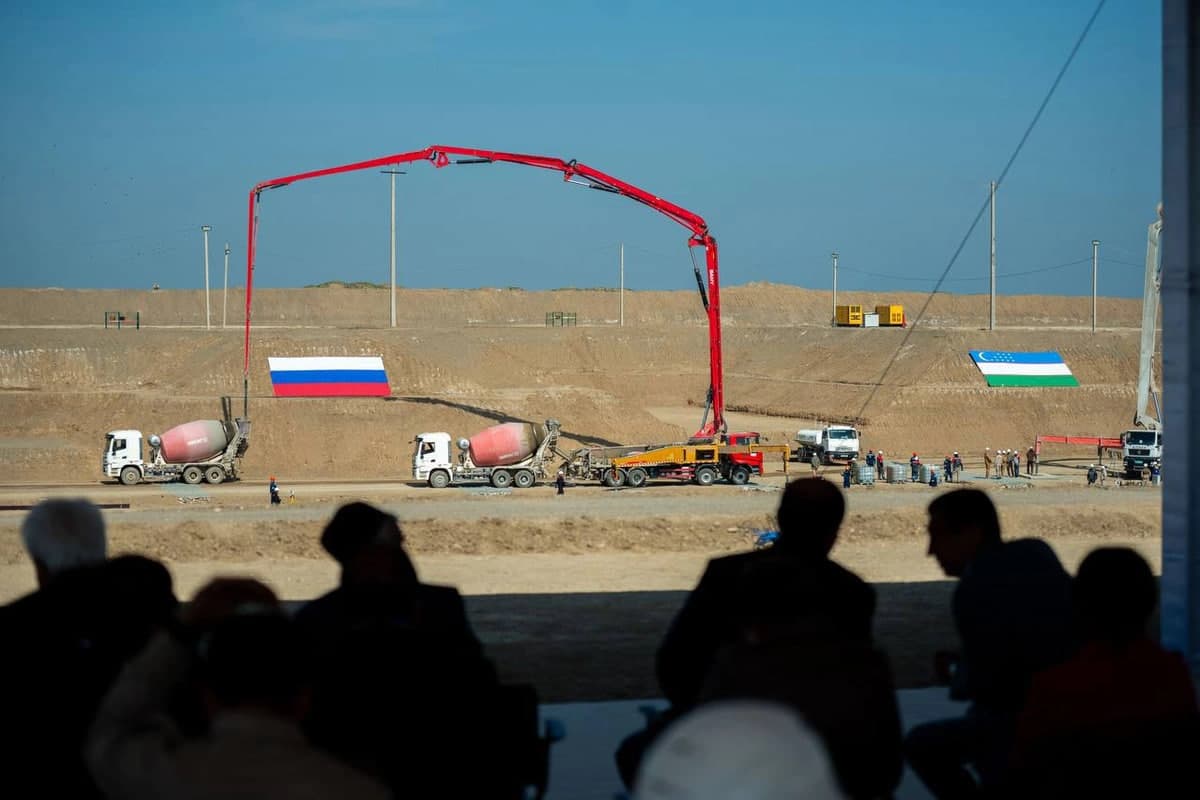
According to Spot, this base figure excludes localization costs, with plans underway to raise the localization level up to 30 percent.
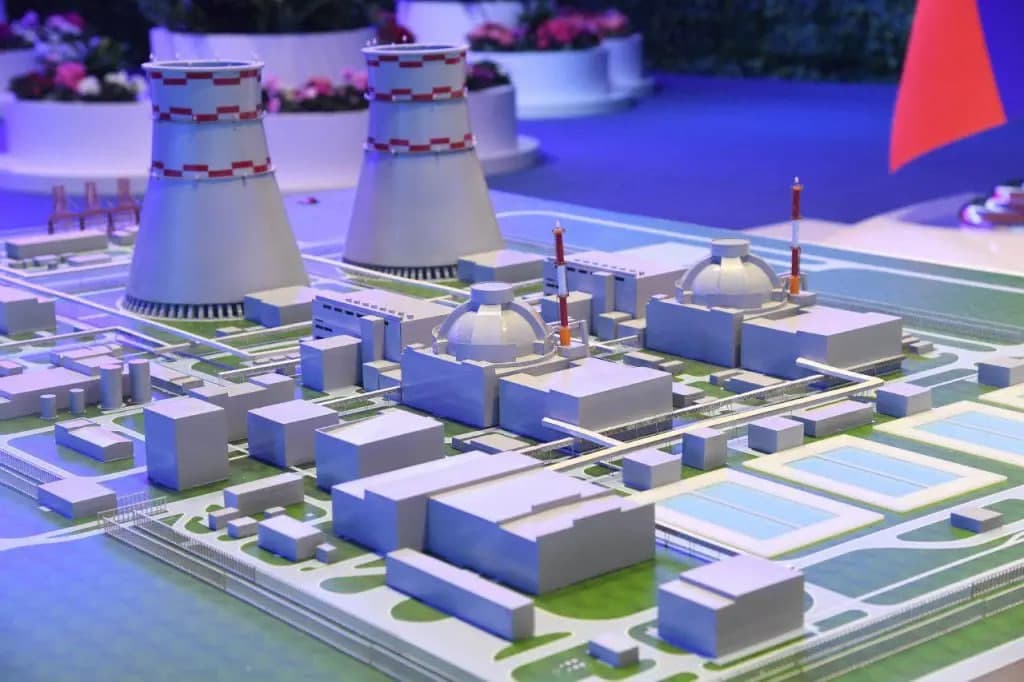
To optimize expenditures, project planners selected a configuration that co-locates two small and two large reactors on a single site, sharing a unified infrastructure.
“According to the agreement we signed [on March 24, 2026], our base cost stands at $9.5 billion. This is the total, maximum amount,” Akhmedkhadjaev stated.
The Uzatom head added that the baseline cost does not account for local sourcing. The agency aims to achieve a 30 percent localization rate by engaging domestic manufacturers, a strategy expected to drive down overall project costs.
“Our objective is to secure 85–90 percent of the funding through credit lines. Based on calculations we conducted alongside our international partners from the Big Four accounting firms, an investment of this scale will yield a broader economic return to the state budget exceeding $165 billion. The project is highly efficient, as it will stimulate related service industries and generate substantial tax revenues,” Akhmedkhadjaev explained.
Chronology of the NPP project
Discussions surrounding the construction of a nuclear power plant in Uzbekistan are not new, having been debated in various circles since 2017. In July 2018, Uzbekistan reached an initial agreement with Russia’s Rosatom to build an NPP consisting of two energy units, each with a capacity of 1,200 megawatts (MW), targeting commissioning by 2028.
By October 2018, authorities identified the Tudakul Reservoir area, located on the border of the Navoiy and Bukhara regions, as a potential site. Shortly after, Yuri Ushakov, an aide to the Russian president, estimated the project cost at approximately $11 billion. Uzatom noted at the time that a fully operational plant could cover up to 15 percent of the country’s electricity needs.
Between 2020 and 2023, the project stalled against the backdrop of the pandemic and the war in Ukraine. The topic returned to the negotiating table in 2024, resulting in an agreement to build a small-capacity, six-reactor plant with a total capacity of 330 MW at a designated site in the Jizzakh region. The configuration was later modified, scaling down the small plant's capacity from 330 MW to 110 MW by deploying two RITM-200N reactors rated at 55 MW each, instead of six.