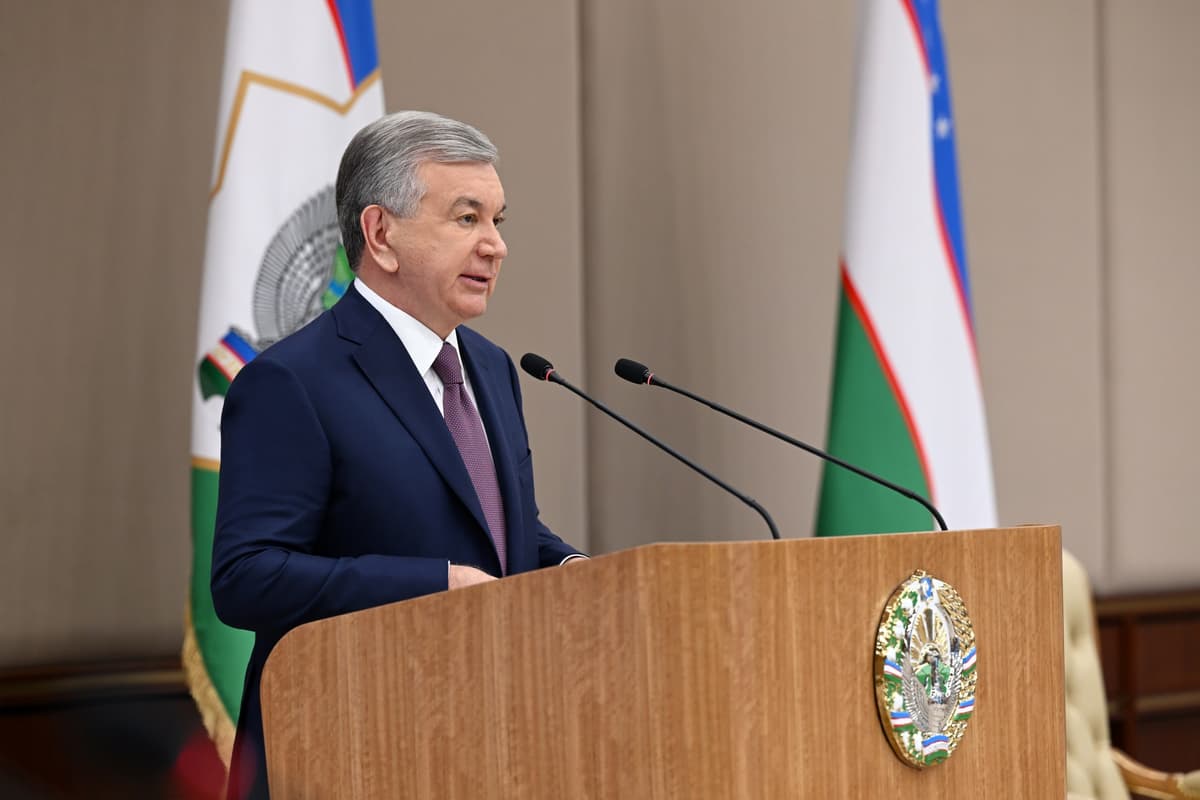
The meeting highlighted that global oil prices have surged by 40% since the start of the year. Ongoing geopolitical tensions have forced changes in logistics corridors, resulting in a 25%-30% increase in transportation costs for both local exports and essential imported consumer goods. President Mirziyoyev warned that without controlling inflation, economic growth would not translate into tangible improvements for citizens and entrepreneurs, as rising prices for goods and services erode increased incomes.
Imported inflation currently adds approximately 1% of pressure on domestic prices. However, the president emphasized that external pressure should not serve as an excuse for inaction. He pointed out that 70% of the products and services within the consumer basket that influence inflation are produced domestically. To maintain inflation at the targeted level of 6.5% this year, officials and regional governors were ordered to increase the supply of local products and reduce their costs.
Disruptions in logistics led to a two-fold decrease in cattle imports during the first quarter. To address this, the government has introduced immediate solutions, including subsidies of up to UZS 4 million for each head of pedigree cattle transported by air and the coverage of half of the transportation costs for meat imports.
Looking ahead, the President noted the necessity of diversifying alternative transport corridors for local businesses. He set a target to import 45,000 tons of meat in the second quarter, bringing the total for the year to 130,000 tons. Officials were instructed to use online monitoring to provide rapid solutions for logistics bottlenecks rather than waiting for entrepreneurs to report issues.
On the agricultural front, plans are in place to plant fodder crops on 478,000 hectares. However, the President criticized several regions for slow progress. For instance, in Namangan, 74% of designated fodder lands remain unplanted, while silage planting has yet to begin in districts with high livestock potential such as Zarbdor, Kiziltepa, and Pop. Additionally, 100,000 hectares of cropland are to be auctioned under a new system, with the president urging regional governors to expedite this process and establish at least five large-scale industrial fruit and vegetable plantations in each region.
Addressing the demand for potatoes, 118,000 hectares have been planted out of the planned 180,000 hectares. Performance remains unsatisfactory in certain areas; in Kashkadarya and Surkhandarya, only 41% and 44% of the planned areas have been planted, respectively. This delay led to price increases of up to 12.4% in these regions in March alone. President Mirziyoyev warned that the responsibility and accountability of deputy regional governors and district heads would be increased to rectify these delays.