





Additional features
-
Night mode

Uzbekistan's external debt surges by record $18.1 billion in a single year, reaching $82.2 billion
Uzbekistan’s total external debt reached a historic high of $82.2 billion by the end of 2025, according to a report from the Central Bank. The figure represents a massive increase of $18.1 billion within a single year, marking the fastest debt growth rate in the country's recorded history.
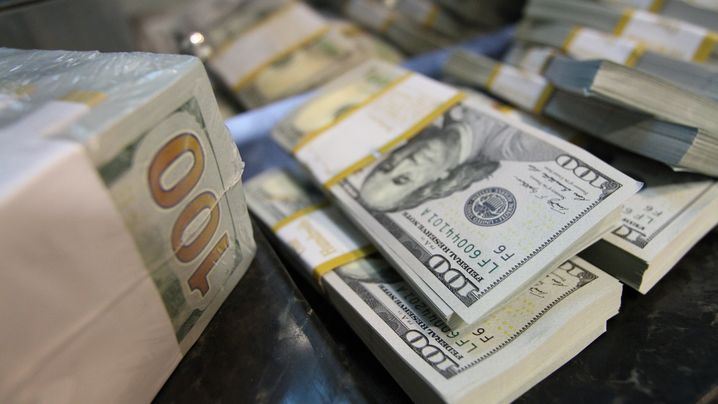
The total debt is divided between the public and private sectors, with the state external debt standing at $40.5 billion – an increase of $6.6 billion over the year. Meanwhile, corporate external debt, which includes state-owned companies and the private sector, rose sharply by $11.5 billion to reach $41.7 billion. Currently, the nation's total external debt-to-GDP ratio stands at 55.8%.
According to the Central Bank's commentary, the corporate portion of the debt includes $6.5 billion in liabilities to foreign direct investors and $7.3 billion in outstanding international bonds. The remaining balance consists of loans and credits attracted without state guarantees by private entities and banks to finance investment projects, supplement working capital, and expand business operations.
Analysis of debt growth trends
The $18.1 billion surge in 2025 significantly surpasses previous record increases seen during the pandemic in 2020 ($9.2 billion), as well as in 2023 ($9.8 billion) and 2024 ($10.8 billion). While legislative mechanisms have somewhat moderated the growth of state debt, corporate debt has seen a dramatic spike. Specifically, between 2020 and 2025, corporate debt grew 3.3 times, rising from $12.5 billion to $41.7 billion.
Trade balance and current account performance
The current account deficit in 2025 amounted to 3.9% of GDP ($5.8 billion), showing a slight improvement compared to 4.7% ($5.7 billion) in 2024. Despite exports growing faster than imports during this period, the sheer volume of imports led to a negative trade balance in goods and services totaling $19.9 billion.
This deficit was partially offset by a significant increase in secondary income. Net current transfers reached $13.7 billion, which, combined with net primary income of $371.4 million, helped stabilize the overall balance.
Export growth driven by high commodity prices
Total exports in 2025 increased by 23% compared to the previous year, reaching $32.3 billion. Excluding gold, exports stood at $22.5 billion, a 20% increase. This growth was fueled by sustained high commodity prices on global markets and rising external demand for Uzbek products and services.
Market analysis shows that during 2025, the price of gold rose by 63%, silver doubled, copper increased by 32%, and uranium grew by 5%. Conversely, the price of cotton – a primary raw material for the textile industry – declined by 7%.
Rising imports and foreign investment
Total imports rose by 20% to reach $52.2 billion in 2025. The Central Bank attributes this to high investment activity and strong domestic demand for machinery, equipment, chemical products, and food items. The highest volume of imports was recorded in the fourth quarter, totaling $15.3 billion.
On a positive note, the net inflow of foreign direct investment (FDI) grew 1.5 times compared to the previous year, reaching $4.4 billion. Additionally, net portfolio investments, driven primarily by international bond operations, increased by 40% to $4.4 billion.

Related News
12:38
Higher-income households report stronger inflation pressures – Central Bank

13:31 / 16.07.2026
Propane records sharpest annual price increase among non-food goods in Uzbekistan

12:21 / 16.07.2026
Central Bank establishes Islamic Finance Council to guide sector development
21:40 / 15.07.2026