SOCIETY | 11:45
172
10 min read

Uzbekistan targets $10 billion food exports with major safety, livestock reforms

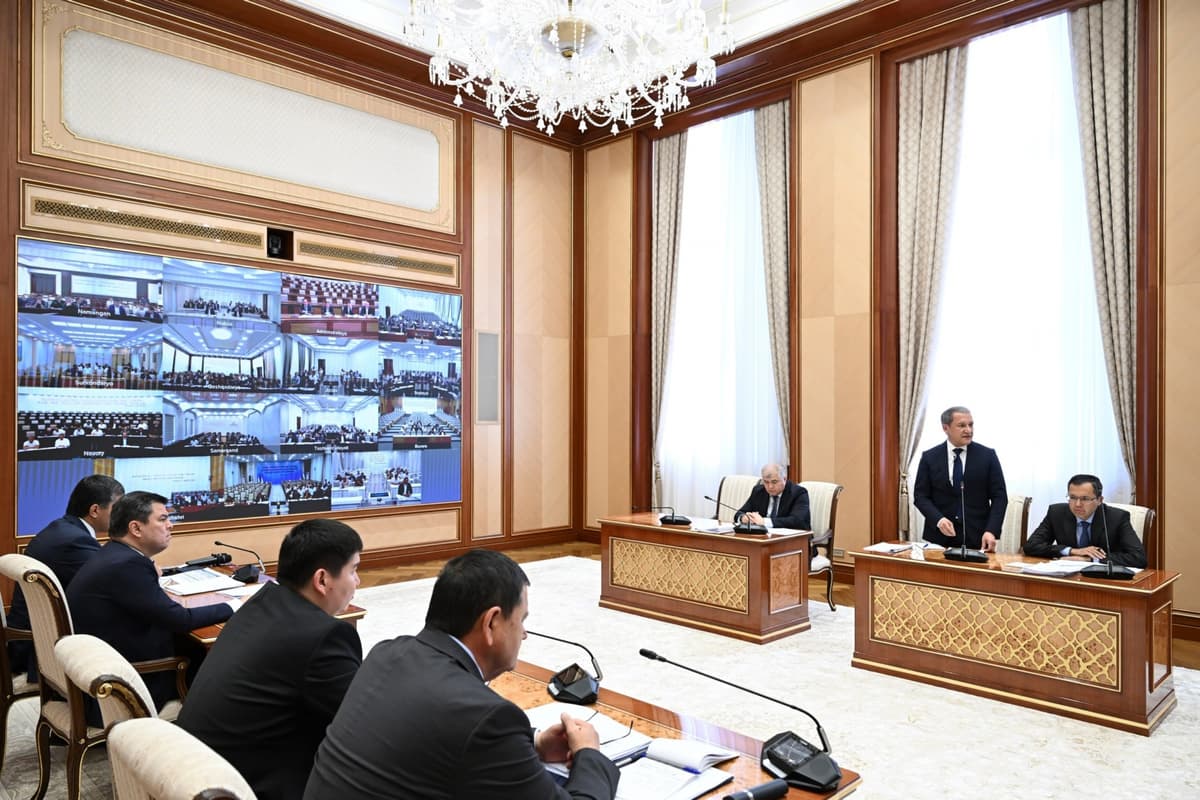
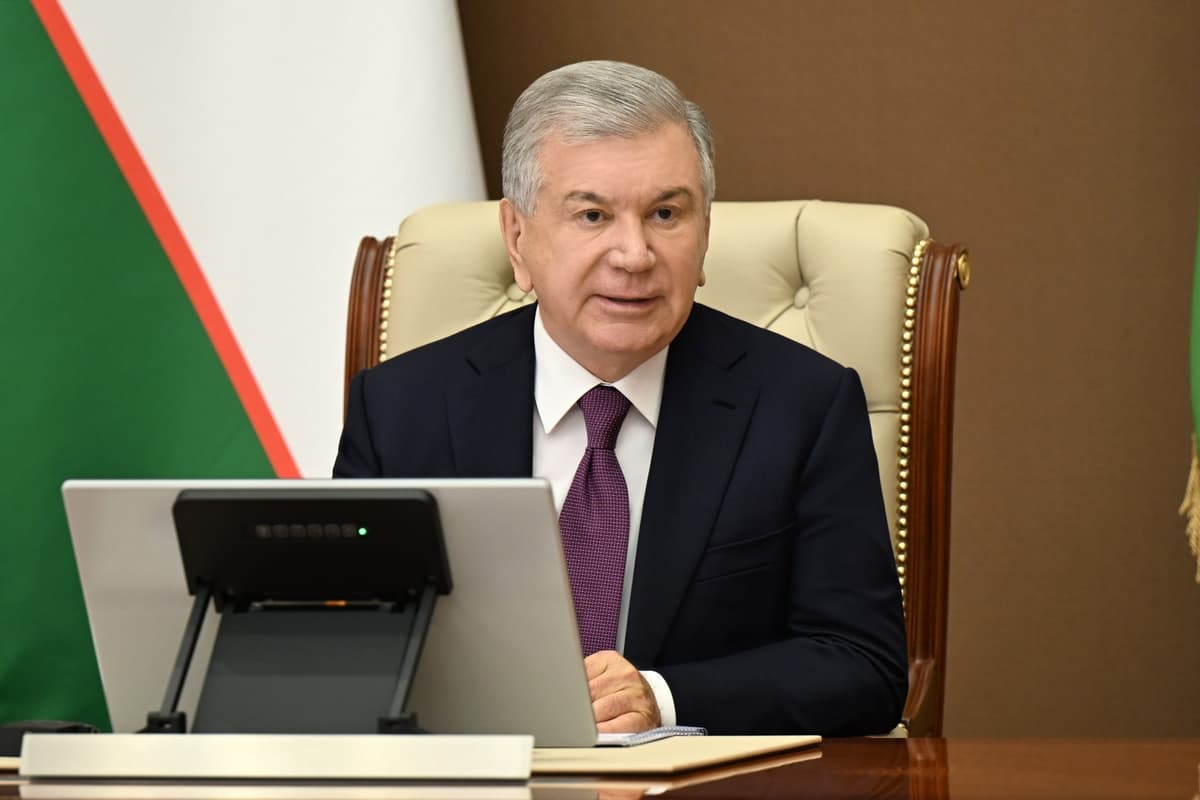
On May 12, President Shavkat Mirziyoyev chaired a meeting on measures to improve public administration in the areas of food safety and livestock sector support.

Photo: Presidential press service

Uzbekistan has developed extensive capacity to ensure a stable food supply, including the cultivation, storage, processing, and export of agricultural products. The country has around 4 million hectares of arable land, storage facilities with a capacity of 1.5 million tons, and processing capacity of 3.5 million tons, enabling the supply of affordable, high-quality food to the domestic market while supporting exports worth $4 billion.

Uzbekistan aims to raise its food exports to $10 billion and expand its export reach to an additional 100 countries by 2030.

The meeting stressed that achieving these targets will require bringing the country’s food safety system fully in line with international standards.

It was noted that, until now, three separate agencies have been responsible for food safety and oversight. As a result, there is no unified database linking the sanitary, veterinary, and quarantine authorities, while some functions and responsibilities overlap. This fragmentation has created unnecessary challenges for businesses engaged in export and import operations.

The Plant Quarantine and Protection Agency is responsible for 100 functions, the Veterinary Agency for 115, and the sanitary-epidemiological surveillance system for 44, yet a fully integrated “farm-to-consumer” product tracking system has still not been established.

Challenges also remain in the export sector. In particular, the European Union has issued 25 warnings over pesticide residues detected in Uzbek products. This underscores the need for a fundamental overhaul of the product safety control system to improve competitiveness in international markets.

The regulatory bodies have largely focused on inspections of finished products, while insufficient attention has been paid to implementing international standards that ensure food safety across all stages of the production chain.

In this context, comprehensive reform of the food safety system is planned, including the creation of a unified centralized mechanism in line with international requirements.

A Food Safety Committee will be established to oversee all regulatory processes under the “farm-to-table” principle. The new body will be formed on the basis of the Agency for Quarantine and Plant Protection, the Veterinary Development Committee, and the food safety unit of the Committee for Sanitary and Epidemiological Welfare.

The new system is expected to eliminate outdated inspection practices that hinder entrepreneurial activity. Mandatory certification of food products will be abolished and replaced with a risk-based inspection and control system.

Currently, this approach is applied to only 1,600 of the country’s 80,000 facilities, or just 2 percent. Going forward, an electronic system for the rapid notification and withdrawal of unsafe products from circulation will also be introduced.

From January 1, 2029, fruit and vegetable exports will be carried out exclusively through agro-logistics centers. A program will be developed to transition large food industry enterprises with high export potential to international risk analysis standards and Codex Alimentarius norms. The share of enterprises operating under these standards is expected to reach 20 percent by 2028, 60 percent by 2030, and 100 percent by 2032.

In 20 districts specializing in fruit and vegetable production, public inspectors assisting in the issuance of internal phytosanitary certificates will begin operating. Going forward, fruit and vegetable export statistics will be attributed to the regions where the products are grown.

Starting in 2027, six state functions, including laboratory testing, animal vaccination, disinfection and identification, will be gradually transferred to the private sector. Regional governors have been instructed to establish at least two private laboratories and veterinary clinics in these areas by the end of the year.

An online monitoring system will be introduced for each type of product. The “Agro Kumakchi” mobile application will include an electronic “Field Diary” system for farmers and dehkan farmers. By predicting pest outbreaks, the system will use artificial intelligence to provide farmers with relevant recommendations.

It is also planned to maintain a rating of active and conscientious farmers and provide them with additional benefits. By March 1, 2027, a unified automated food safety information platform will be launched and integrated with the customs single-window system, easing exporters’ administrative procedures.

Thanks to the new system, import control times are expected to be reduced from nine days to two, while export procedures will be shortened from three days to one. As a result, businesses will be able to save around UZS 70 billion in storage costs.

The meeting also addressed issues related to livestock development and pasture management.

According to analysis, over the past 25 years, the number of cattle has declined in 42 percent of countries worldwide by around 12 percent. The main factors include high feed costs, drought, environmental pressures, high interest rates, and declining incomes. As a result, average global meat prices have reached record levels.

Uzbekistan, however, has significant potential for livestock development. The country has 16 million hectares of pastureland, but only about 10 percent of this capacity is currently being utilized.

In this regard, an Agency for Livestock and Pasture Development will be established under the Ministry of Agriculture. The new body will be formed on the basis of the Committee for Veterinary and Livestock Development.

The agency has been tasked with increasing cattle numbers to 16.5 million head, sheep and goats to 30 million, and poultry to 141 million. Plans also include raising meat and dairy processing levels to 50 percent, increasing the share of pedigree livestock to 90 percent, and expanding feed crop areas by 1.5 times.

To expand the feed base and improve pedigree livestock breeding, one district in the Republic of Karakalpakstan and each region will be specialized in livestock production.

In these districts, up to 50 percent of cotton and grain areas may be allocated for feed crop cultivation, with concessional loans provided at an annual rate of 10 percent. Farms will also be allowed to build light structures, feed storage facilities, and silage pits on 0.2 hectares of leased land without excessive bureaucratic procedures.

By the year-end, the target has been set to raise 2 million head of cattle on the land of 28,746 farms with at least 10 hectares each.

Financial support measures for livestock farming have also been outlined. Starting June 1, banks will provide loans of up to 10 years at an annual interest rate of 10 percent, with a four-year grace period. Importers of pedigree livestock will be exempt from value-added tax through 2029.

A total of UZS 1 trillion and $50 million will be placed in banks at an annual rate of 6 percent. These funds are expected to finance 1,500 projects worth UZS 5.5 trillion this year, create 25,000 jobs, and increase cattle numbers by 400,000 head.

A new program for workforce training and the expansion of pedigree livestock breeding will also be launched. From June 1, 10-day artificial insemination courses will be organized at leading agricultural universities. At least 1,000 specialists are expected to be trained annually and provided with the necessary equipment free of charge.

A subsidy of UZS 500,000 and UZS 700,000 will be provided for each pedigree calf obtained in households through artificial insemination and embryo transfer, with an additional UZS 50 billion allocated for this purpose.

At the meeting, reports from responsible officials and proposals from entrepreneurs and farmers were heard. Specific instructions were given to ensure effective implementation of the new system, support farmers and businesses, and expand feed production, breeding activities, processing capacity and export potential in the livestock sector.

Виктория Π‘Π°ΠΌΡƒΡ‚ΠΎΠ²Π°
Prepared by Виктория Π‘Π°ΠΌΡƒΡ‚ΠΎΠ²Π°
Follow Kun.uz news on Google News
+ Subscribe

Related News