





Additional features
-
Night mode

Uzbekistan expands green energy integration as battery storage capacity reaches 1,545 MW
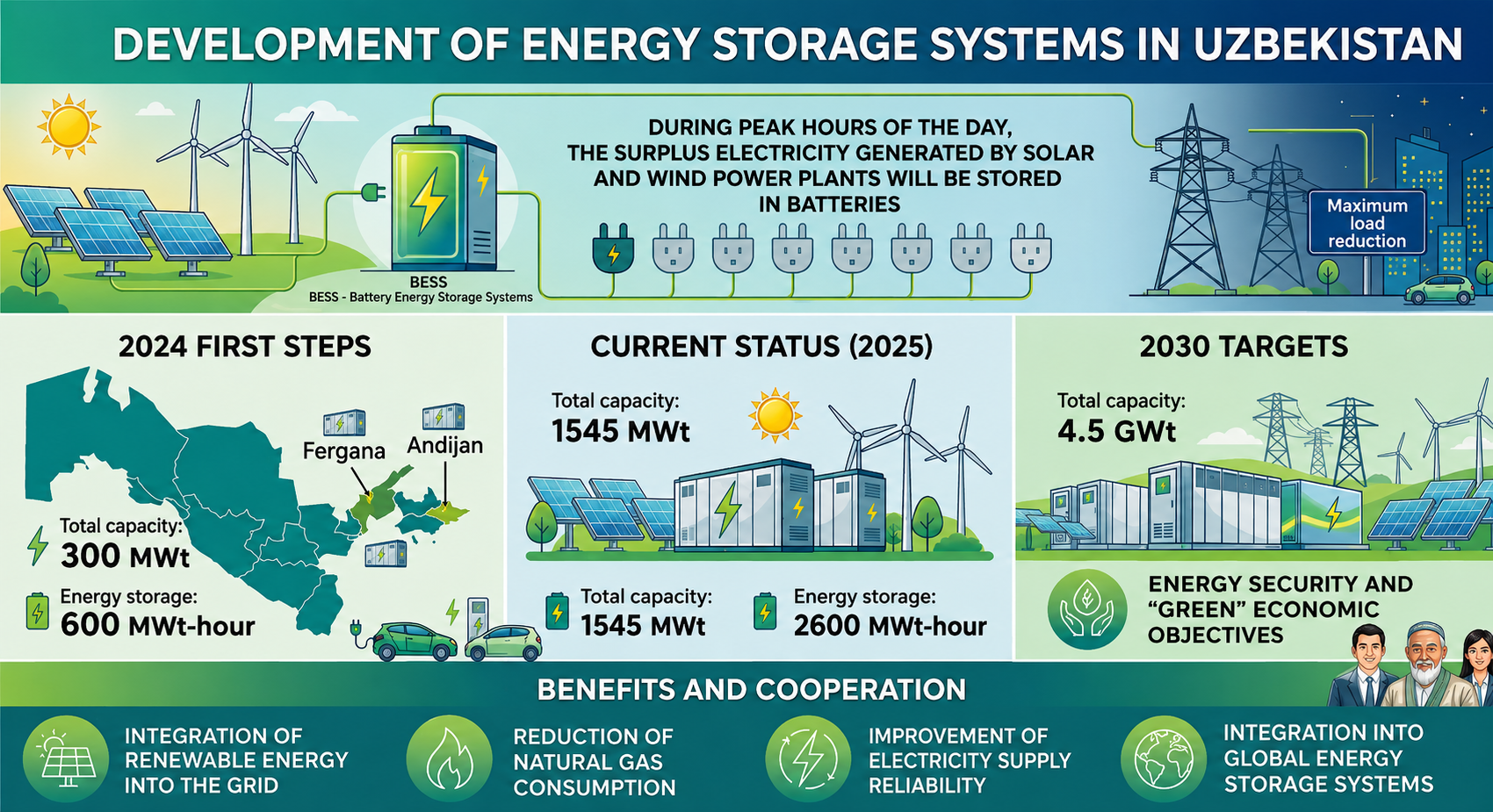
The capacity of battery energy storage systems (BESS) in Uzbekistan has reached over 13.5% of the national grid's peak evening load, according to the Ministry of Energy. This infrastructure allows the country to store surplus electricity and deploy it when demand spikes.
Uzbekistan currently operates 15 solar power plants with a combined capacity of 3,930 MW and 5 wind power plants generating 1,652 MW. Since the beginning of the year, these renewable energy installations have generated more than 4 billion kWh of green electricity.
The rising share of intermittent renewable energy sources has driven the need to expand national energy storage infrastructure. These storage systems accumulate excess electricity generated during daylight hours by solar panels or during high-wind periods, then discharge it into the power grid when public consumption peaks in the evening.
The grid expansion gained significant momentum in 2024 with the launch of two energy storage systems in Fergana and Andijan regions, each contributing 150 MW. The network expanded further in 2025, when additional systems with a combined capacity of 1,245 MW were commissioned.
As a result of these developments, Uzbekistan’s operational energy storage infrastructure has reached a total power capacity of 1,545 MW and an energy capacity of 2,600 MWh. The Ministry of Energy noted that this capacity allows the grid to cover every eighth kilowatt-hour of electricity consumed during peak evening hours using previously accumulated reserves.
These storage units help integrate solar and wind facilities into the unified power system more effectively. By smoothing out supply fluctuations, they reduce reliance on natural gas-fired power generation and enhance the overall reliability of the domestic electricity supply.
The government plans to increase the country's energy storage capacity to 2,000 MW and its total energy capacity to 3,600 MWh by the end of 2026. Looking further ahead, the capacity is projected to reach 4.5 GW by 2030.

Related News
17:25 / 14.07.2026
Uzbekistan's daily electricity consumption hits new summer peak
11:49 / 13.07.2026
Uzbekistan braces for near-record electricity demand amid heatwave

19:17 / 09.07.2026
Uzbekistan and France discuss $1.8 billion in new energy projects

16:42 / 08.07.2026