





Additional features
-
Night mode

Uzbekistan’s national currency registers low volatility compared to regional peers in May
The official exchange rate of the US dollar in Uzbekistan rose by 0.54% in May, climbing from UZS 11,937 to UZS 12,001. Throughout the month, the greenback strengthened against the national currency in 13 out of 17 trading sessions, while the opposite trend was observed in the remaining four sessions.
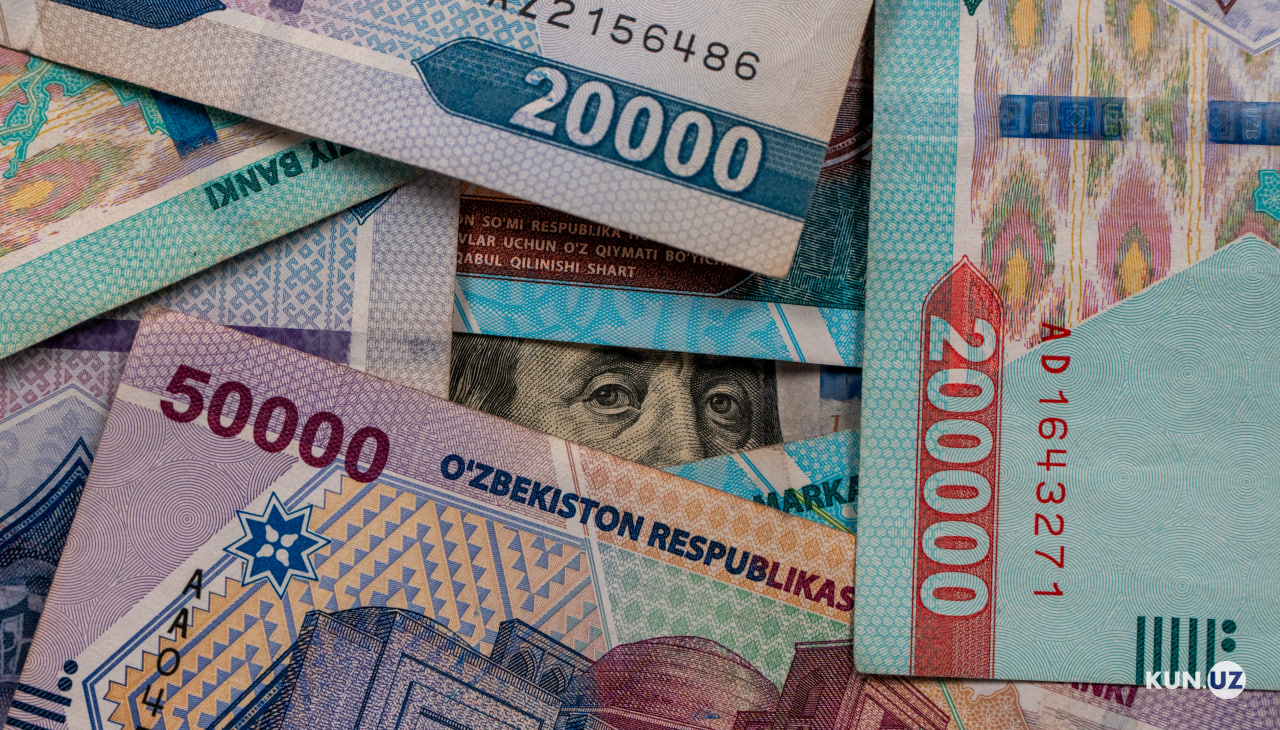
The dollar recorded its lowest value of the month on May 1 at UZS 11,937, before peaking at a monthly high of UZS 12,145 on May 13. Commercial bank rates mirrored this upward movement. At the beginning of May, the best available purchase and sale rates from banks started at UZS 11,925 and UZS 11,950, respectively. By May 26, the best purchase rate had risen to UZS 11,990, while the selling rate reached UZS 12,010.
According to economist Mirkomil Kholboyev, the appreciation of the US dollar was a broader global trend rather than an isolated development for the Uzbek currency. In April, the dollar had depreciated against 32 out of 39 selected global currencies. However, this trend reversed in May, with 25 of those selected currencies losing value against the US dollar.
Among regional currencies, the Kazakh tenge – which was one of the strongest performing currencies in April – depreciated by 5% against the dollar in May. Conversely, the Russian ruble continued its upward trajectory, strengthening by 5.1% against the dollar in May, following an 8.1% appreciation in April. Major global currencies also weakened, with the British pound and the Japanese yen both dropping by 1.4%, the Swiss franc by 0.6%, and the euro by 0.5%.
The daily volatility of the Uzbek soum averaged 0.31% over the month, marking a noticeable expansion compared to April. However, this fluctuation remained 9.2% lower than the volatility recorded during the same month in 2025.
Kholboyev noted that the soum remains a relatively low-volatility currency when compared to the selected global basket, despite the shift from the previous month. In April, the UZS demonstrated higher volatility than only 9 currencies, but this figure expanded to 16 currencies in May.
The Chilean peso emerged as the most volatile currency of the month, posting a daily fluctuation rate of 0.62%. Significant volatility was also observed in the Russian ruble at 0.54% and the Kazakh tenge at 0.47%. In contrast, major currencies such as the Japanese yen and the euro maintained lower daily volatility than the soum, standing at 0.29% and 0.19%, respectively.

Related News

19:41 / 13.07.2026
IMF advises caution as Uzbekistan prepares pension system reform

12:28 / 13.07.2026
Central Bank: Strong housing demand pushes up prices across Uzbekistan
12:28 / 10.07.2026
World Bank: Uzbekistan could attract up to $6.4 billion in private investment through sector reforms
12:19 / 10.07.2026