





Additional features
-
Night mode

Modernizing Tashkent's drainage system requires a $400 million investment – Mayor Umrzakov
Tashkent is aiming to secure a spot among the world’s most livable cities within the next five years through a comprehensive overhaul of its public infrastructure, urban ecology, and transit networks. In an exclusive interview with Kun.uz, Tashkent City Mayor Shavkat Umrzakov detailed the capital’s developmental blueprints, addressing historical infrastructure challenges, budgetary demands, and the administration's long-term strategic goals.
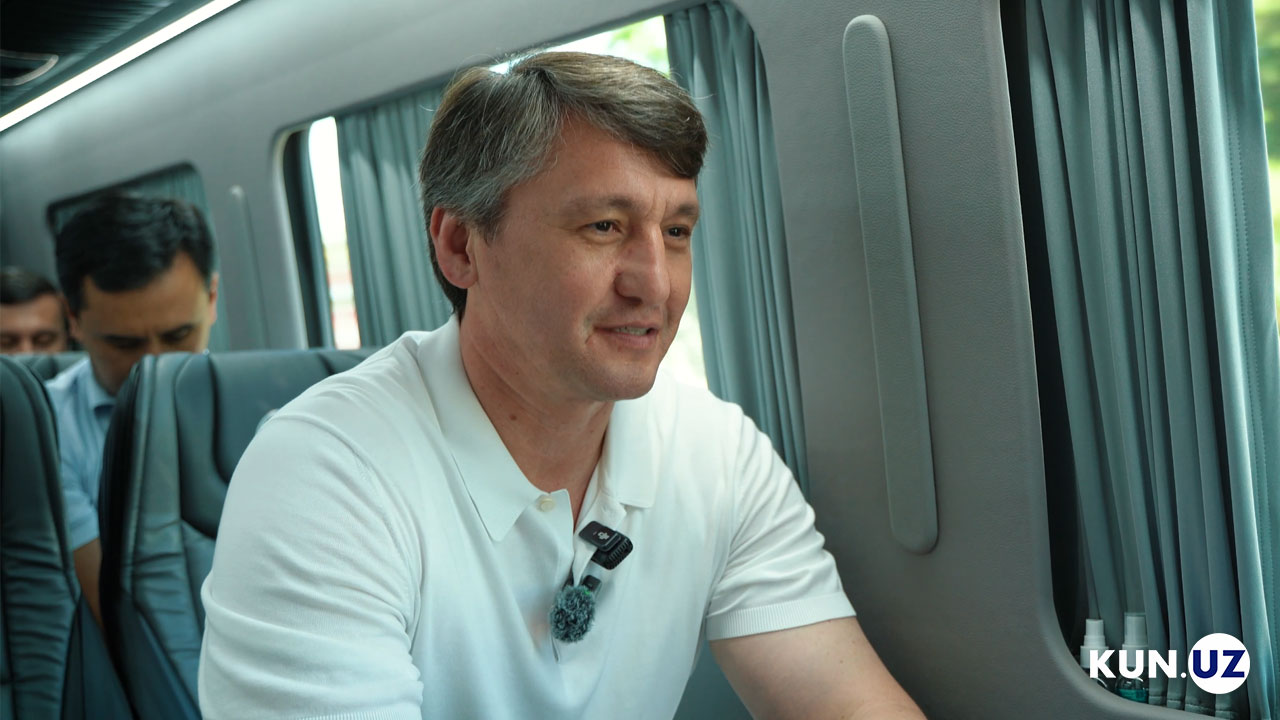
The burden of public accountability
Reflecting on his regular interactions with local communities, Umrzakov admitted that his primary professional anxiety centers on the prospect of leaving citizens' questions unanswered. He emphasized that operational awareness is non–negotiable for any public official.
"If a citizen comes forward with an issue, and I or city hall representatives are completely unaware of it or are not actively working on a solution, that is a failure on our part," Umrzakov stated. "That is exactly what concerns me most."
Re-engineering a $400 million drainage deficit
Addressing the chronic flash flooding that paralyzes Tashkent after heavy downpours, the mayor revealed that analyzing the city’s outdated stormwater infrastructure was his immediate priority upon taking office in 2023.
The municipality has since finalized a comprehensive drainage master plan. According to official estimates, a complete modernization of the capital's stormwater management framework requires an investment of approximately $400 million.
Umrzakov underscored that funding is only part of the challenge; structural management is equally critical. The administration plans to map out and forecast water volumes on a monthly and daily basis to determine optimal containment and routing zones. To facilitate this, construction has begun on 12 artificial lakes designed to harvest, store, and repurpose rainwater for industrial and municipal needs.
During a recent official visit to China, Tashkent administration officials studied advanced water conservation frameworks implemented in Tianjin and signed bilateral cooperation agreements. City hall intends to combine these insights with proven water management strategies from Dubai and Singapore, where treated stormwater is diverted away from natural river basins and strictly funneled into technical applications. This includes irrigating urban green zones, supporting municipal utility maintenance, and supplying commercial car washes. Umrzakov noted that establishing this fully integrated water recycling network will require at least three years of systematic engineering.
Expanding the capital's green canopy
Turning to pressing ecological concerns, Umrzakov candidly acknowledged that the city has yet to achieve major breakthroughs in environmental quality, though foundational large-scale initiatives are underway.
By the end of next year, the city plans to complete a new 300–hectare public park. Looking at mid–term environmental targets, the capital is working toward the cultivation of a massive 1,000–hectare urban forest. The expansion will run parallel to the development of the 12 artificial lakes, which will collectively span a surface area of 150 hectares to help stabilize the local microclimate.
Reclaiming bus stops as dedicated civic spaces
The mayor also defended recent municipal directives ordering the systematic removal of commercial retail kiosks from bus stops, a move that reverses the policies of his predecessors.
"If city authorities authorize a bus stop to double as a commercial shop, it naturally triggers public backlash," Umrzakov explained, adding that transit stops must adhere to strict spatial and safety standards. Tashkent currently counts roughly 2,500 bus stops, with plans to expand the network to 3,500 locations. However, more than 1,000 existing stops fail to meet modern urban criteria.
Umrzakov noted that past policies reflected the priorities of their time, but current presidential directives demand that Tashkent transition into a pedestrian-friendly metropolis. Commuter data shows that integrating commercial shops into bus stops creates friction for municipal transit. Customers park personal vehicles in front of the stops, blocking dedicated bus lanes, generating litter, and causing severe delays. In extreme cases, business owners locked the structures after hours, leaving commuters stranded outside in harsh weather.
The capital is now constructing new transit hubs designed according to international standards. These spaces will feature emergency assistance buttons, public Wi–Fi networks, digital arrival timetables, and vending machines for water and basic items.
Because each modern stop carries a price tag ranging between $10,000 and $20,000, city hall is utilizing a public-private partnership model to eliminate state expenditure. Private partners assume full financial responsibility for the maintenance and daily operations of the hubs, generating revenue through integrated digital advertising displays and vending services. Meanwhile, the displaced shop owners are being offered alternative commercial locations across the capital.
Concluding the interview, Umrzakov assured that long-term municipal projects would resolve recurring bottlenecks in electricity, natural gas, and water distribution. He re-emphasized his goal of pushing Tashkent into the top 50 or top 100 most livable global cities, while acknowledging that his past reluctance to engage regularly with members of the press was a communicative oversight he intends to correct.

Related News
18:28 / 16.07.2026
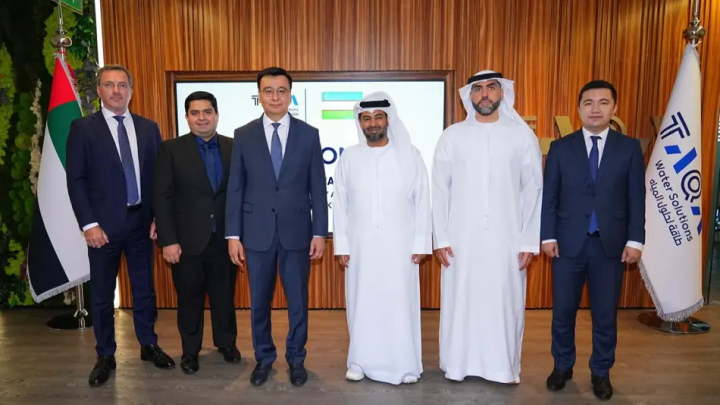
UAE's TAQA Water Solutions considers participation in Uzbekistan's water infrastructure upgrades
13:12 / 13.07.2026
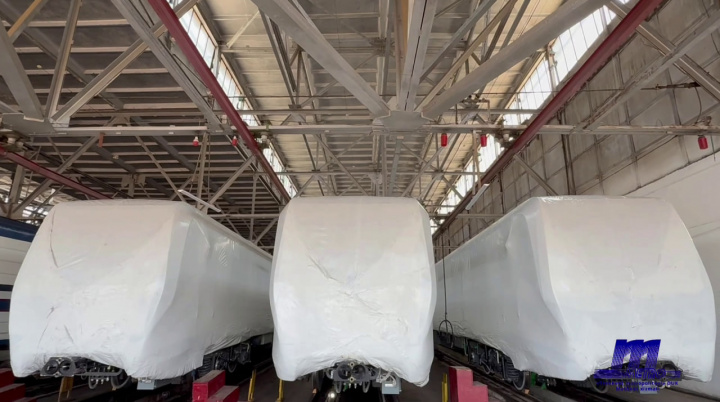
Tashkent Metro expands fleet with arrival of three modern trains
11:31 / 13.07.2026
Tashkent places third in Central Asia in global cost of living ranking
13:41 / 09.07.2026