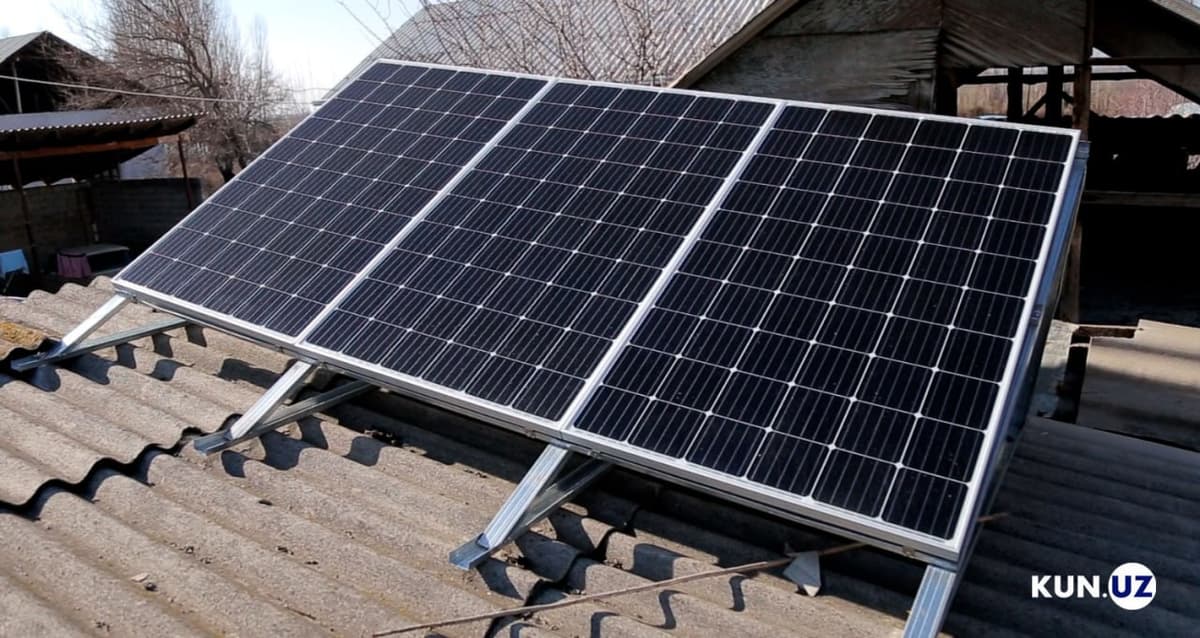
According to the State Tax Committee, 60,193 individuals generated and fed 156.1 million kilowatt-hours of solar electricity into the grid over the two-month period. Under the program, residents receive a subsidy of UZS 1,000 per kilowatt-hour, bringing the total payout to UZS 156.125 billion.
The largest share of the subsidies went to Khorezm region, which received UZS 29.1 billion, followed by Bukhara region with UZS 27.1 billion and the Republic of Karakalpakstan with UZS 19.1 billion.
The payments come after months of delays that had prompted complaints from participants. Several Kun.uz readers confirmed receiving the overdue funds on July 2.
One subscriber said UZS 9.386 million had been credited to their account for electricity supplied during April and May. Another reported receiving approximately UZS 9.5 million for the same period.
Kun.uz had previously covered public complaints over the delayed payments and interviewed economist Otabek Bakirov, who argued that the suspension of subsidies without any official explanation undermined confidence in the government's commitments to renewable energy investors.
While payments to households have now resumed, Bakirov noted that no progress has been made on a separate issue affecting businesses. According to him, companies that have supplied electricity generated by solar panels to the grid are still waiting to receive subsidy payments that have been outstanding for nearly six months.
Earlier, Bakirov described the unexplained suspension of subsidy payments as a breach of trust and urged the government to honor the commitments it had made when encouraging investment in rooftop solar generation.
Despite the latest disbursement, the reason for the payment delays remains unclear. Neither the Ministry of Energy nor the Ministry of Economy and Finance has publicly explained why the subsidies were suspended. The State Tax Committee's July 2 statement also made no reference to the cause of the delays.