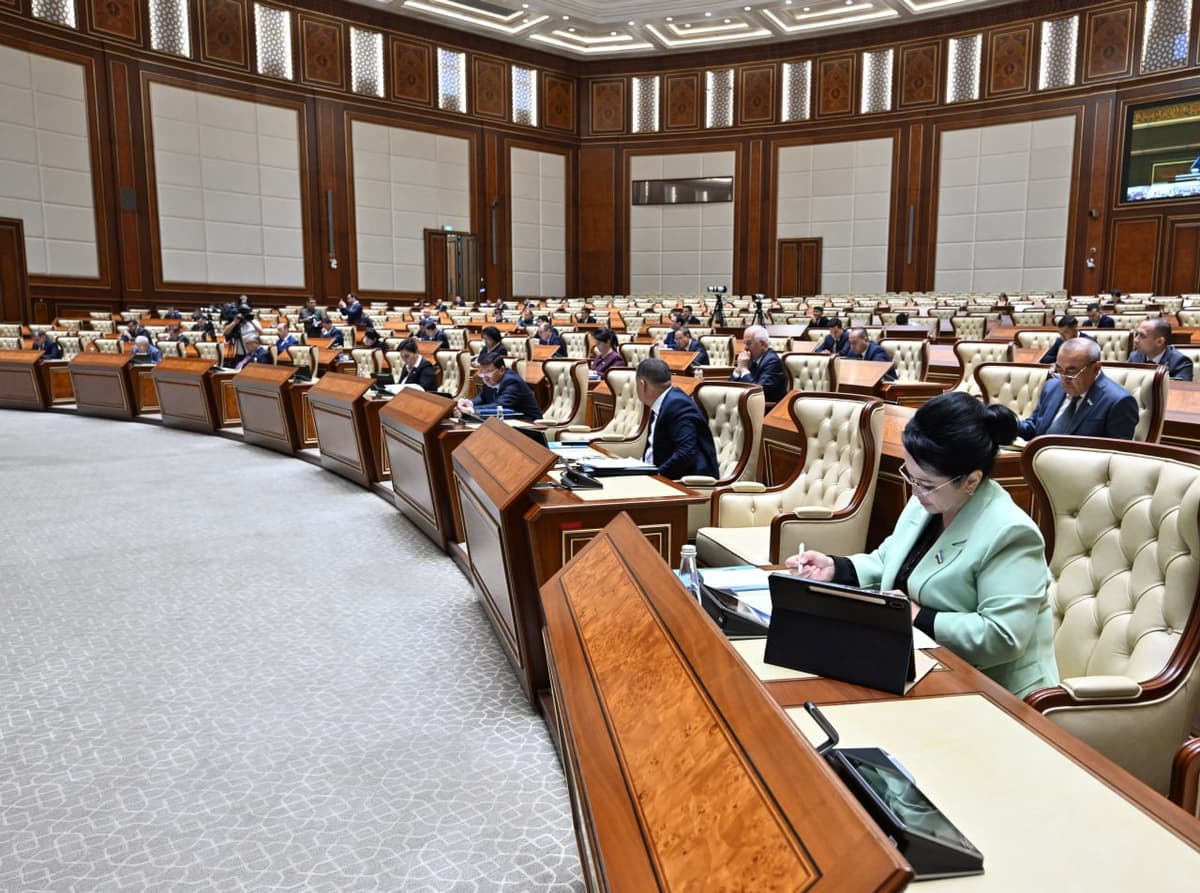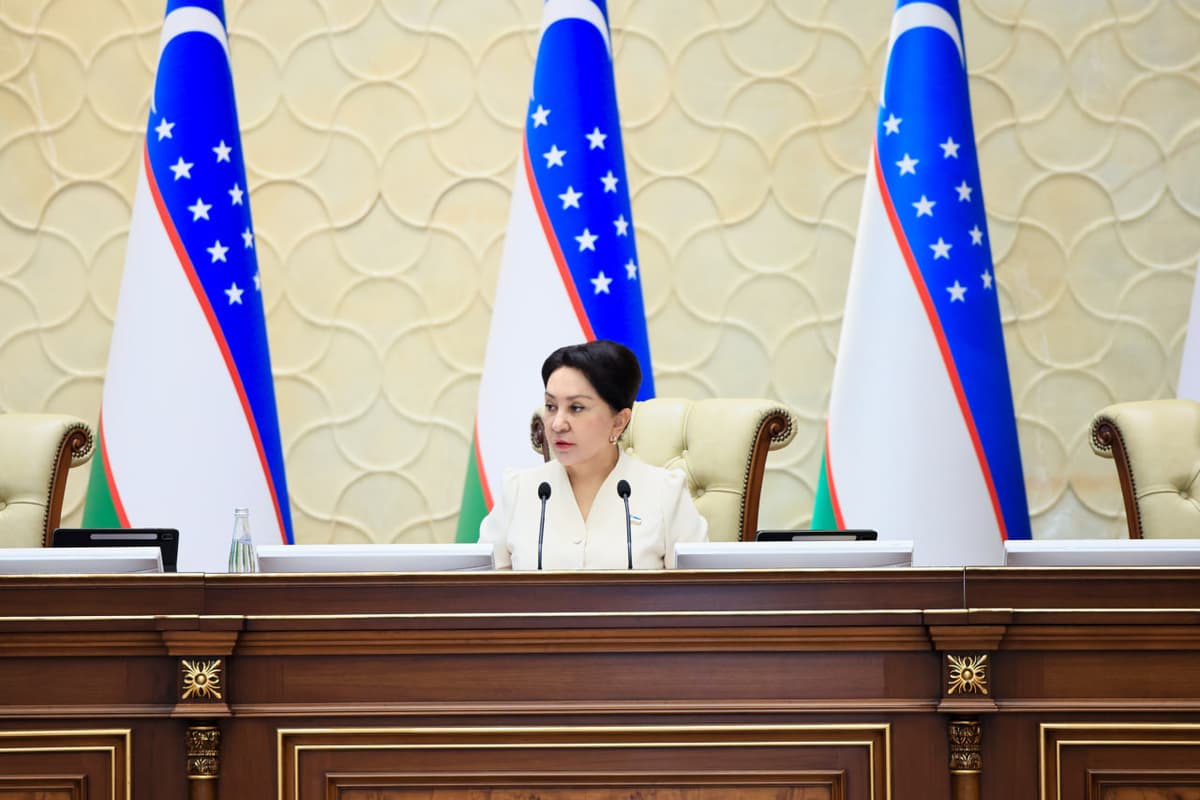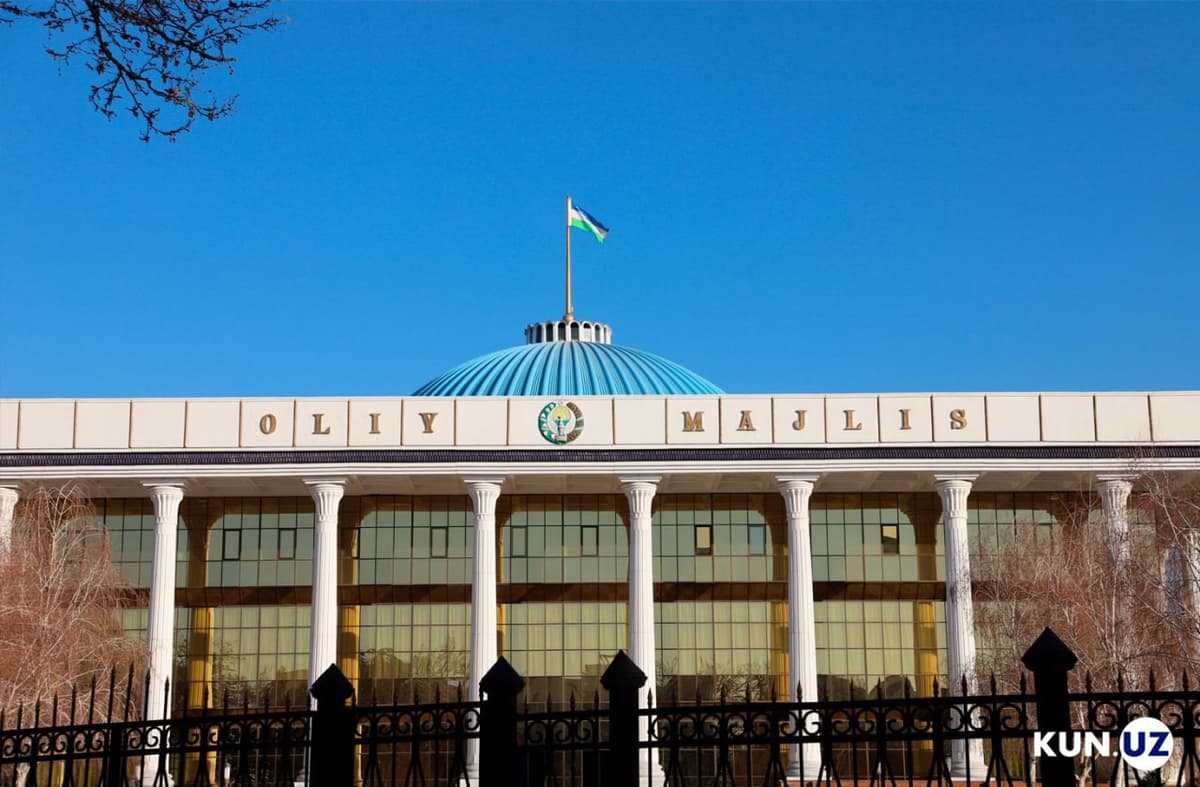
The law was approved during the Senate's 17th plenary session on July 9, the upper chamber of Oliy Majlis said.
The legislation is intended to improve Uzbekistan's investment climate, attract international capital, and develop a modern financial infrastructure. The bill had previously been considered during the Senate's 16th plenary session, when it was rejected and returned to the Legislative Chamber for further revision.
A conciliation commission comprising senators and members of parliament subsequently revised the draft with the participation of representatives from relevant government agencies and organizations.
Presenting the bill, Senator Erkin Gadoyev said the financial center would operate under a special legal framework governing banking, investment activities, insurance, securities trading, payment systems, Islamic finance, financial technologies, auditing, consulting, legal services, and other related sectors.
He said the law also establishes the special legal status of the center's participants, granting tax and other incentives as well as simplified entry and residence procedures for foreign investors and professionals.
Under the legislation, participants in the financial center will be able to employ foreign specialists without obtaining separate work authorization. Foreign citizens and stateless persons affiliated with the center will be eligible for entry visas valid for up to five years.
According to Gadoyev, the revised draft also aligns provisions on the protection of participants' funds and data with international standards on combating money laundering and terrorist financing.
He added that the tax and visa incentives had been substantially refined. The law now clearly defines who is eligible for the benefits and under what conditions, while also introducing minimum investment requirements, rules on the origin of funds, beneficial ownership, tax residency, and economic substance.
Gadoyev noted that while the legislation preserves the principles of free capital movement and the repatriation of income, the relevant mechanism will operate in coordination with the Central Bank of Uzbekistan.
"This creates favorable conditions for investors while strengthening important safeguards for the country's financial stability," he said.
International commercial court and financial regulator
The senator also said the powers of the Tashkent International Commercial Court had been revised and expanded. Its jurisdiction has been defined more clearly, while the eligibility criteria for judges have been broadened to allow the appointment of highly qualified specialists with expertise in international commercial law, arbitration, finance, bankruptcy, and digital assets.
The law also establishes a Financial Services Authority, which will be responsible for licensing, regulating, and supervising financial and related services within the center. According to Gadoyev, its powers have been refined based on the experience of leading international financial centers, with clearer provisions on licensing, prudential supervision, corporate governance, consumer protection, market oversight, and enforcement mechanisms.
He said the legislation would provide an important legal foundation for strengthening Uzbekistan's investment appeal, developing the capital market, introducing advanced financial technologies, and positioning the country as one of Central Asia's leading international financial hubs.
Authorities expect billions in investment
During the debate, Senator Jamila Kholmurodova noted that the Tashkent International Financial Centre would be the first institution of its kind in Uzbekistan and would operate under a special legal regime.
Referring to international experience, she said financial centers such as the Astana International Financial Centre in Kazakhstan and the Dubai International Financial Centre in the United Arab Emirates have played a significant role in attracting investment, developing capital markets, and creating jobs.
Responding to her question about the expected economic impact, Acting Deputy Minister of Investment, Industry and Trade Shokhrukh Gulamov said the government had closely studied the experience of Kazakhstan and the UAE while revising the law.
According to Gulamov, the Astana International Financial Centre has attracted more than $20 billion in investment since it began operations in 2018, while more than 1,900 international companies have registered there.
He added that the Dubai International Financial Centre, established in 2004, is home to more than 4,800 international companies and over 50,000 highly qualified professionals, contributing around 5% of Dubai's gross domestic product.
Based on preliminary estimates, Gulamov said the Tashkent International Financial Centre could attract $20–25 billion in investment annually by 2030 and contribute at least 1% to Uzbekistan's GDP.
He also said the center is expected to employ more than 10,000 Uzbek and international specialists and could help improve the country's sovereign credit rating by expanding access to cheaper financing and financial resources.
During a presidential meeting on March 25, officials said the Tashkent International Financial Centre would become an important instrument for attracting new forms of investment and supporting sustainable economic growth.