
The average estimate of price growth over the previous 12 months stood at 10.2%, down 0.1 percentage points from May. The median perceived inflation rate fell by one percentage point to 8%, marking the lowest level recorded since the survey was introduced.
Tashkent returned to the top of the regional ranking for perceived inflation, with respondents estimating annual price growth at 12.3%. It was followed by Andijan region at 12.2% and Fergana region at 11.1%. The lowest readings were reported in Khorezm region at 8.5%, Namangan region at 9% and Navoi region at 9.1%.
Across occupational groups, the highest inflation perceptions were reported by respondents working in household services and transport, at 11.6%, followed by construction workers at 11.5% and healthcare professionals at 11.4%.
Students reported the lowest perceived inflation at 8.8%, ahead of employees in the tourism industry at 9.3% and the banking and financial sector at 9.6%.
The survey also found that inflation perceptions remained highest among respondents earning UZS 30 million or more per month, who estimated annual price growth at 13.5%. Among those with monthly incomes between UZS 10 million and UZS 30 million, the figure hovered around 12.3%.
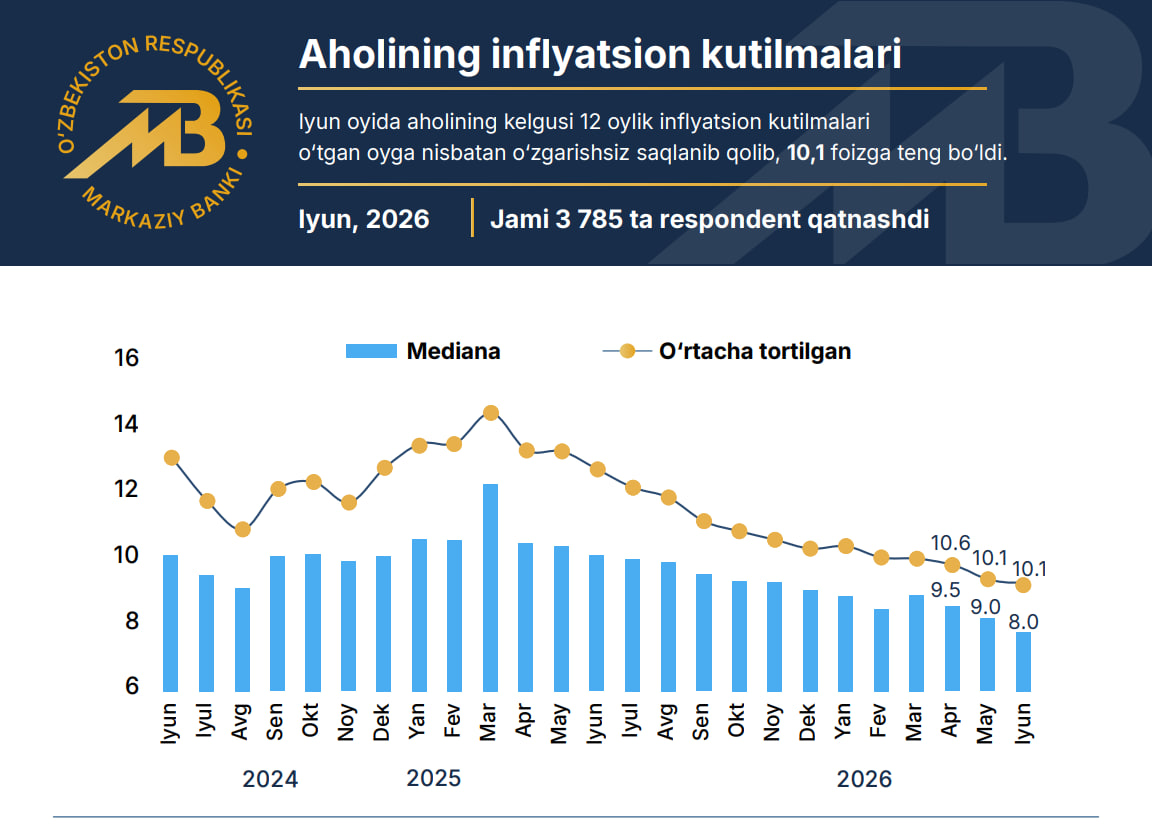
By contrast, respondents earning less than UZS 2 million per month estimated inflation at 8%, while those with monthly incomes between UZS 2 million and UZS 4 million put it at 9.5%. Participants without a regular source of income assessed price growth over the past year at 9.3%.
As in previous months, meat and dairy products remained the items most frequently cited as having become significantly more expensive, with 52% of respondents pointing to higher prices. The share of respondents reporting rising fuel prices increased to 38%, up from 31% in May, while the proportion mentioning electricity and natural gas rose from 25% to 31%.
At the same time, fewer respondents reported increases in fruit and vegetable prices, with the share falling from 29% to 22%. In contrast, the number of people citing higher sugar prices rose by 50% to 18%, while the share mentioning rice prices increased almost two-and-a-half-fold to 17%.
The fewest respondents reported noticeable price increases for household services at 7%, education services at 8%, and bread and flour, rent, and home repairs, each at 9%. The proportion of respondents citing higher egg prices also declined slightly compared with May, reaching 10%.