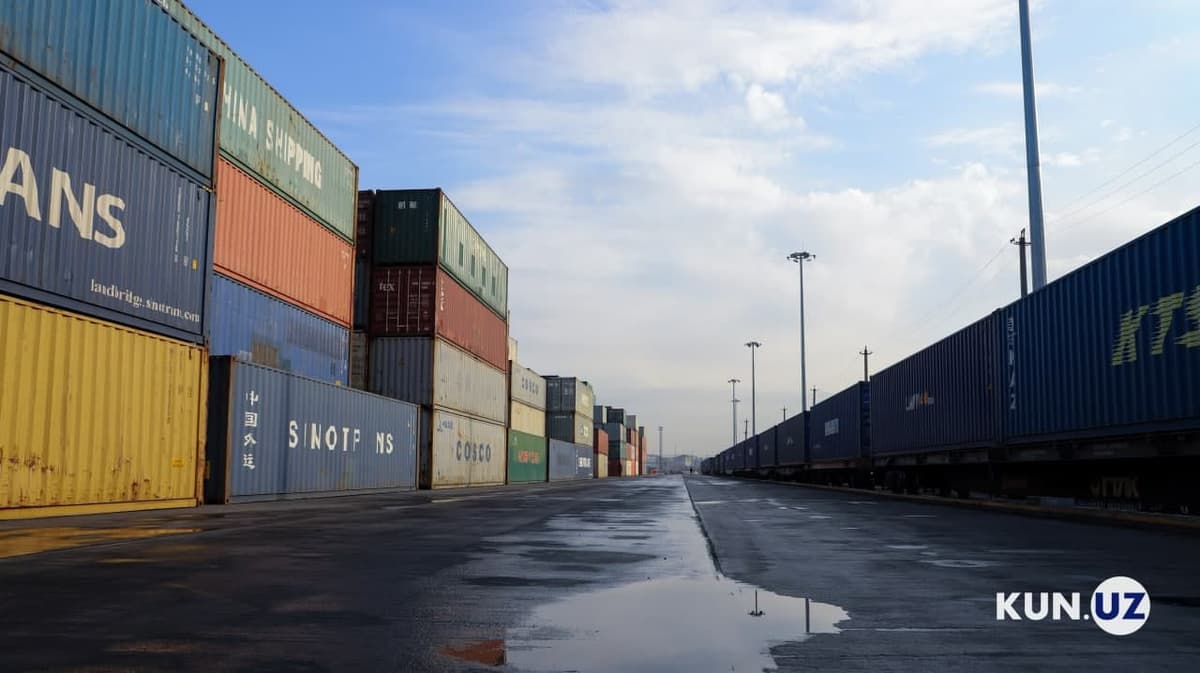
According to the National Statistics Committee, despite the increase in overall trade, exports declined while imports continued to rise, widening the country's trade deficit. Exports totaled $15.9 billion, down 8.8% year-on-year, while imports climbed 21% to $25.1 billion, resulting in a foreign trade deficit of $9.3 billion.
The committee noted that, excluding gold, merchandise exports increased 28.7% from a year earlier to $8.2 billion.
China remained Uzbekistan's largest trading partner during the reporting period, with bilateral trade reaching $9.5 billion. Russia ranked second with $7 billion, followed by Kazakhstan with $2.8 billion, Turkey with $1.4 billion and Afghanistan with $1.1 billion.
Trade with Afghanistan continued to expand rapidly. In the first half of 2024, bilateral trade totaled $458 million, meaning trade between the two countries has more than doubled in just two years.
Services accounted for the largest share of export revenues, generating $6.2 billion, an increase of 35.7%. Tourism contributed $3.3 billion, while transport services brought in nearly $2 billion.
Industrial goods ranked second among export categories, with revenues reaching $2.4 billion, up 22.8%. Textile products generated $975.9 million, while non-ferrous metals accounted for $882 million.
Gold exports fell sharply during the reporting period. Uzbekistan exported $1.5 billion worth of gold in the first six months of 2026, compared with $6.5 billion in the same period of 2025. The figures indicate that the Central Bank reduced its gold sales by about 4.3 times.
Exports of food products and live animals rose 9% to $1.3 billion. Fruit and vegetable exports accounted for $899.5 million, while cereals and cereal preparations generated $299.1 million.
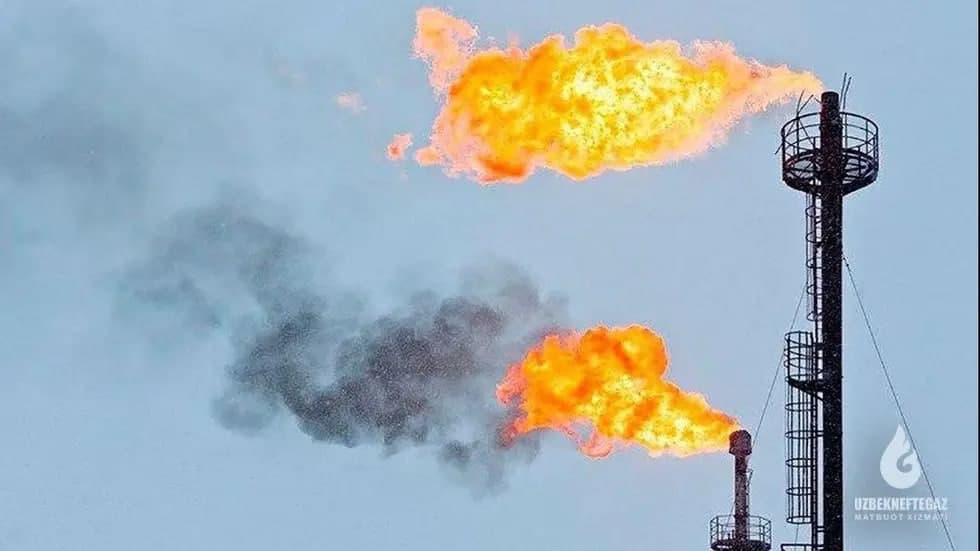
Exports of mineral fuels and lubricants totaled $772.8 million. This included $422.2 million worth of petroleum products, up 154.3%, $232.9 million in natural gas exports, down 34.4%, and $116.2 million in electricity exports, an increase of 13.4%.
On the import side, machinery and transport equipment remained the largest category, rising 25.1% to $8.25 billion. Vehicle imports accounted for $2 billion, up 31.7%, while imports of electric vehicles and related equipment reached $1.4 billion, an increase of 44.4%.
Industrial goods imports amounted to $3.7 billion, up 12.2%. Uzbekistan imported $1.5 billion worth of iron and steel, an increase of 6.3%, while purchases of non-ferrous metals surged 80.5% to $534.5 million.
Imports of chemicals rose 16.7% to $3 billion, including $966.4 million worth of medical and pharmaceutical products.
Imports of food products and live animals recorded one of the fastest growth rates, increasing 44.2% to $2.8 billion. The country imported $761.1 million worth of cereals and cereal preparations, up 67.3%, alongside $480.8 million in meat and meat products, an increase of 42.1%. Imports of sugar, sugar products and honey reached $362.7 million, up 48.6%, while fruit and vegetable imports rose 35.6% to $325.7 million.
Imports of mineral fuels and lubricants climbed 19.3% to $2.2 billion during the first half of the year. Petroleum and petroleum products accounted for $1.1 billion of that total. Gasoline imports rose 78.5% to $409.5 million, while diesel imports increased 11.1% to $228.9 million.
Natural gas imports also rose sharply, reaching $971.7 million, up 41.4% from a year earlier. Propane imports totaled $86.3 million, increasing 3.6-fold.
Meanwhile, imports of services grew 12.3% to $2.95 billion. Tourism-related services accounted for $1.3 billion, representing 43.8% of total service imports, while transport services made up $812.9 million, or 27.5% of the total.