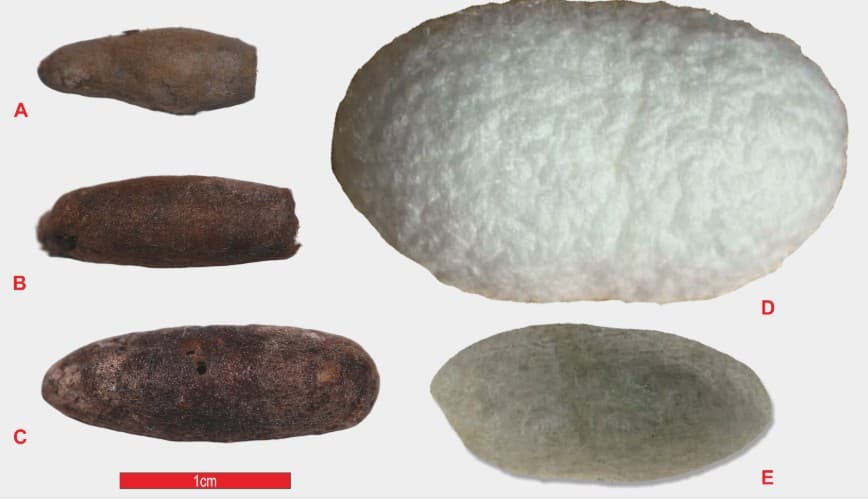
The finding comes from an international team of researchers, including specialists from the Institute of Anthropology of the Academy of Sciences of Uzbekistan, who examined three silkworm cocoons recovered from the Bronze Age settlement. Microscopic and protein-based analyses identified the cocoons as belonging to the domesticated mulberry silkworm, Bombyx mori.
Radiocarbon dating placed the cocoons between 1940 and 1765 BCE. Researchers also found remains of mulberry trees in the same archaeological layer. Because mulberry leaves are the primary food source of domesticated silkworms, the findings suggest that silk production at the site was part of an established practice rather than an isolated occurrence.
The discovery pushes back the known history of sericulture in Central Asia. The Silk Road is generally associated with the 2nd century BCE, but the new evidence indicates that domesticated silkworms and the knowledge required to raise them were present in southern Central Asia nearly 2,000 years earlier.
The researchers used micromorphological and proteomic techniques to examine the ancient cocoons. Although the specimens resemble cocoons produced by wild silkworms, their preserved protein signatures match those of Bombyx mori, providing evidence that domesticated silkworms were present at Sapalli Tepe during the Bronze Age.
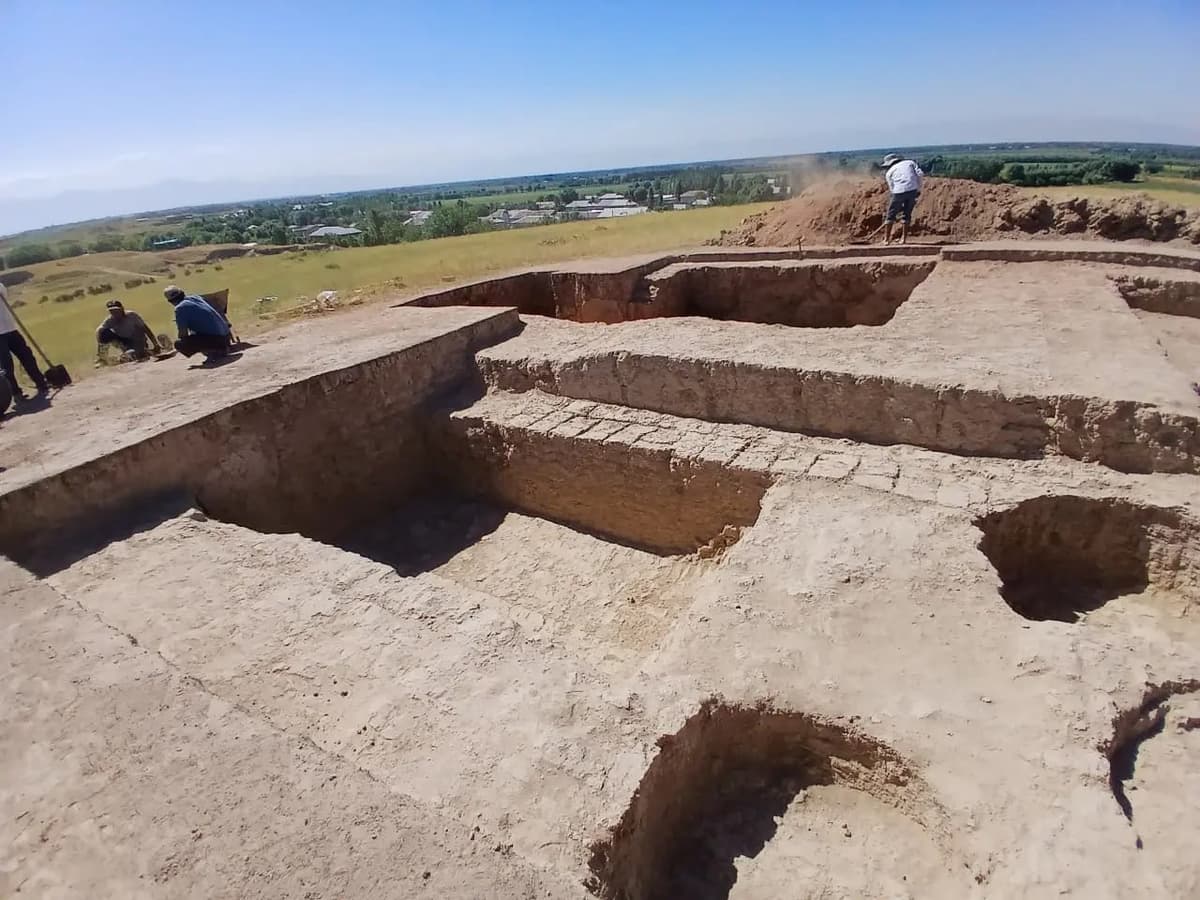
Sapalli Tepe forms part of the archaeological landscape of southern Central Asia associated with the Bactria-Margiana Archaeological Complex. Located in the Surkhan-Darya basin, the settlement was home to agricultural communities during the Bronze Age.
The findings do not alter the conventional dating of the Silk Road itself. Rather, they point to the movement of silk-production techniques and related knowledge across Central Asia long before the emergence of the major trade routes traditionally associated with the exchange of silk between East and West.
The study, titled “Silkworm cultivation predating the Silk Road in southern Central Asia (2000 BCE)”, was published in Science Advances.