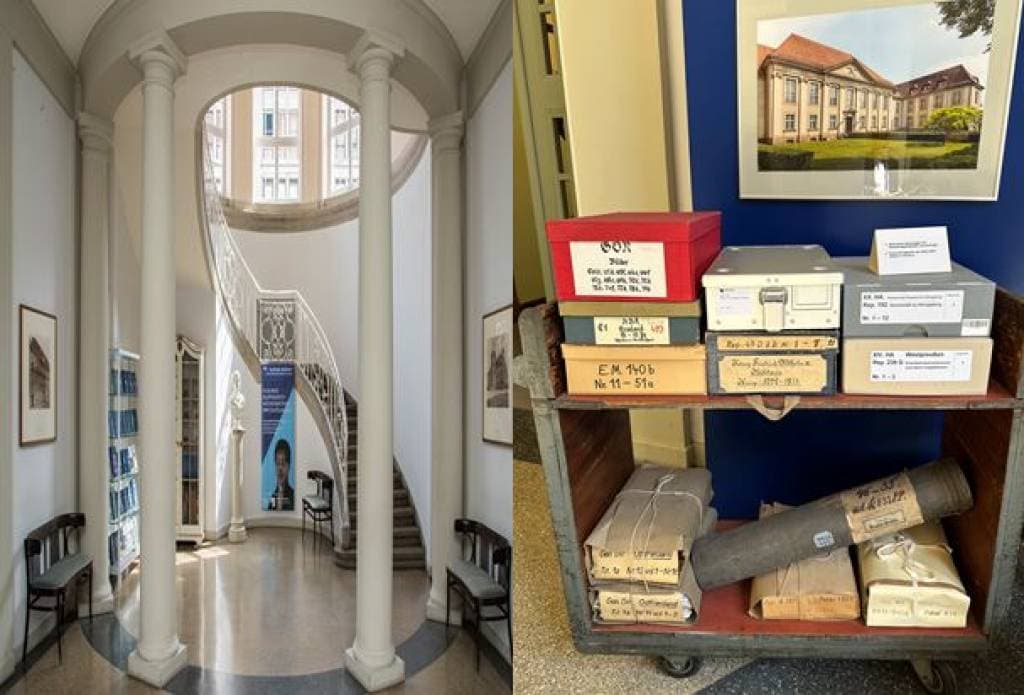
The archive, established in 1598, holds around 35,000 linear meters of historical documents, equivalent to an estimated 1.5–2 million bound volumes or 300–350 million sheets. Most of the materials are in German, while the collection also includes sources in Ottoman Turkish, Russian and Persian written in the Arabic script.
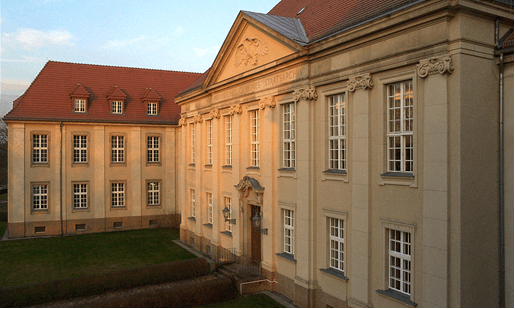
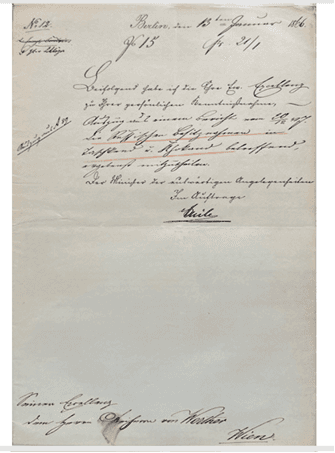
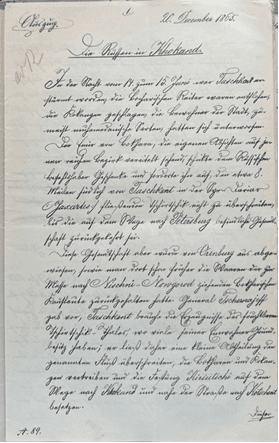
Researchers examining the archive discovered correspondence and official reports by Karl Hermann von Thile, State Secretary at the Prussian Ministry of Foreign Affairs and a diplomat, concerning political developments and diplomatic relations in Turkestan in 1865.
According to UzA, the collection also contains special reports written by Georg Kleinow, a Privy Councilor of the Weimar Republic, during his trip to Uzbekistan in 1928–1929. The reports examine the geopolitical significance of the construction of the Turkestan–Siberia Railway, known as the Turksib, as well as the Soviet policy of settling nomadic populations, national-territorial delimitation and land and water reforms.
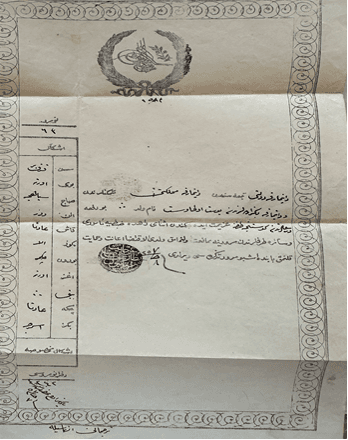
Another valuable source consists of correspondence concerning the fate of Vali Qayum Khan, a student from Tashkent who was sent to Germany to study in 1922.
The documents are held in the personal collection of Karl Heinrich Becker, Culture Minister of the Weimar Republic. Among them is a 1933 letter written by Dr. Walter Becker, which describes Vali Qayum Khan’s difficult financial circumstances after the Nazis came to power and appeals for assistance on his behalf.