Uzbekistan’s draft capital markets law opens door to sukuk, derivatives and easier foreign investment
|19:03 / 13.08.20261,17913 min
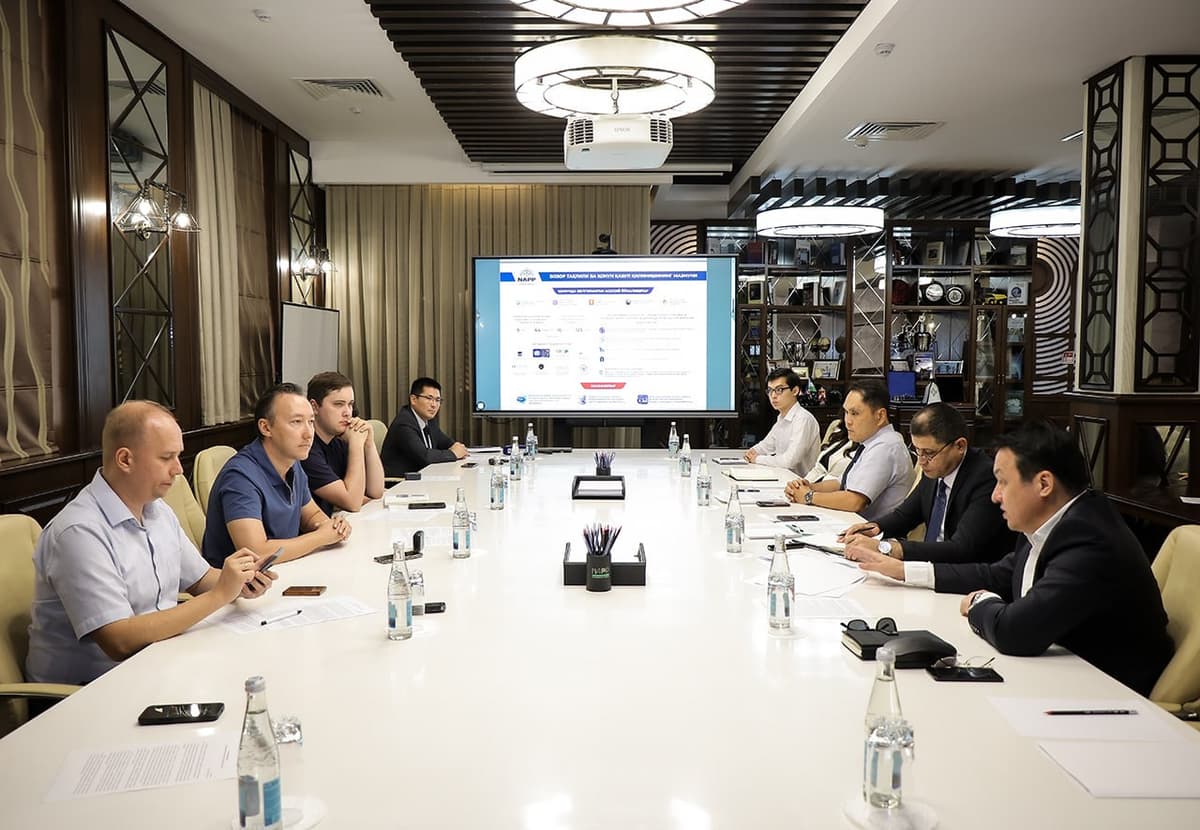
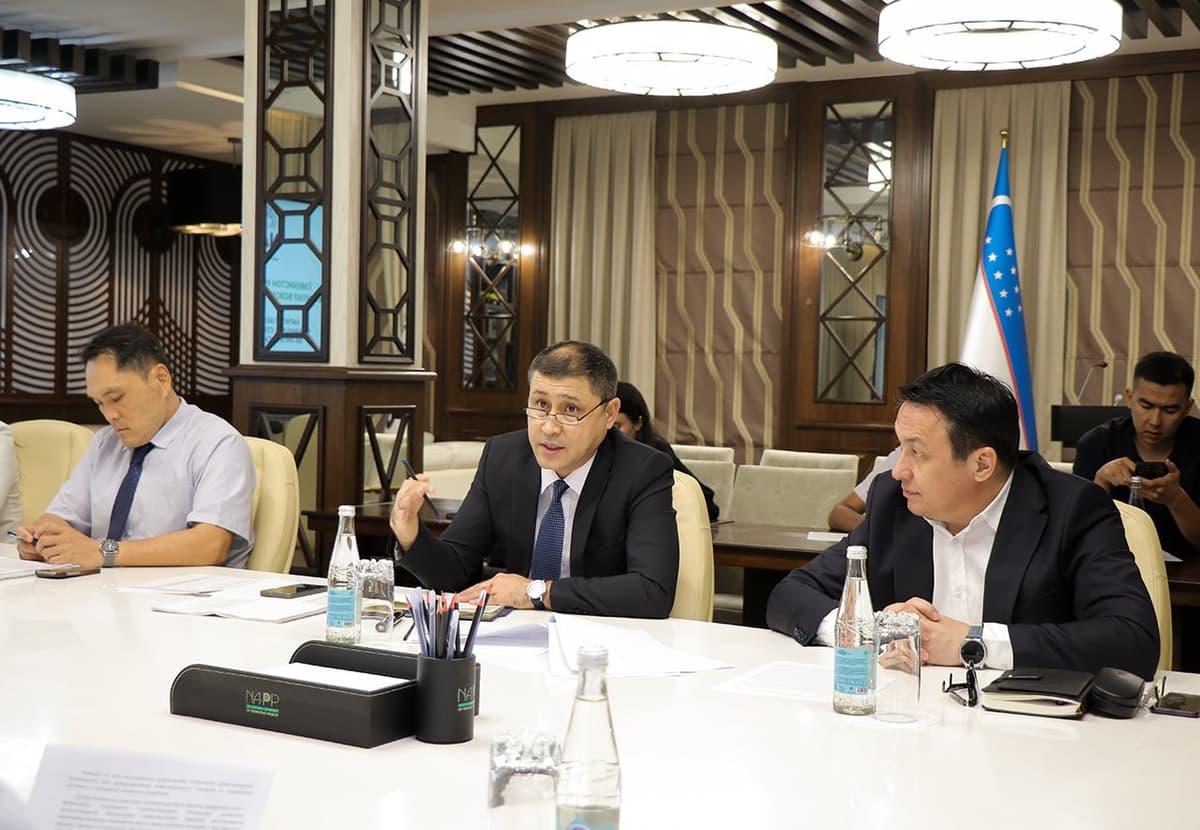
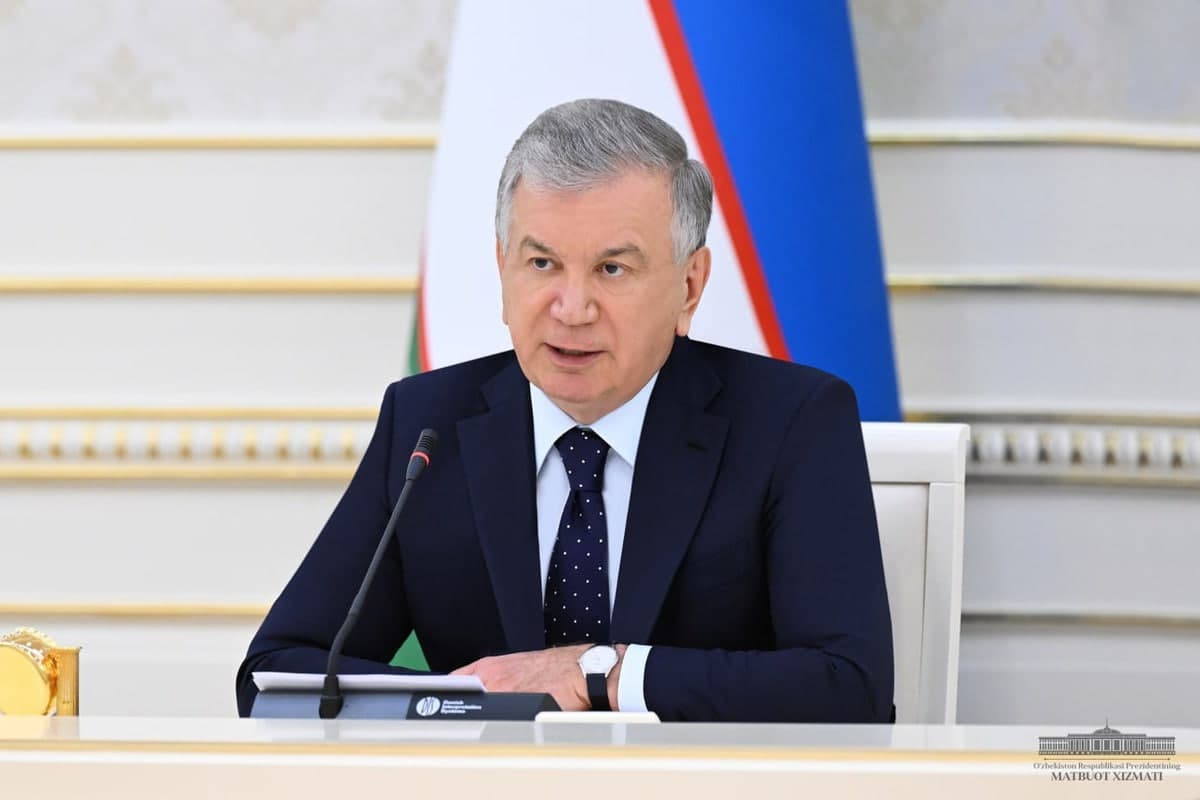
The National Agency for Perspective Projects (NAPP) has presented a draft law on the capital market that would introduce new financial instruments, ease foreign investors’ access to the domestic market and significantly expand the regulator’s supervisory powers.
Photo: NAPPPhoto: NAPP
The draft was presented at a press conference on August 12. It is intended to replace the existing 2015 Law on the Securities Market and was prepared in line with a presidential decree dated December 18, 2025.
The current law consists of nine chapters and 64 articles, while the proposed legislation contains 16 chapters and 123 articles. According to NAPP, the overhaul is aimed at consolidating existing regulations, introducing modern financial instruments and bringing Uzbekistan’s capital market framework closer to international standards.
The draft was prepared with consideration of approaches developed by the Asian Development Bank, UNDP, Islamic Development Bank, International Finance Corporation, European Bank for Reconstruction and Development, US Securities and Exchange Commission, IOSCO and other organizations.
NAPP says the main objective is to create a fair, transparent and competitive capital market, strengthen investor protection and introduce financial instruments that meet international standards.
Capital market capitalization reaches UZS 284.6 trillion
According to NAPP data, the capitalization of Uzbekistan’s capital market rose from UZS 171.4 trillion in 2023 to UZS 242.4 trillion in 2024 and UZS 284.6 trillion in 2025, an increase of about 66% in two years.
Over the same period, nominal GDP increased from UZS 1,107.6 trillion to UZS 1,653.6 trillion. The ratio of stock market capitalization to GDP consequently rose from about 15.5% to 17.2%.
Exchange trading volumes increased from UZS 2.7 trillion in 2023 to UZS 9.8 trillion in 2025, or 3.6 times. The over-the-counter market grew even faster, from UZS 178.5 billion to UZS 7.85 trillion, an increase of more than 40 times.
Related topics
Securities issuance rose from UZS 190.8 trillion to UZS 269.1 trillion. Shares accounted for most of the issuance, increasing from UZS 189.7 trillion to UZS 265.1 trillion. Bond issuance more than tripled, from UZS 1.06 trillion to UZS 3.93 trillion.
Despite this growth, NAPP identified several persistent weaknesses, including low market liquidity, a lack of mechanisms for complex financial transactions, underdeveloped infrastructure and limited supervisory powers. The agency also pointed to difficulties faced by foreign investors entering Uzbekistan’s market and by Uzbek companies seeking access to overseas markets.
Sukuk and derivatives among proposed new instruments
The draft would establish a legal framework for covered bonds, derivatives, securitized bonds, sukuk, sustainable development bonds, subordinated bonds and foreign-currency-denominated bonds.
NAPP forecasts that the introduction of these instruments could increase investment raised through the stock market from UZS 10 trillion in 2026 to UZS 20 trillion in 2030.
Sukuk, or Islamic securities compliant with Islamic finance standards, receive a separate section in the draft. Several types are envisaged, including partnership, lease, trade and agency sukuk.
They would be issued through a special-purpose financial company based on assets allocated by the originator. Lease sukuk, for example, could finance the acquisition of assets that are subsequently leased to the originator. Trade sukuk would be used to purchase assets that are then sold to the originator on an installment basis, while partnership sukuk would finance joint commercial activities.
The draft would also allow the issuance of sovereign sukuk. Such securities could be issued on behalf of Uzbekistan by the Central Bank or another state body authorized by the president or Cabinet of Ministers.
NAPP cited international data showing that global Islamic finance was valued at about $6 trillion at the end of 2025, including around $1 trillion in sukuk. The presentation put the sukuk market at $340 billion in Malaysia, $31 billion each in Saudi Arabia and Turkey, and $50 million in Kazakhstan.
Tax incentives proposed through 2038
The draft provides for tax incentives for several new and existing capital market instruments.
Investment fund income received as dividends would be exempt from dividend tax. Transactions between a bank issuing covered bonds and the special company holding the covered assets would also be exempt from taxation.
The transfer of securities between accounts held by a foreign nominee without a change in ownership would not be treated as a sale and therefore would not create a tax liability.
Income from foreign-currency-denominated bonds, including interest income and exchange-rate gains, would be fully exempt from corporate income tax and personal income tax through 2038.
Income from sukuk would be treated in the same way as interest income from bonds and would also receive tax exemptions through 2038. Transactions involving assets, goods, works and services between the originator and the special-purpose financial company as part of a sukuk issuance would be exempt from turnover tax.
Foreign investors to gain direct access to central securities depository
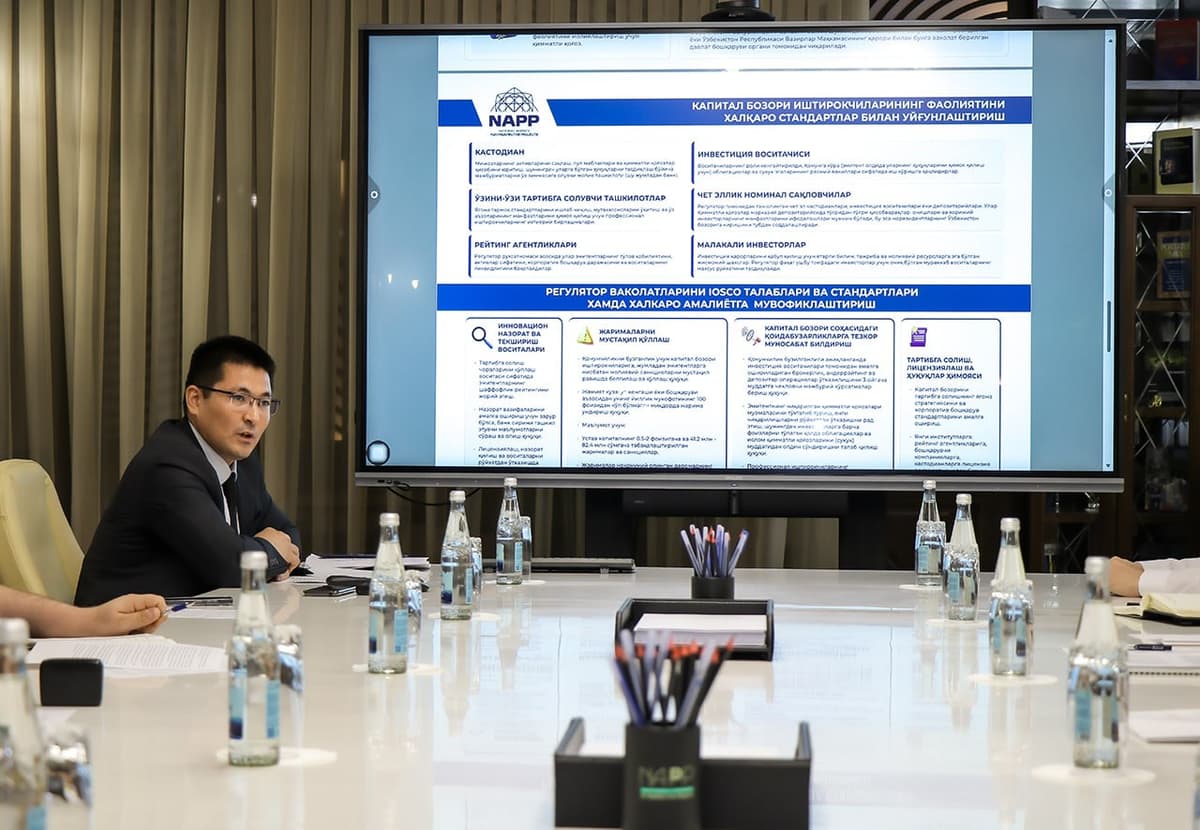
The draft introduces the concept of foreign nominee holders. Recognized foreign custodians, investment intermediaries and depositories could qualify for this status.
They would be allowed to open accounts directly with the Central Securities Depository and represent foreign investors. NAPP expects the measure to substantially simplify non-residents’ access to Uzbekistan’s capital market.
The draft also formally defines a custodian as a financial organization, including a bank, that holds clients’ assets, maintains records of money and securities, and confirms ownership rights.
Investment intermediaries would be allowed to act as official representatives of bond and sukuk holders and defend their rights before issuers. The legislation would also provide for self-regulatory organizations for professional market participants.
A new category of credit rating agencies would be introduced. With NAPP authorization, they would be able to assess issuers’ solvency, asset quality, corporate governance and the liquidity of financial instruments.
The draft also introduces qualified investors – individuals with sufficient knowledge, experience and financial resources. NAPP would determine which complex financial instruments could be offered exclusively to qualified investors.
NAPP to gain access to bank secrecy and direct sanctioning powers
The draft would significantly expand NAPP’s supervisory powers in line with IOSCO standards.
The regulator would be authorized to request and obtain information covered by bank secrecy when such information is required for its supervisory functions.
NAPP would also be able to apply the principle of “reasonable judgment” in licensing, supervision and the registration of financial instruments. A transparency rating for issuers is also planned.
The agency would gain the authority to impose financial sanctions directly on market participants, including issuers.
Fines imposed on members of a company’s supervisory board or management board could reach 100% of their annual remuneration. Other penalties could amount to twice the illegally obtained income, 5% of the offender’s net profit for the previous year or 1% of its total capital. Additional differentiated fines ranging from 0.5% to 2% of charter capital, as well as fixed penalties of UZS 41.2 million to UZS 82.4 million, are also envisaged.
NAPP would also be able to temporarily restrict certain activities of professional market participants. If a violation is identified, the agency could suspend an investment intermediary’s brokerage, underwriting or depository activities for up to three months.
The regulator would further be authorized to suspend trading in issued securities, refuse to register new issues and require the early redemption of bonds and sukuk, with investors receiving the income due to them.
Licenses of professional market participants and qualification certificates of specialists could be suspended without a court ruling. The draft provides for suspensions of up to 10 days, as well as longer periods in certain cases.
Central counterparty and expanded depository functions
The draft also proposes a new framework for capital market infrastructure.
Trading could be organized by a stock exchange as well as currency and commodity exchanges that establish stock market sections. Trading and clearing rules would be set by the exchanges in coordination with the regulator.
The Central Securities Depository would retain exclusive responsibility for maintaining registers of securities holders, assigning international identification codes, settling transactions and making centralized dividend and other income payments.
At the same time, the depository would be allowed to open correspondent accounts with foreign banks and depositories without obtaining a banking license, maintain records of permitted financial transactions and open foreign-currency accounts.
Another new institution would be a central counterparty. It would become the buyer for every seller and the seller for every buyer on the exchange, assuming the risk that transactions may not be completed.
To cover those risks, the central counterparty would establish a system of guarantee contributions and a reserve fund financed from its own and clients’ assets. These functions could be performed either by the Central Securities Depository or the stock exchange.
Government plans further steps to deepen capital market
The NAPP presentation also outlined a series of practical measures planned to further develop Uzbekistan’s capital market.
Under the plans, presidential or government decisions would be adopted on privatization programs, while the free float of major state-owned enterprises would be increased through secondary public offerings (SPOs) on domestic and international stock markets.
To attract foreign institutional investors, Uzbekistan plans to establish technical and legal links between its national securities settlement system and international central securities depositories, including Clearstream and Euroclear. The plans also include improving clearing mechanisms and developing the custody services market.
Another priority is to modernize the infrastructure of the Republican Stock Exchange “Toshkent” and build long-term strategic partnerships to attract both domestic and foreign investors.
Once the new law is adopted, NAPP and other relevant government agencies will also need to review existing secondary legislation and bring it into line with the new requirements.