
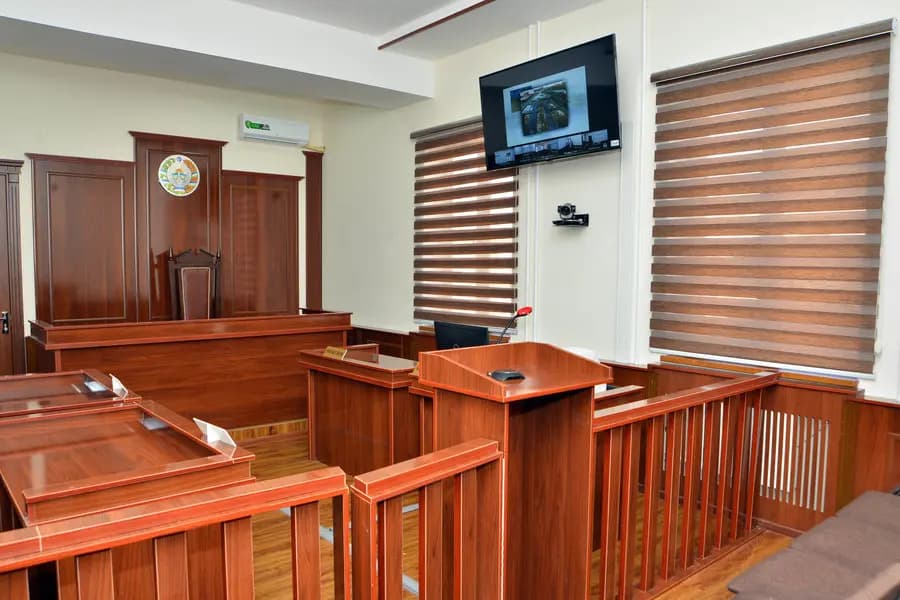
The president discussed the results of recent judicial reforms and priorities for the sector with senior officials of the judicial system. The meeting included a presentation of the draft “Justice – 2030” strategy, which sets out plans for developing the courts through 2030.
The strategy was developed using public proposals, consultations with academics, practicing lawyers and advocates, as well as international experience. It contains 57 objectives, while an action plan for 2026–2028 includes 160 specific measures and 33 targets to be achieved by 2030.
Mirziyoyev said the success of judicial reforms should ultimately be measured by whether people can approach the courts without unnecessary obstacles, have their rights restored promptly and trust that court decisions are fair.
Five interregional courts to be established
From July 1, 2027, five interregional courts will be established to improve the impartiality of reviews of lower court decisions.
Regional courts will retain their appellate and cassation functions, while powers currently exercised at the supervisory review stage will be transferred to the new interregional courts. The reform is intended to prevent courts from effectively reviewing their own decisions and reduce the need for citizens to travel to Tashkent to seek justice.
Civil courts will also be brought closer to the public. By 2030, civil courts will be gradually established in almost all districts and cities where there is a need for them, reflecting the fact that civil cases are among the disputes most frequently brought by citizens.
A “single window” system will be introduced across all courts, allowing people to obtain information, submit applications and access digital services through a unified platform.
Applications filed with the wrong court will no longer be returned to applicants. Instead, the court will forward them to the appropriate court itself. Where an application contains minor deficiencies, the court will actively assist the applicant in correcting them.

New safeguards for suspects
The reforms also seek to strengthen safeguards for human rights during investigations and preliminary inquiries.
A “reasonable suspicion” or prima facie standard will be introduced to provide stronger protection for individual liberty. When considering whether to authorize a measure restricting a person’s freedom, an investigative judge will be able to examine the legality of the detention, assess whether there are sufficient grounds for the suspicion or charge and request additional documents where necessary.
The authorities say the measure is intended to prevent unjustified restrictions on personal freedom.
For faster resolution of commercial disputes, Uzbekistan will introduce a standard for “proactive management of economic cases”. The system is intended to reduce the need for businesses to move between government offices and repeatedly submit the same documents.
An open “Precedent Register” covering decisions of the Supreme Court’s Plenum will also be created to promote greater consistency in judicial practice.
Courts to expand digital services
A “Digital Court” concept will be fully implemented across the judicial system, while the my.sud.uz portal and its mobile application will be upgraded.
The reform targets include having at least 50% of court applications submitted electronically, recording 100% of court hearings through audio recordings and increasing the number of users of the Supreme Court’s information systems at least fivefold.
From 2028, a judicial administration system will also be introduced to relieve judges of administrative duties unrelated to adjudicating cases and allow them to focus more closely on their judicial responsibilities.
The reforms also envisage expanding mediation and reconciliation mechanisms, establishing an open register of administrative acts declared unlawful and increasing to at least three the number of types of criminal cases heard with the participation of a “people’s representatives panel”.
A special uniform for court administrative staff was also presented at the meeting. The uniform is intended to make court employees easier for citizens to identify and strengthen their professional accountability.
The meeting also considered measures to improve constitutional proceedings, increase the effectiveness of judicial self-governing bodies, strengthen judicial independence and expand overseas professional training for judicial personnel.
Mirziyoyev approved the draft strategy and signed a presidential decree aimed at implementing the reforms outlined in it.