JSC Xalq bank named among the world’s top-performing banks by Forbes
|18:16 / 11.09.20262,9627 min
Forbes has published its first global ranking of banks based on financial performance. Xalq Banki of Uzbekistan made the list of 500 banks. Here’s what the ranking means and which of the bank’s indicators may have influenced its result.
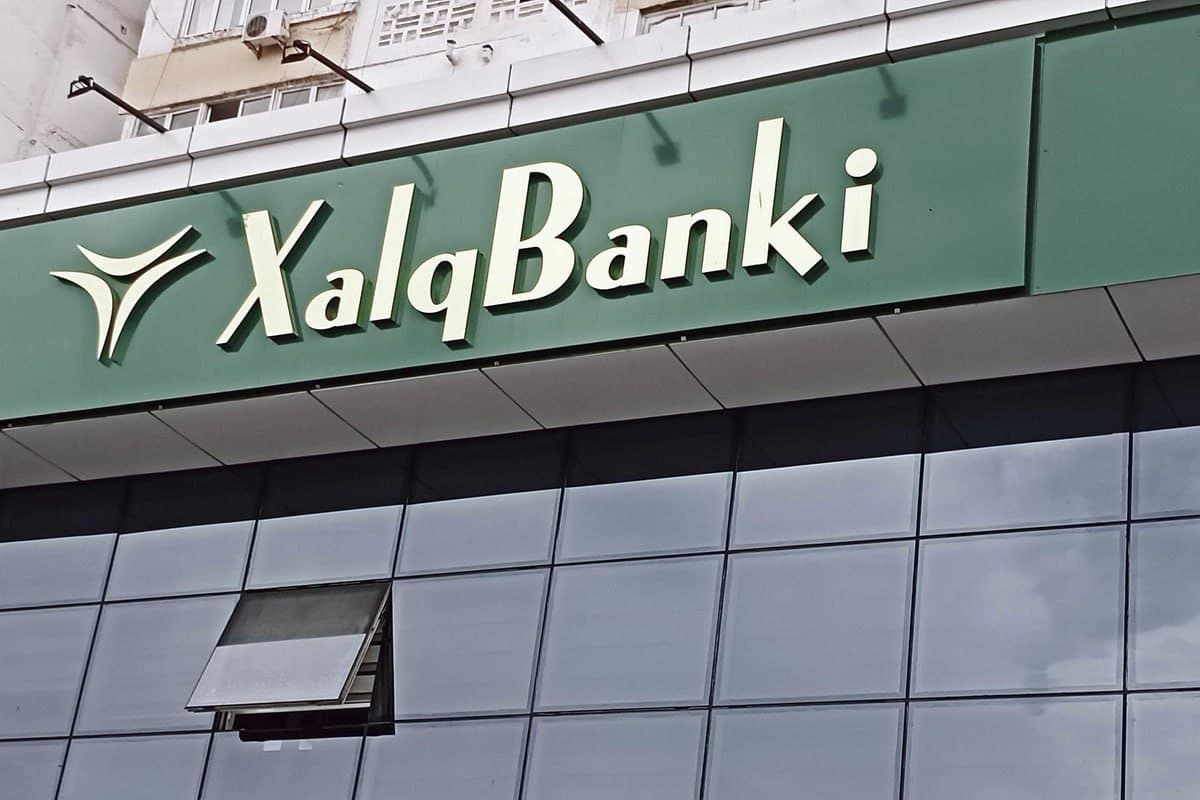
Photo: Xalq BankiPhoto: Xalq Banki
On September 9, Forbes published its firstWorld’s Top Performing Banks 2026 ranking. It includes 500 banks from 89 countries. Xalq Banki ranked 142nd in Tier 6, which covers banks with assets ranging from $3 billion to $10 billion.
It is important to clarify that this is not a 142nd-place ranking among all banks worldwide. Forbes first divided the banks into six groups based on asset size, so that large global banks would not be compared directly with significantly smaller financial institutions.
This is not the Forbes ranking based on customer surveys
Forbes already has a separate ranking called World’s Best Banks. It is based primarily on customer surveys, with respondents rating their banks on satisfaction, trust, service quality, digital services and other factors.
World’s Top Performing Banks takes a different approach.
Forbes and research firm Statista used banks’ financial data, information from major data providers including S&P Capital IQ, the results of their own research, and information submitted by banks to verify the accuracy of their figures.
To qualify for the ranking, a bank had to have more than $3 billion in assets, publish audited financial statements and have comparable data available for at least three consecutive years. Forbes noted that when 2025 financial statements were available, it used the most recent financial year; otherwise, it used 2024.
The banks were then evaluated across four areas:
●
Related topics
profitability, 30% of the overall score;
● revenue growth and quality, 20%;
● capital and funding strength, 25%;
● asset quality and efficiency, 25%.
Within these categories, Forbes considered indicators such as return on assets, the cost-to-income ratio, net interest margin, changes in profit and deposits, capital adequacy, the loan-to-deposit ratio, loan portfolio quality and other metrics.
Why Xalq Banki was included in the ranking
Forbes does not publish Xalq Banki’s individual scores or specify which particular indicator secured the bank’s 142nd-place ranking. Therefore, it would be inaccurate to say that the bank made the list because of any single factor.
Shukhrat Atabayev has headed Xalq Banki since July 2021. In recent years, the bank has accelerated its transformation, with a particular focus on improving financial efficiency, developing digital services and modernizing business processes.
However, the bank’s financial performance in recent years shows several changes that directly correspond to the ranking criteria.
In 2025, Xalq Banki’s assets increased by 5.6 trillion UZS to 52.1 trillion UZS. Its capital increased by 2.6 trillion UZS to 10.6 trillion, while its loan portfolio grew by 3.5 trillion to 31.8 trillion. Deposits reached 26.6 trillion UZS, up 2.9 trillion over the year. These figures were provided by the bank itself.
Profit also increased significantly. According to Central Bank data cited by Spot, Xalq Banki earned 702.5 billion UZS in net profit in 2025, compared with approximately 268.5 billion UZS a year earlier.
In other words, the bank’s net profit increased by approximately 2.6 times in one year.
This directly relates to several of Forbes’ evaluation categories, including profitability, revenue growth and capital strength.
Balance sheet quality also improved
Another important indicator can be seen in Fitch Ratings’ assessment.
According to the agency, Xalq Banki’s loan portfolio grew by 21% in 2024, compared with average growth of around 13% across the banking sector. But Fitch highlighted more than just the pace of growth.
The share of Stage 3 loans, meaning loans showing signs of impairment, fell from 22% at the end of 2023 to 14% at the end of 2024. Pre-provision operating profit also improved, while Fitch Core Capital increased from 9% to 17.5% following an increase in the bank’s capital.
In June 2025, Fitch upgraded Xalq Banki’s long-term rating to BB, with a stable outlook.
A quarter of Forbes’ overall score is based on capital and funding strength, while another quarter is based on asset quality and efficiency.
At the same time, the bank still faces risks. Fitch specifically noted its historically high level of impaired assets, partly linked to Xalq Banki’s participation in government-backed preferential and directed lending programs. Therefore, being included in Forbes’ ranking does not mean that the bank has no issues with the quality of its loan portfolio.
What the Forbes ranking actually means
The main feature of the new ranking is that Forbes compared banks based not on brand popularity or the quality of their mobile apps, but on their financial performance.
Xalq Banki was among the banks that met the initial requirements for asset size, financial reporting and data availability, and was then included among the 500 banks selected by Forbes and Statista based on a combination of financial indicators.
At the same time, 142nd place should not be interpreted as 142nd among all banks worldwide or as a title of Uzbekistan’s best bank. It is Xalq Banki’s position within Tier 6, the group of banks with assets ranging from $3 billion to $10 billion.
However, the bank’s inclusion in the ranking coincided with notable improvements in its financial performance: higher capital and deposits, more than a twofold increase in net profit and improved loan portfolio quality.
That is what makes the story more interesting than a standard news report about the name of an Uzbek bank appearing on Forbes’ website.