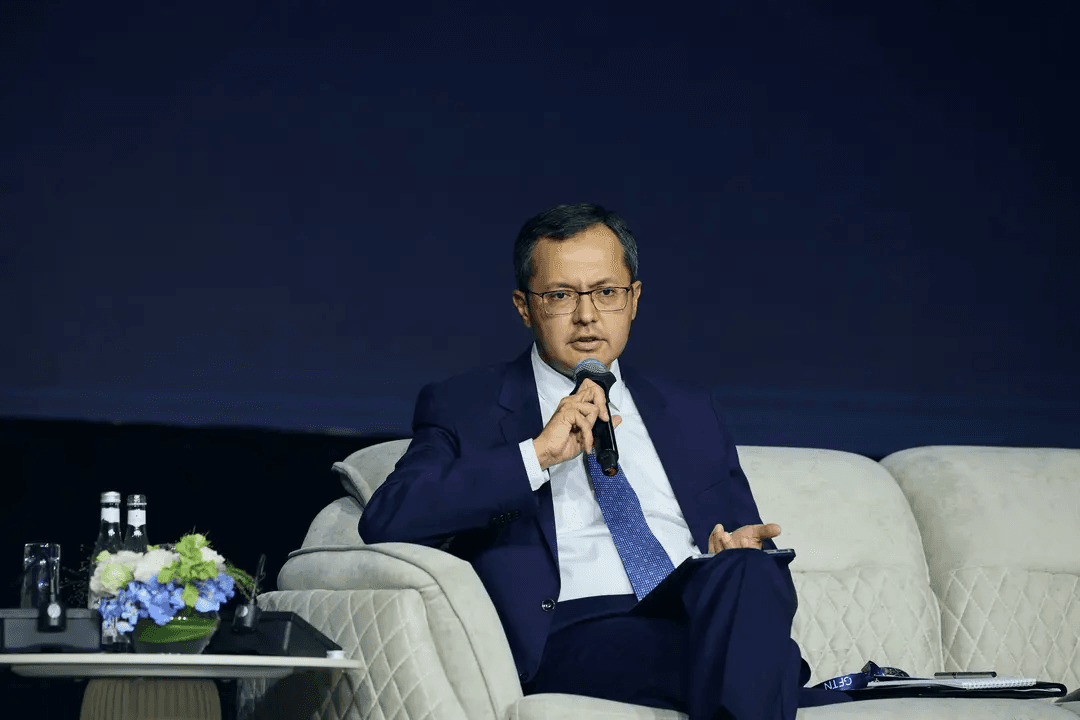
Speaking at the Silk Road Finance & Technology Forum, Ishmetov said the current environment was becoming increasingly unpredictable, requiring the regulator to place greater emphasis on resilience and its ability to respond to changing conditions.
“Central bank activity is inherently associated with risks. They are always present. Perhaps if these risks did not exist, there would be no need for a Central Bank at all,” Ishmetov said.
He said the regulator needed to move beyond managing routine risks and strengthen its ability to withstand persistent shocks and periods of heightened uncertainty.
“We need to focus on resilience,” Ishmetov said, adding that the Central Bank must be ready to act regardless of how the inflation outlook develops.
“The Central Bank must be prepared for both scenarios, whether inflation continues to fall or risks arise that could lead to its acceleration. We must take decisive action in either direction and continue fulfilling our mandate under any circumstances,” he said.
Ishmetov noted that developments in global commodity markets could eventually feed through to consumer prices in Uzbekistan. Recent increases in international oil and food prices have not yet had a direct impact on domestic prices, he said, but the Central Bank is monitoring the risk of second-round effects.
The regulator is therefore paying close attention to how external developments could affect domestic inflation and stands ready to respond if those pressures begin to emerge.