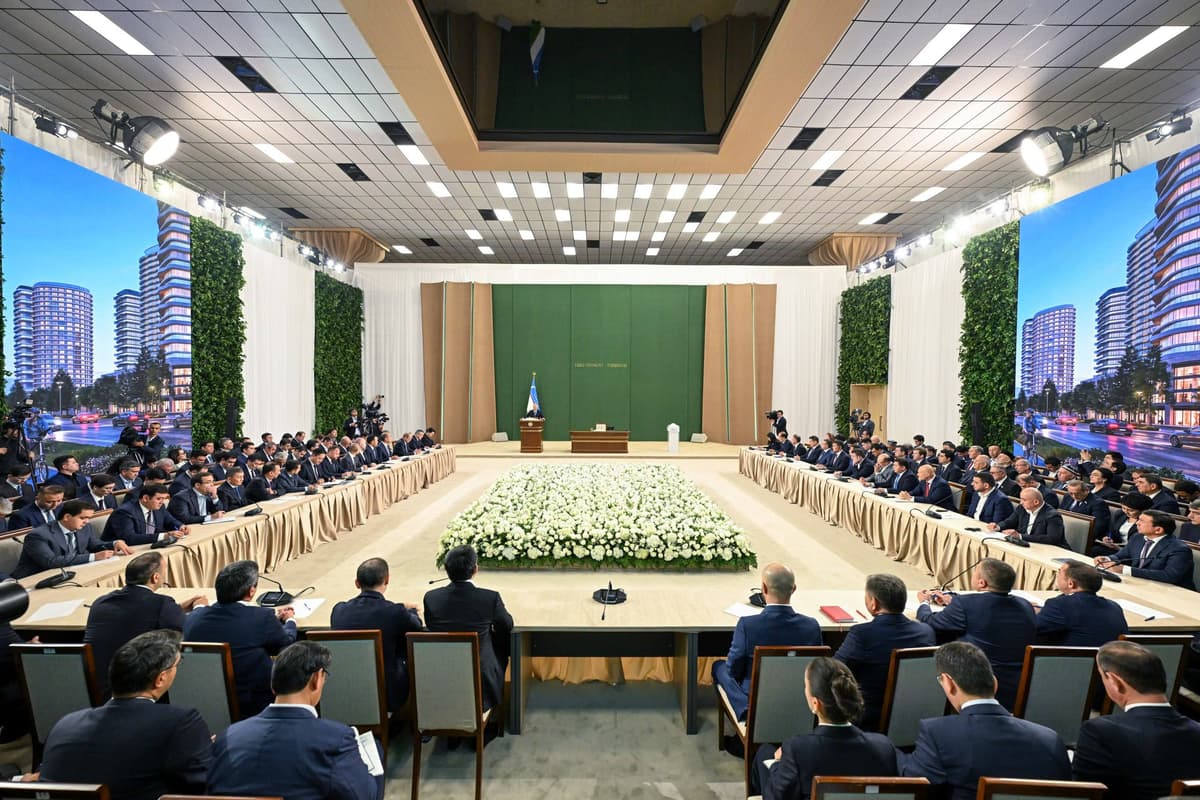
The president said the relocation of government institutions would be key to establishing New Tashkent as a business hub.
The Construction, Transport and Energy ministries are already operating from lightweight buildings in the new city. Nine additional buildings are being constructed to accommodate 2,600 employees of ministries and government agencies.
The prime minister has been tasked with initiating the relocation of the remaining ministries and state organizations. Where necessary, their existing buildings in Tashkent may be sold on the condition that they are maintained and renovated for use, without being demolished for new construction.
By the end of this year, authorities plan to commission 20,000 apartments in New Tashkent, creating a new residential environment for at least 70,000 people.
Mirziyoyev stressed that residents would need more than housing, including access to recreation, sports facilities, shops, educational institutions and healthcare services.
A 55,000-seat stadium meeting FIFA requirements is also under construction in the city. It is expected to serve as one of the main venues for next year's FIFA U-20 World Cup.
Authorities have been instructed to calculate demand for hotels, cafes, restaurants and entertainment venues based on expected visitor numbers and make the findings available to entrepreneurs to help them plan investments.
Faster approval process for investors
The meeting also addressed procedures for reviewing investment proposals. Mirziyoyev said New Tashkent's master plan should not prevent investors from pursuing viable projects that serve the city's interests.
Proposals to change a plot's size or the type of facility planned for it should be supported when justified by a project's value to the city, he said.
Although the legal framework allows such changes, the process remains complicated and insufficiently transparent in practice, with some decisions taking months. The president called for investment proposals to be assessed promptly against clear criteria.
Entrepreneurs' interest in the St. Petersburg district was attributed to the availability of a clearly defined concept, project documentation and construction permits in advance. The city directorate was instructed to increase the number of projects prepared to a similar level of readiness.