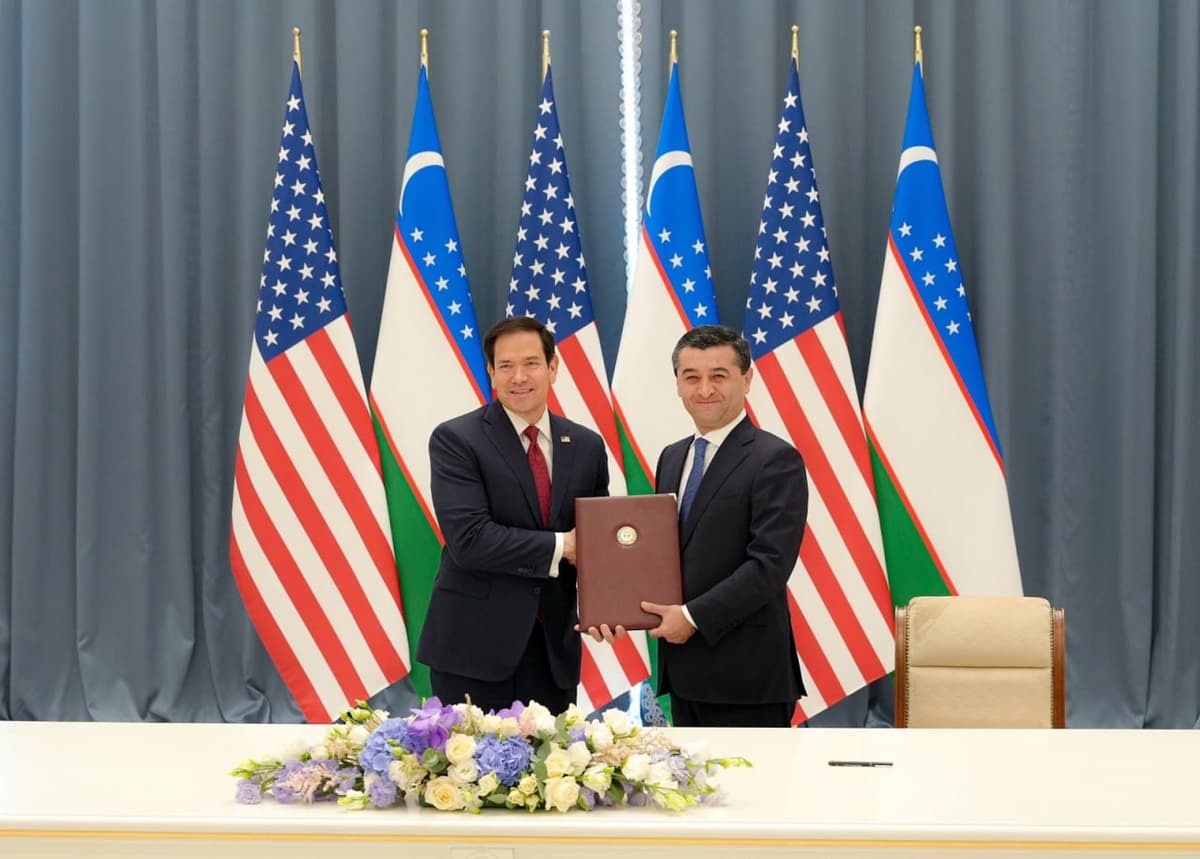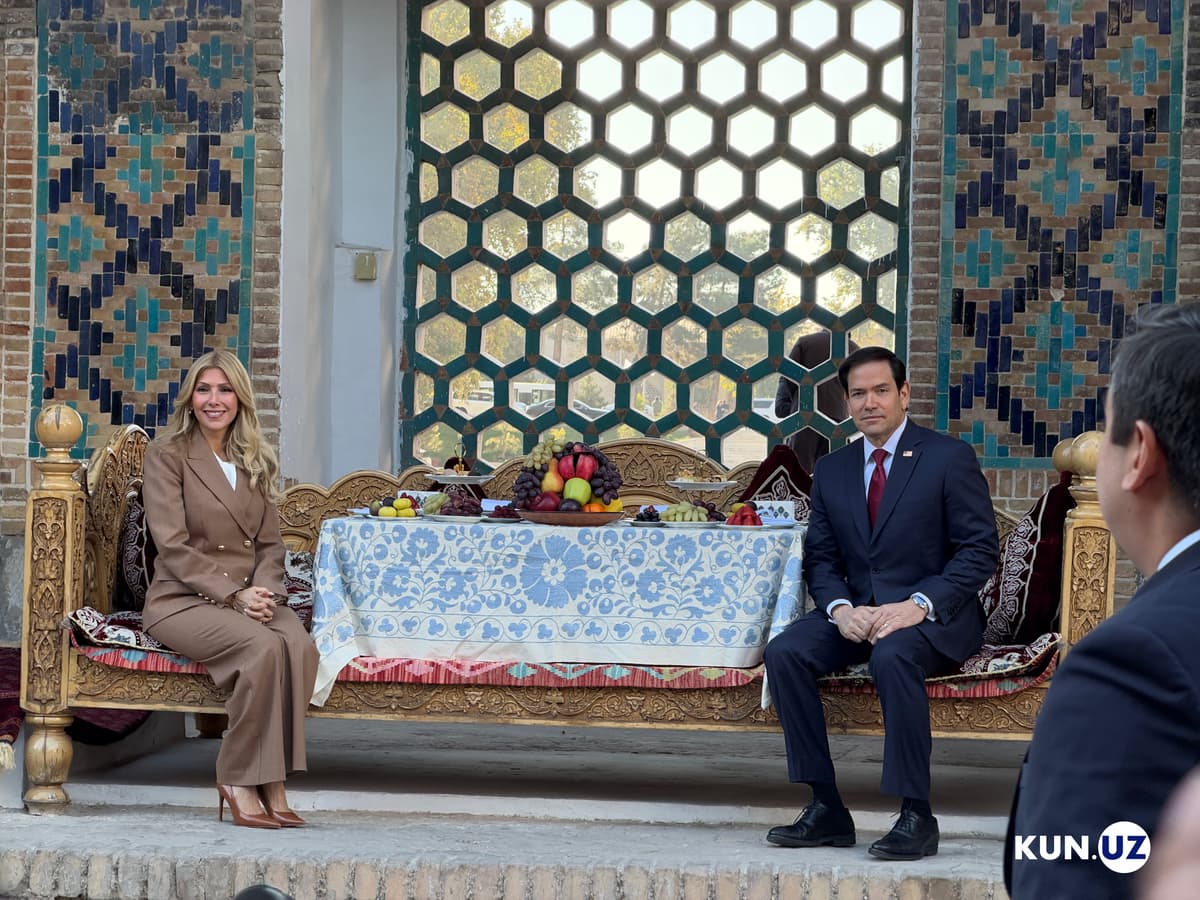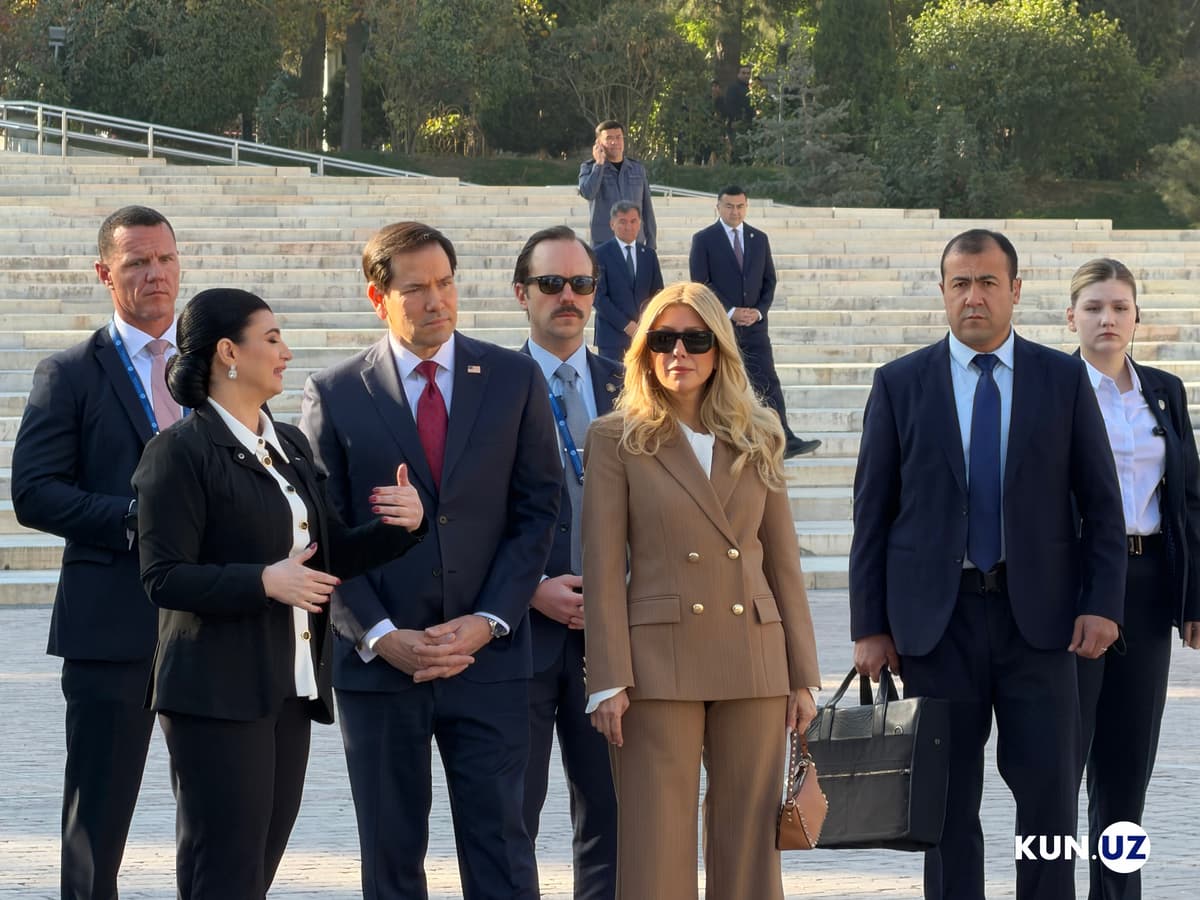
Responding to a question from a Kun.uz correspondent during his visit to Samarkand, Rubio said the administration would like to work towards arranging the visit.
“I think we would love to see that happen. We'd love to work on that in the year to come and see what dates are possible, because I think he would like to come if he can. He has said so,” Rubio said.
He added that he could not speak on behalf of the president regarding his schedule.
When asked about the agenda of his talks with his Uzbek counterpart, Rubio said the discussions would cover bilateral issues, including economic cooperation and the effects of global developments on the world economy.
He described the relationship between the United States and Uzbekistan as one centered on economic opportunity rather than conflict, saying that American companies were interested in taking part in Uzbekistan’s economic growth.
“This is a relationship defined not by challenges, not by conflicts, but by opportunity,” Rubio said, adding that Washington was looking for ways to expand its engagement with the country.
He said closer economic ties could strengthen relations between the two countries and their peoples, arguing that shared prosperity was one of the strongest foundations for closer relationships.
Rubio also acknowledged that Central Asia had not received sufficient attention from US policymakers over the past two decades, but said that was beginning to change.
“Central Asia has simply not received the level of attention from our policymakers over the last 20 years that it deserves. But that's changing. That's why we're here now,” he said.