





Additional features
-
Night mode

Turkey and Uzbekistan should expand cooperation in logistics – Ambassador Ufuk Ulutaş
Turkey and Uzbekistan need to boost investment in transport and logistics corridors and expand cooperation in untapped sectors such as agriculture and regional manufacturing, according to Turkish Ambassador to Uzbekistan Ufuk Ulutaş.
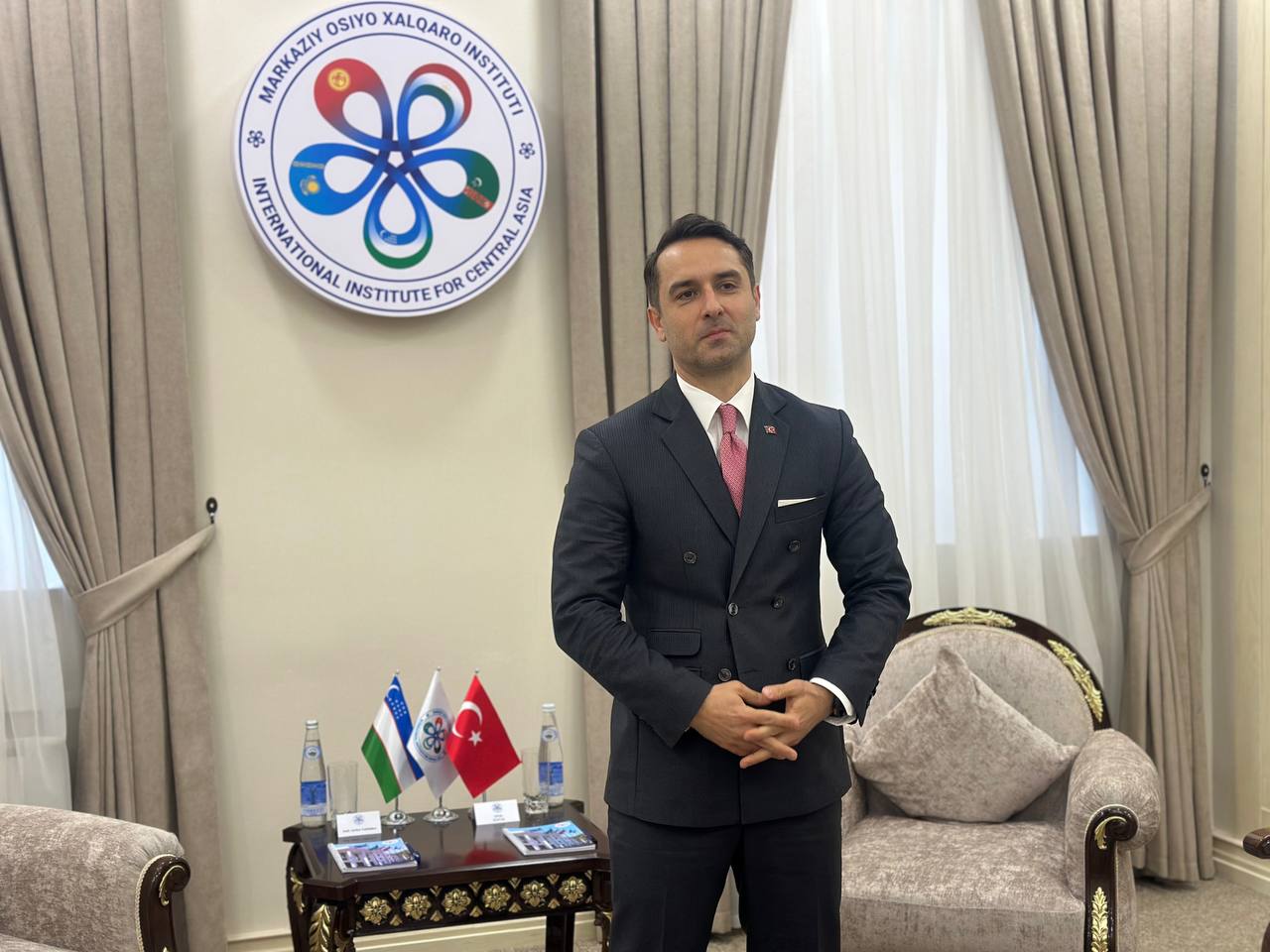
In an interview with Kun.uz and in remarks at the International Institute for Central Asia, Ulutaş addressed rising tensions in the Middle East and their impact on global supply chains. He stated that the resilience of international trade increasingly relies on both physical and institutional connectivity between regions, particularly amid global economic fragmentation and instability.
“When we talk about trade security, we need to think beyond national borders,” the diplomat added, noting that investment in transport infrastructure is no longer optional but essential for economic stability.
Logistics as the backbone of trade connectivity
Ulutaş said Turkey and Uzbekistan occupy complementary positions in global trade geography: Turkey serves as a gateway to European and Western markets, while Uzbekistan connects Central Asia with China and eastern economies. He noted that transport corridor development requires regional and international coordination.
“This is not something a single country can build. It must be a regional – even global – project, stretching from the European Union in the west to China in the east. Everyone has an interest in making these routes work,” the ambassador said.
Trade and Middle East tensions
When asked about the prospects of reaching a $5 billion bilateral trade target amid Middle East tensions, Ulutaş identified transport costs as a major constraint.
“Connectivity and transportation issues are among the main limitations between our countries. Transport costs are one of the reasons we have not yet reached the $5 billion target set by our presidents,” he said. He warned that continued conflict affecting oil markets and logistics would push transport costs higher, making the target harder to achieve.
However, Ulutaş noted that trade should not be measured solely in quantitative terms, adding that deeper strategic cooperation, including in defense and joint production, could strengthen economic ties over time.
New logistics challenges and routes
Ulutaş stated that geopolitical instability is already reshaping supply chains. “If the war continues and logistics remain affected, transport costs will rise. Turkish companies, for example, are already using alternative routes – road transport or maritime routes via China – instead of traditional routes through Iranian ports such as Bandar Abbas,” he said.
He noted that well-developed transport corridors would reduce such risks and provide more stable links between Turkey and Uzbekistan, as well as between Europe and the Far East.
Investment moving beyond major cities
Speaking about Turkish business in Uzbekistan, Ulutaş said the market is broadly saturated with investment, but new growth areas remain, particularly, in agriculture and regional development.
“Turkish investors are present in almost all sectors, but we are increasingly seeing interest in agriculture,” he said. The diplomat added that Turkish companies are expanding beyond Tashkent, Samarkand, and Bukhara into regions offering additional investment incentives.

Related News
14:51
“Russia is a time-tested strategic partner and ally” – President Mirziyoyev
20:47 / 04.06.2026
President Mirziyoyev arrives in St. Petersburg for high-level talks and nuclear project launch

19:20 / 04.06.2026
Belgium to open embassy in Tashkent
18:30 / 04.06.2026