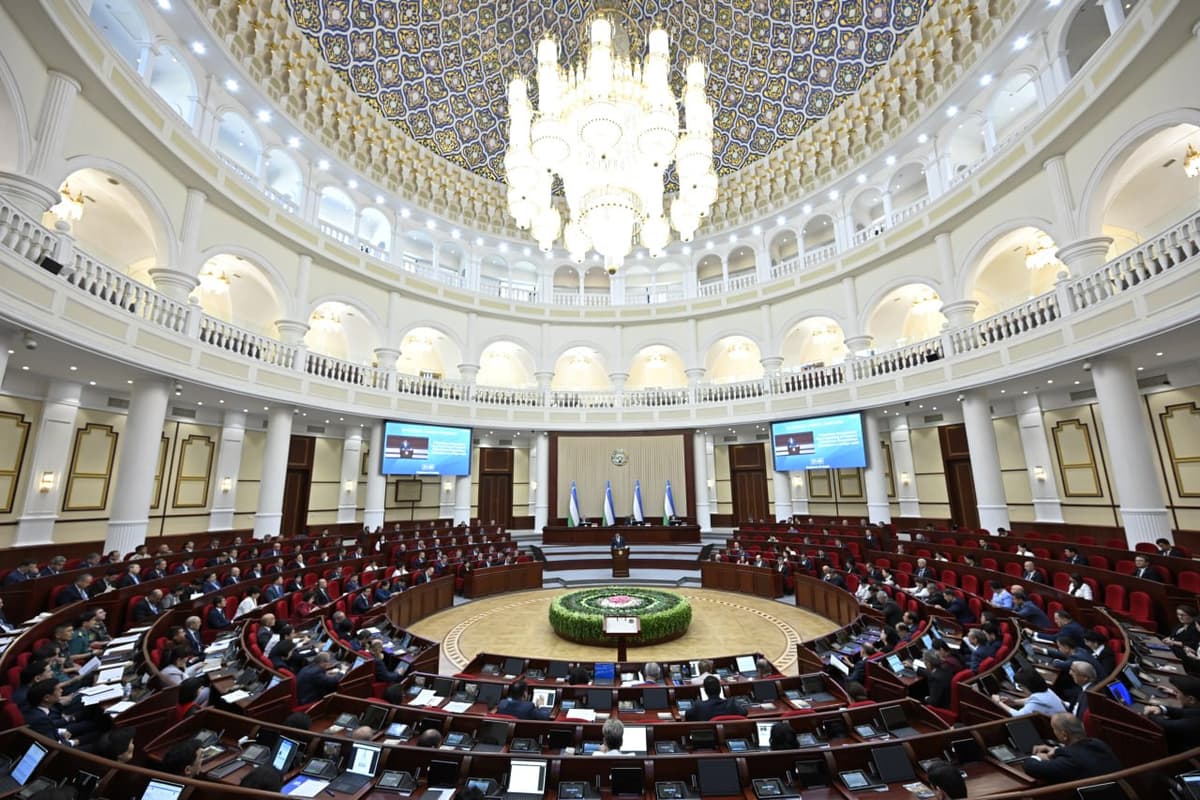

During an expanded meeting of the National Council for Combating Corruption, chaired by President Shavkat Mirziyoyev, achievements in the fight against corruption in recent years were recognized.
In particular, a law on public procurement was adopted, and tenders and competitions were digitalized, fostering healthy competition and resulting in 14 trillion UZS in budget savings last year.
Previously, people had to overcome numerous obstacles to obtain loans. Today, all banks issue consumer loans of up to 100 million UZS online within five minutes, without human intervention. As a result, thousands of bankers who previously processed loans manually are now engaging with communities, offering projects and credit options to expand their customer base.
People also faced difficulties enrolling their children in schools or kindergartens, often resorting to “alternative means” to resolve the issue. Over the years, more than 10 types of services in preschool and school education have been fully digitalized, reducing complaints in this sector by 2.5 times.
Seven or eight years ago, university admissions were plagued by nepotism and favoritism. Now, the sector has been digitalized, with entrance exams broadcast online. A system was introduced allowing students to select a university after receiving their test scores. Additionally, 35 types of documents can now be obtained without human intervention, reducing complaints in higher education by 2.2 times.
Traffic safety inspectors now use body cameras, vehicle license plates are sold through auctions, and the use of handheld speed radars and paper-based protocols has been eliminated, significantly reducing corruption in the sector.
The principle of "a state in service of the people" has been introduced to enhance services for citizens and businesses. Notably, the requirement to submit 120 types of documents and obtain over 160 licenses and permits has been abolished. As a result, nearly 200,000 new entrepreneurs have entered the market, and the number of foreign-invested enterprises has increased almost fivefold, reaching nearly 23,000. The number of electronic government services has grown 15-fold to 721, with more than 11 million users.
"These concepts were foreign to us for the past 25 years—they were simply ignored. None of these achievements happened on their own; we attained them through hard work.
Most importantly, these changes have strengthened the trust of our citizens, entrepreneurs, foreign partners, international organizations, and investors in our reforms.