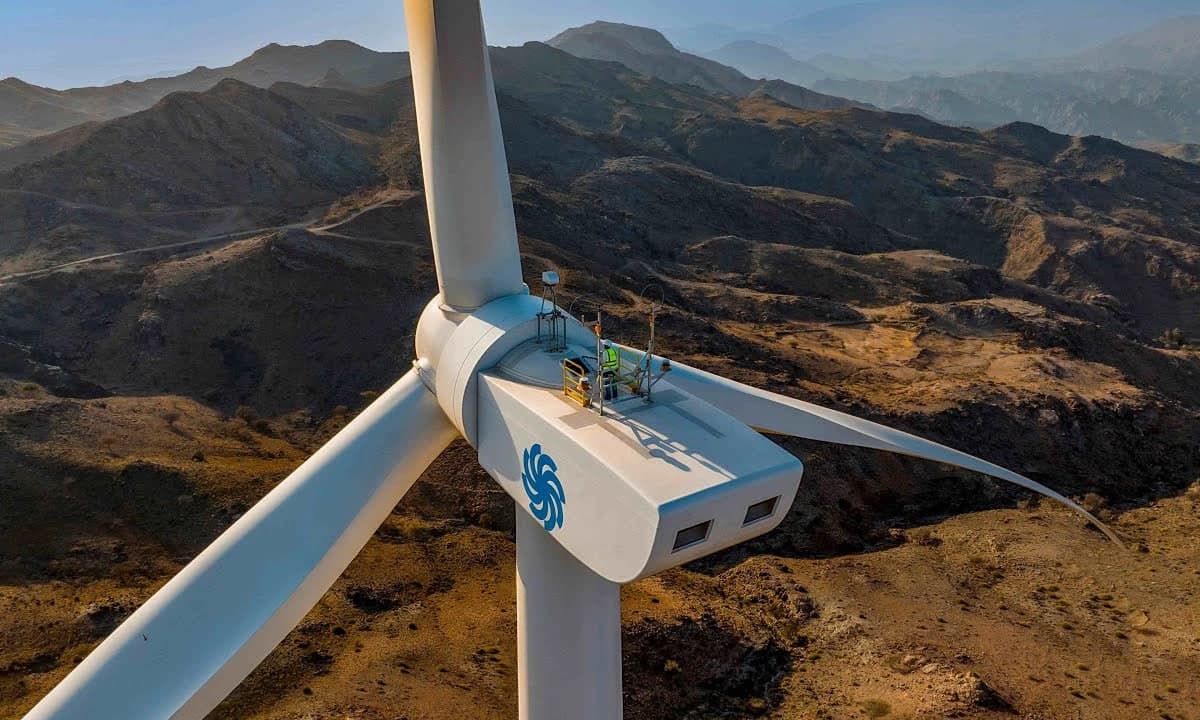
At the end of 2023, the company signed an agreement with the Ministry of Investments, Industry, and Trade and the Ministry of Energy of Uzbekistan to build a 2 GW wind power plant and energy storage facilities across the country. The total project cost is estimated at $2.6 billion.
“We have divided the project into two phases, starting with a 1 GW project. We have now signed an agreement to conduct the feasibility study and implement the project by 2029. This will take some time as we are collecting wind data. We need at least 12 months of such data before we can finalize the financial terms of the deal,” she said.
The project also includes the construction of energy storage systems with a capacity of about 1.15 GWh. According to Maryam Al Mazrouei, this will be a separate energy storage project, not directly tied to any specific generation.
“We are already developing energy storage systems as part of projects in Bukhara and the Guzar district. These batteries are standalone and are not directly connected to generation,” she added.
The cost of the first phase of the project will be under $500 million for 1 GW.
Masdar is also collaborating with Uzbekhydroenergo on a pumped-storage hydropower station (PSH) project.
“We signed an agreement with them last year. We have just received the feasibility study and are discussing the next steps. The project is still in the early stages of development,” she explained.
On tariff policy
According to Maryam Rashed Al Mazrouei, all of Masdar’s current projects in Uzbekistan have been won through tenders, except for the wind farm in Zarafshan.
“Zarafshan is the only project implemented under a bilateral agreement. All the others were obtained through tenders. This clearly shows that we won them due to our competitiveness, including on price. We continue to reduce costs as much as possible and support competition if it benefits the country,” she noted.
Masdar’s contracts in Uzbekistan are based on fixed prices within power purchase agreements (PPA) with the government, which are typically signed for 25 years.
Masdar has refrained from commenting on its readiness to operate in Uzbekistan’s future wholesale electricity market without long-term government contracts.