





Additional features
-
Night mode

Senate sends official inquiry to Cabinet of Ministers over widespread illegal construction
The Senate of Uzbekistan has sent an official parliamentary inquiry to the Cabinet of Ministers regarding measures being taken to regulate construction activity. The request highlights issues such as unauthorized construction near multi-storey buildings and the blocking of shared spaces, which have been identified as major concerns.
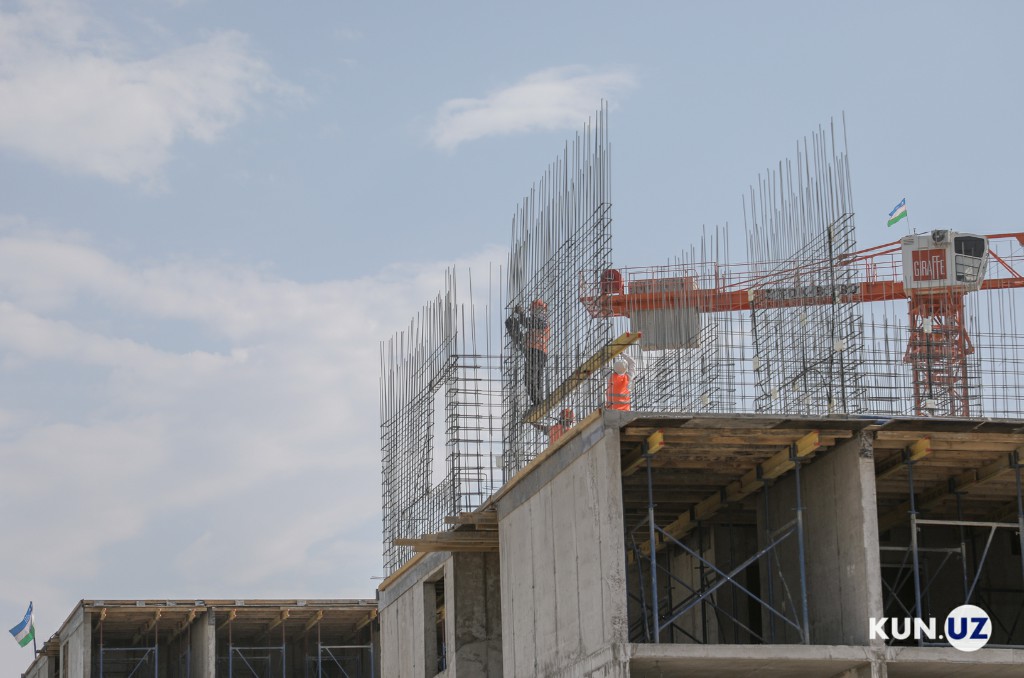
At its ninth plenary session on August 2, the Senate reviewed the matter of infrastructure development and construction regulation across the regions.
Speaking at the session, Senator Erkin Gadoev noted that in several regions, legal norms in construction and infrastructure development are not being fully observed. He emphasized that measures aimed at preventing illegal construction – especially in areas adjacent to apartment buildings – and the unauthorized blocking of public-use spaces remain insufficient.
It was also pointed out that in some cases, foreign loans are being attracted for projects that lack proper feasibility studies or financial justification.
For instance, three healthcare projects worth a total of $300 million have seen no disbursement from international financial institutions for over a year due to the absence of approved feasibility documents. One such project involves a $70 million medical higher education facility with 120 student places in Tashkent, approved in May 2024, for which the feasibility study still remains undeveloped.
In 2024 and the first half of 2025, over 8,000 legal violations were recorded in relation to the technical condition of multi-apartment buildings. These include:
- Damage to 431 load-bearing structures and 2,600 partition structures
- Construction of over 3,300 illegal structures adjacent to residential buildings
- Unlawful blocking of more than 1,800 public-use spaces
Due to non-compliance with laws and regulations by construction firms, more than 11,000 civil lawsuits were reviewed in 2024 and the first half of 2025 regarding demolition of illegal structures. Courts ruled in favor of demolition in 8,300 cases – about 75% of the total.
From 2023 to 2024, 5,500 violations of legal requirements were documented in processes ranging from project design to the commissioning of multi-storey buildings.
Notable examples include:
- Use of substandard concrete materials in 102 buildings
- Failure to comply with lift installation regulations in 139 buildings
- Acceptance for use of 74 incomplete or non-compliant buildings by the construction oversight authority
One such case is the nine-storey building at 182 Parkent Street in Yashnobod district, Tashkent, built by a private contractor. Despite extremely poor construction quality, the building was approved for use. As a result, the lives of 102 homeowners were put at risk, prompting them to submit formal complaints to the relevant authorities.
Additional findings include:
- Undefined responsibilities among contractors, technical supervisors, and internal inspectors for quality testing of concrete during construction of category II and higher facilities
- Approval of 185 construction projects by urban planning councils without considering mandatory planning elements such as site boundaries, protection zones, green spaces, parking lots, and playgrounds due to the lack of a fully digitalized system
- Contractor failure to inspect the quality and compliance of building materials delivered by suppliers
For example, in 402 cases across construction and renovation sites, internal supervision was not conducted by contractors. As a result:
- 223 cases of substandard façade and landscaping work
- 181 cases of poor-quality interior wall and finishing work
- 277 cases of violations in foundation work, column reinforcement, and roof timber installation
Based on these findings, the Senate’s inquiry to the Cabinet of Ministers calls for the following nine actions:
- Accelerate the development of general plans and urban planning documents for population centers
- Speed up project implementation involving international financial institutions and ensure efficient use of allocated funds
- Analyze delays in specific projects under the 2025 Investment Program and ensure their timely and high-quality completion
- Develop measures to prevent unauthorized construction and encroachment on public-use areas near apartment buildings
- Ensure strict compliance with construction-related legal frameworks in regional development
- Define the duties and responsibilities of both state inspectors and contractors in overseeing material quality in construction
- Strengthen oversight mechanisms to prevent positive assessments of project documents that violate planning regulations by regional urban planning councils
- Transition urban planning council operations to a fully electronic system
- Provide a reasoned explanation of the measures being taken to control the quality of construction materials delivered to sites and address the other concerns outlined above

Related News
13:24 / 13.07.2026
China–Kyrgyzstan–Uzbekistan railway project enters active construction phase

12:28 / 13.07.2026
Central Bank: Strong housing demand pushes up prices across Uzbekistan
13:38 / 09.07.2026
Senate backs stronger child protection measures and penalties for abuse
13:25 / 09.07.2026