





Additional features
-
Night mode

Uzbekistan to allow 150 km/h speed limit on new toll highways
Drivers in Uzbekistan will soon be able to travel at speeds of up to 150 kilometers per hour on new paid highways, according to Hasan Umarov, chief legal counsel at the Committee for Automobile Roads.
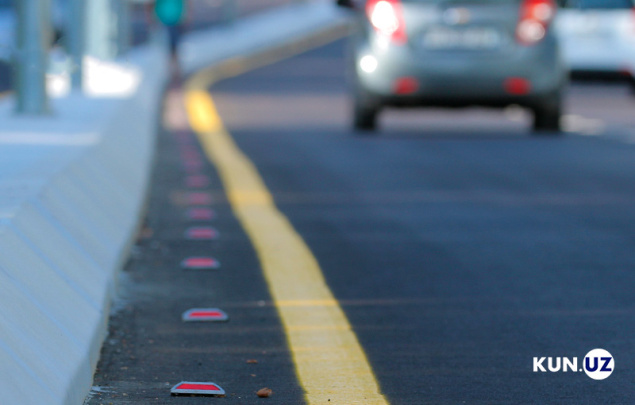
Speaking about the new version of the draft law On Automobile Roads, Umarov said that the legislation introduces specific regulations for toll roads, including a higher speed limit than on regular highways. Once the law takes effect, amendments will be made to traffic rules, officially allowing speeds of up to 150 km/h on paid routes.
He explained that toll rates will be set according to a government-approved methodology, which will also determine the maximum ceiling for prices. Investors operating the roads will not be allowed to charge more than the established limit.
“As a rough estimate, a 200-kilometer drive on a toll road could cost around UZS 100,000,” Umarov said. “By comparison, on existing free roads, a driver might pass several speed cameras, and even one fine costs about UZS 200,000. These figures are still preliminary and may change.”
Alternative, not replacement
The legislation stipulates that toll roads can only be built as alternatives to existing free roads. This means drivers will retain the right to choose whether to use a free public road or pay for a faster, more convenient route.
Farhod Zayniev, deputy chair of the Legislative Chamber’s Committee on Entrepreneurship, Competition Development, and Industry, stressed that no current roads will be converted into toll roads. “For example, if there is already a road connecting two points, it will remain free,” he said. “The paid road will be built alongside it, providing an option for those who prefer to save time and travel without stops.”
Revenue allocation
The draft law also clarifies how revenue from toll roads will be used. Zayniev noted that if a toll road is established under a public–private partnership (PPP), income will first go toward maintenance, repairs, and improving road quality. The remaining funds will be distributed according to the Law On Public–Private Partnership, with the state’s share reinvested solely in the development of that specific road.
Free access in emergencies
The law also provides for exceptions. In emergencies, toll roads will be accessible free of charge, while vehicles belonging to emergency medical services and law enforcement agencies will be permanently exempt from payment.
The Legislative Chamber passed the draft law On Automobile Roads on September 23 and has forwarded it to the Senate for review.

Related News
17:49 / 06.07.2026
Egypt seeks closer transport and logistics cooperation with Uzbekistan

15:35 / 06.07.2026
Uzbekistan eyes stake in Georgia’s Anaklia port to strengthen trade corridor

18:59 / 25.06.2026
Namangan region secures UZS 703 billion for water infrastructure and transit upgrades

15:23 / 25.06.2026